How Much Light Does a Spider Plant Need?
Spider plants need bright, indirect light for steady growth, but they can tolerate lower light. Protect the leaves from harsh direct sun and add supplemental lighting only when the room stays too dim.
On this page (9 sections)
- What are the ideal spider plant light needs?
- Can spider plants grow in low light?
- How can you tell if the light is too weak?
- What does too much light do to a spider plant?
- When should you add supplemental lighting?
- Is a terrarium hood suitable for spider plant lighting?
- How should you position a spider plant near a window?
- Does light affect spider plant watering?
- What is the simplest way to choose the right light?
Spider plants need bright, indirect light, although they can adapt to lower light for a while. The best spot is usually near an east- or north-facing window, or a few feet back from a brighter window where the leaves receive plenty of ambient light without strong midday rays.
Light affects leaf color, growth speed, and the number of plantlets a spider plant produces. Variegated varieties often show weaker contrast in dim conditions, while harsh direct sun can fade or scorch the leaves.
What are the ideal spider plant light needs?
The ideal spider plant light needs are strong filtered light for several hours each day. The plant should look bright and active without sitting in a narrow beam of hot sunlight.
An east-facing window often gives gentle morning light. A north-facing window can offer steady lower-intensity light.
A south- or west-facing window may also work if a sheer curtain or extra distance softens the strongest rays.
Watch the plant instead of treating one window direction as a fixed rule. The same direction can provide different light levels depending on glass, curtains, nearby buildings, trees, and the season.
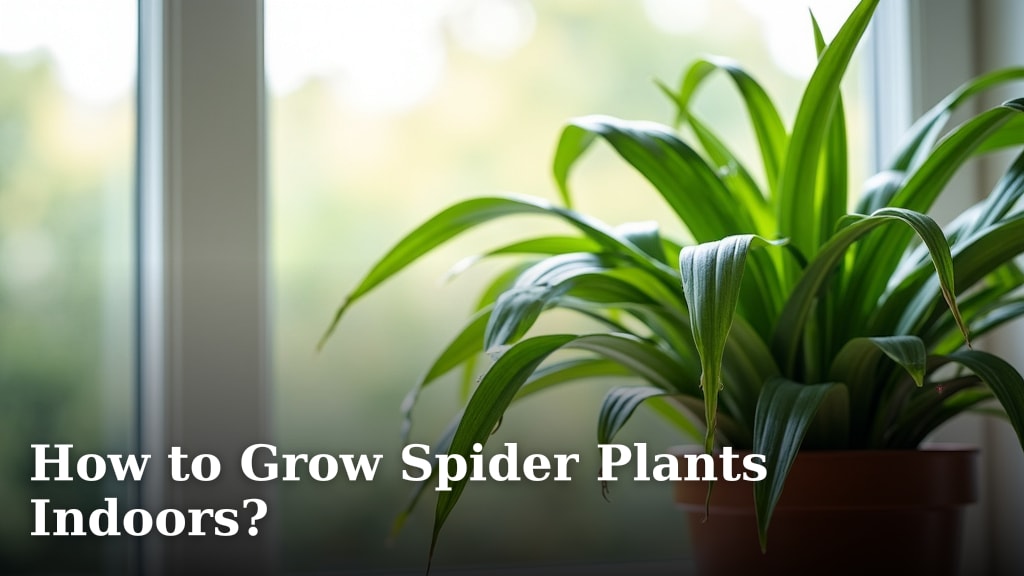
If you're still setting up the plant, our guide to How to Grow Spider Plants Indoors? covers placement and general care together.
Can spider plants grow in low light?
Spider plants can survive in low light, but they usually grow more slowly there. A dim room may produce fewer leaves, fewer plantlets, and less clear striping on variegated foliage.
Low light doesn't always cause an immediate problem. A plant can remain green for some time while gradually using stored energy and producing less new growth.
Move the plant closer to a bright window if the leaves become smaller, the center growth looks weak, or the soil stays wet for much longer than usual. Lower light often means slower water use, so keep your watering schedule tied to soil moisture rather than the calendar.
Spider plants are more forgiving than many high-light houseplants. For a plant that must stay in a darker room, compare the placement ideas in How to Grow Snake Plants in Low Light? and How to Grow Zz Plants in Low Light?.
How can you tell if the light is too weak?
You can tell the light is too weak when new growth slows, plantlets become less frequent, or variegation fades. One symptom alone doesn't prove that light is the cause, because watering, root crowding, temperature, and pests can also affect growth.
Place your hand between the plant and its main light source during the brightest part of the day. A soft, faint shadow suggests lower light, while a very sharp shadow suggests stronger light.
This simple check helps you compare locations, but it doesn't give a precise measurement.
A light meter gives you a more repeatable way to compare the shelf, windowsill, and nearby room. The Dr.meter Digital Illuminance Light Meter 0-200 has a 0–200,000 lux range, switches between FC and LUX, responds 2 times per second, and records a peak reading.
Use the meter at the height of the leaves and take readings at different times of day. The goal is to compare spots, not to chase one number without considering how long the plant receives that light.
The meter uses a 9V battery and includes 1 light meter. Its ABS material, 4 x 1 x 8 in dimensions, and 12 oz weight make it a dedicated measuring tool rather than a plant-care accessory that stays in the pot.
What does too much light do to a spider plant?
Too much light can cause pale, bleached, or brown areas on leaves, especially where the strongest rays hit. Direct afternoon sun through glass can be more intense than the room feels to you.
For how another houseplant handles it, see snake plants in direct sunlight.
Read about Monstera plants in direct sun for a related example.
Move the plant farther from the window, add a sheer curtain, or choose a window with softer light. Make one change at a time so you can see whether new damage slows.
Don't confuse normal older-leaf browning with a light problem. Check the location, watering pattern, leaf age, and whether the brown area is limited to the sun-facing side.
A spider plant may also look washed out when its leaves receive strong light for long periods. Filtered brightness is usually a better target than the strongest possible window.
When should you add supplemental lighting?
Add supplemental lighting when the best available window stays dim or the plant sits far from natural light. A grow light is most useful when it creates a consistent daily schedule and covers the plant evenly.
Keep the fixture above the foliage and follow its placement guidance. Check the leaves after moving the light closer, since heat and intensity can vary between fixtures.
The SunBlaster SL0900304 54 Watt 6400K 4' 120V is a 49.5 x 3.5 x 2 in indoor T5 high-output fixture with 3,730 lumens, a 6400K daylight-white color temperature, and a 120-degree beam angle. It includes a cord, jumper plug, and hanging and flat-surface mounting clips.
SunBlaster says the fixture can sit 6–8 in above the plant canopy and can link up to 8 units from one power cord. Those details suit a shelf with several plants, but one spider plant may not need a fixture this long.
The fluorescent light source is rated for 10,000 hours. Choose it when you need a dedicated indoor fixture and have room for its 4 ft length, rather than for a small tabletop plant.
For more focused options, see Best Grow Lights For Spider Plants. If you are comparing artificial lighting for a different low-light plant, Can Snake Plants Grow with Artificial Light? explains why the plant's tolerance still matters.
Is a terrarium hood suitable for spider plant lighting?
A terrarium hood is not the first choice for ordinary spider plant lighting because its product purpose centers on reptile enclosures and UVB, UVA, and visible light. Spider plants generally need useful plant light, not reptile-specific UVB equipment.
The Zoo Med 5.0 T5-HO 14" Terrarium Hood measures 16.3 x 5.9 x 1.1 in and weighs 1.43 lb. It includes a ReptiSun T5 HO 5.0 UVB lamp, has a low-profile design, an energy-efficient T5 HO electronic ballast, and a polished curved reflector.
The hood's UVB function is designed around reptile needs, including UVB exposure for vitamin D3 production. That makes it a poor default recommendation for a spider plant unless you have a specific setup that calls for this type of enclosure lighting.
Measure the available space before choosing any fixture. A compact hood can suit a 14 in area, while a 4 ft plant fixture needs a much longer shelf or mounting surface.
How should you position a spider plant near a window?
Position a spider plant close enough to a bright window for clear ambient light, but far enough away to avoid harsh direct rays. Start with a moderate distance and adjust after watching new growth.
Turn the pot occasionally if one side receives much more light than the other. This helps the plant grow more evenly and makes it easier to notice changes in leaf color.
Keep leaves from pressing against cold glass or touching hot glass. Curtains can soften intense light, but they also reduce the amount reaching the plant, so check the plant's response after closing them.
If the room is bright only for part of the day, use the brightest period as your reference. A plant that receives a short burst of strong light may still need a better position for the rest of the day.
Does light affect spider plant watering?
Yes, light affects watering because a brighter plant usually uses water faster than a plant growing in dim conditions. Light is only one part of the calculation, so check the soil before watering.
In a dim room, wet soil may remain wet longer. Repeated watering on a fixed schedule can keep the roots too wet even when the leaves look fine.
In brighter light, the plant may dry sooner, especially in a small pot or a warm room. Check below the surface with your finger and consider the pot's drainage before adding more water.
Good lighting doesn't correct a container that drains poorly. When you choose a new container, compare the sizes and styles in Best Planter Pots For Spider Plants and make sure the pot suits the root ball and growing setup.
What is the simplest way to choose the right light?
Choose the light by matching the room, the plant's response, and the amount of space available. A bright indirect window is the simplest option, a meter helps compare uncertain spots, and a grow light helps when natural light stays weak.
Use a window when the plant already receives steady filtered brightness. Use the Dr.meter meter when two locations look similar or when you want to confirm whether moving the plant changes the light.
Choose the SunBlaster when you need a long indoor fixture with 6400K light and have room for its 49.5 in length. Avoid choosing the Zoo Med hood just because it is compact, since its UVB design serves reptile enclosures rather than normal spider plant care.
The best spider plant light needs are met by consistent, filtered brightness. Pick the natural-light location if the leaves stay green and new growth continues, pick a grow light if the room remains dim, and move the plant back from the window if direct sun causes fading or brown patches.
Frequently asked questions
What are the best spider plant light requirements?
The best spider plant light requirements are bright, indirect light for several hours each day. Place the plant near an east- or north-facing window, or set it back from a brighter window so direct midday sun doesn't scorch the leaves.
Adjust the position if growth becomes weak or leaf color fades.
Can spider plants grow in low light?
Yes, spider plants can grow in low light, but growth is usually slower and the plant may produce fewer new leaves or plantlets. Move it closer to a bright window or use supplemental lighting if the room is too dim for steady growth.
Avoid placing it directly against hot glass.
How do I know if a spider plant gets too much light?
A spider plant may get too much light when its leaves develop bleached, pale, or brown patches, especially on the side facing the window. Move it farther from the glass or filter the light with a sheer curtain.
Change its position gradually and watch new growth.
Do spider plants need a grow light?
Spider plants don't always need a grow light. A bright room with indirect window light is often enough, but a grow light can help when the plant sits far from windows or receives weak winter light.
Use a timer and keep the light far enough away to avoid leaf stress.