Can You Grow Pothos from Leaves?
A plain pothos leaf with no node rarely grows a new plant. You need a stem cutting with at least one node, plus clean tools, water or soil, bright indirect light, and time for roots to form.
On this page (10 sections)
- Can a single pothos leaf grow a new plant?
- What do you need to start a pothos cutting?
- How to grow pothos from leaves using a node cutting
- How to propagate pothos in water step by step
- How to root pothos in soil instead of water
- How much light do pothos cuttings need?
- What mistakes make leaf cuttings fail?
- How do you care for a rooted pothos after potting?
- Which products help with pothos propagation at home?
- How to grow pothos from leaves: final checklist
A plain pothos leaf with no node rarely grows a new plant. You need a stem cutting with at least one node, plus clean tools, water or soil, bright indirect light, and time for roots to form.
This guide explains how to grow pothos from leaves in the way that actually works. That means starting with a node, not just a leaf blade.
A node is the bump on the stem where a leaf and aerial root grow.
Can a single pothos leaf grow a new plant?
No, a single leaf without a node usually cannot become a full plant. It lacks the stem tissue that makes new growth points.
Pothos leaves can sometimes form small roots at the base of the leaf stem. That is not the same as making a new vine.
The leaf may live for a while in water, then slowly decline.
A node cutting works because the node holds meristem tissue. That tissue can push out roots and a new leaf or vine tip.
If you want a plant, always look for that bump.
Check the stem before you cut. You should see a small brown nub or a tiny aerial root at the leaf joint.
That is the part you need to keep below water or in moist soil.
What do you need to start a pothos cutting?
You need clean scissors, a healthy stem with a node, and water or potting mix. A clear jar, small pot with drainage, and bright indirect light complete the setup.
Use sharp, clean scissors or pruners. Clean blades reduce the chance of spreading disease to the cut.
Rinse them with soap and water, then dry them before you cut.
Pick a vine that looks firm and green. Avoid stems with yellow leaves, brown mush, or soft spots.
A cutting about 4 to 6 inches long with one or two nodes is easy to handle.
For water rooting, you need a jar that holds stems upright. For soil rooting, you need a small pot with holes and a light, airy mix.
Either method needs the same bright, indirect light.
How to grow pothos from leaves using a node cutting
Cut below a node, remove lower leaves, and place the node in water or moist soil. Keep the top leaves dry and the node covered.
Cut the stem about 1/2 inch below the node. That short stub protects the node while it roots.
Then remove any leaf that would sit under water or deep in soil.
Place the cutting so the node is submerged in water or buried just under the soil surface. Keep at least one healthy leaf above the water line.
That leaf makes food for the new roots.
Change the water every 3 to 5 days, or top it up and refresh it weekly. Stale water can grow algae and bacteria.
In soil, keep the mix moist but not soggy, and never let it dry out fully for long.
How to propagate pothos in water step by step
Use a clear jar, plain water, and a node cutting, then refresh the water often. This method lets you watch roots as they form.
Fill the jar with room temperature water. Place the cutting in right away so the cut end does not dry.
Set it in bright indirect light, such as near an east facing window with a sheer curtain.
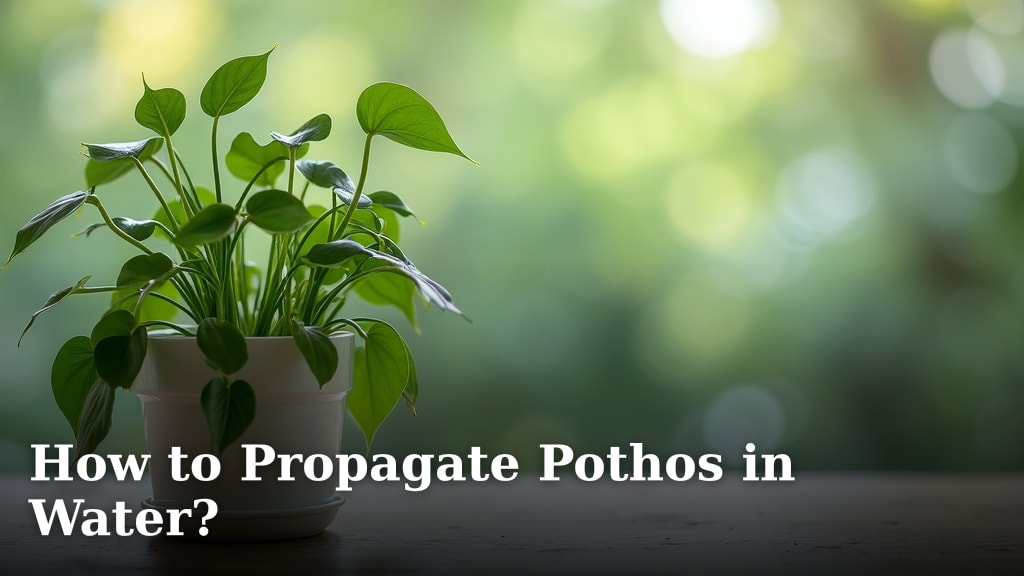
Our guide to How to Propagate Pothos in Water? covers jar choice, water changes, and timing in more detail. Read it before you start if this is your first water cutting.
Roots often appear in 1 to 3 weeks. Pot the cutting up when roots reach about 2 inches long.
Longer water roots can break during transplant, and the plant may struggle to adjust to soil.
What should you do when roots are 2 inches long?
Pot it up gently in moist potting mix and keep it humid for a few days. Water the soil well after planting, then let excess drain away.
Use a small pot so the roots fill the space quickly. A large pot holds too much wet soil around a small root system.
That raises the risk of rot.
Keep the new plant in bright indirect light while it adjusts. Do not add fertilizer yet.
The cutting needs roots first, then steady leaf growth.
How to root pothos in soil instead of water
Plant the node just under the soil surface and keep the mix evenly moist. Soil rooting avoids a later move from water to soil.
Fill a small pot with light potting mix. Make a hole, set the node in it, and firm soil around the stem while keeping the top leaf above the soil.
Water until it drains, then empty the saucer. Water again when soil feels moist, not wet.
A clear bag can raise humidity, but open it daily to prevent mold. Most cuttings root in 3 to 6 weeks with steady moisture and light.
For planting after rooting, see our guide to how to plant pothos. It covers pot size, soil depth, and watering.
How much light do pothos cuttings need?
Bright indirect light is best for rooting pothos cuttings. Too little light slows root growth, and direct sun can scorch leaves.
An east window, a few feet from a south window, or a spot under a tree with filtered sun works well. Leaves should stay green and firm.
Pale new leaves can signal low light.
If your room is dark in winter, a grow light can help. Our guide to How Long Should You Leave Grow Lights On? explains timing for seedlings and cuttings.
Most indoor growers use 12 to 16 hours for rooting plants.
The SunBlaster fixture is 54 Watt, 4 foot, 120V, and rated at 3730 lumens with a 6400K color temperature. It can be placed 6 to 8 inches above the plant canopy, per SunBlaster.
That close placement suits a shelf of cuttings, but you must watch for heat and leaf stress.
How do you measure light for a cutting spot?
Use a light meter app or a handheld meter to check brightness at leaf level. You want to know if your spot is truly bright or just near a window.
The Dr.meter meter measures 0 to 200,000 lux and toggles between FC and LUX. It gives fast readings and has a PEAK button for brief high light.
That helps you compare a windowsill, a shelf, and a spot under a light.
Measure at the same time of day on a bright and a cloudy day. A spot that shifts from bright to dim may still root a cutting, just more slowly.
Move the jar if readings drop a lot after midday.
What mistakes make leaf cuttings fail?
The top mistakes are using no node, submerging leaves, and keeping soil or water too wet. Each mistake blocks growth or invites rot.
A leaf only cutting is the most common mistake. Without a node, there is no place for a new vine to start, so always confirm the node before you cut.
Leaves under water rot quickly. Remove lower leaves so only the stem and node sit in water, and keep leaves off the soil surface in soil.
Soggy soil also causes failure. Roots need oxygen as well as water, so let the top inch dry slightly between waterings once roots form.
Cold drafts, direct sun, and dark corners slow cuttings. Keep jars away from vents and heaters, and cut away mushy or black stem parts before trying again with a clean node.
How do you care for a rooted pothos after potting?
Give it bright indirect light, water when the top soil dries, and wait before feeding. Young plants need steady care, not extra fertilizer.
Water thoroughly, then let excess drain. Most pothos do best when the top 1 to 2 inches of soil dry between waterings, and yellow lower leaves often mean the soil stays wet too long.
Light green leaves can mean too much direct sun or a nutrient issue. Our guide to pothos light green leaves helps you tell the cause, so move the plant if leaves fade in strong sun.
For long term care, our pothos plant care tips and tricks covers watering, pruning, and training vines. Prune only after the plant has several leaves, so you do not weaken the young root system.
Which products help with pothos propagation at home?
A light meter, a full spectrum light, and a small fixture help you control the rooting environment. Each one solves a different problem for cuttings.
The Zoo Med hood is 14 inch, with a ReptiSun T5 HO 5.0 UVB lamp included, and a low profile design. It provides UVB, UVA, and visible light for reptiles, plus visible light that can suit a small plant shelf.
Choose the Dr.meter meter if you want to check light before you buy a fixture. Choose the SunBlaster 4 foot fixture for a larger shelf, and the Zoo Med 14 inch hood if space is tight.
Do not leave grow lights on all night. Our guide to Is It Safe to Leave Grow Lights on Overnight? explains why plants need a dark period, so use a timer set for 12 to 16 hours.
How to grow pothos from leaves: final checklist
Start with a node, keep it in clean water or moist soil, and give it bright indirect light. That simple plan beats most tricks sold for leaf propagation.
Cut below a node, remove lower leaves, and place the node where it stays moist. Refresh water often, or keep soil evenly moist but not soggy, and pot up water rooted cuttings at about 2 inches of root.
Check light with a meter if your spot is dim. Add a grow light on a timer if windows do not give enough brightness.
Wait for strong roots before you feed or prune. If a leaf only cutting fails, try again with a node cutting, and with patience one healthy node can grow into a full vine for your shelf or a gift.
Frequently asked questions
Can a pothos leaf grow roots by itself?
A leaf without a node can sometimes root at the petiole, but it usually cannot grow a new stem or full plant. It may stay alive for weeks, then fade.
A stem piece with a node has the tissue needed to produce roots and new leaves.
How long does it take for pothos to root?
Water rooting often shows small roots in 1 to 3 weeks, depending on light, temperature, and node health. Soil rooting can take 3 to 6 weeks.
Healthy cuttings root faster than weak, yellow, or cold-stressed ones.
Should pothos cuttings root in water or soil?
Both work. Water lets you see roots and change the water often.
Soil gives roots a stable home from the start and avoids transplant shock.
Many growers root in water, then pot up when roots are about 2 inches long.
Why is my pothos cutting turning yellow?
Yellow leaves often signal too much water, too little light, or a cut placed too deep. Remove yellowing leaves, check for mushy stems, refresh water or let soil dry slightly, and move the cutting to bright indirect light.