How to Grow Indoor Plants Faster with Grow Lights?
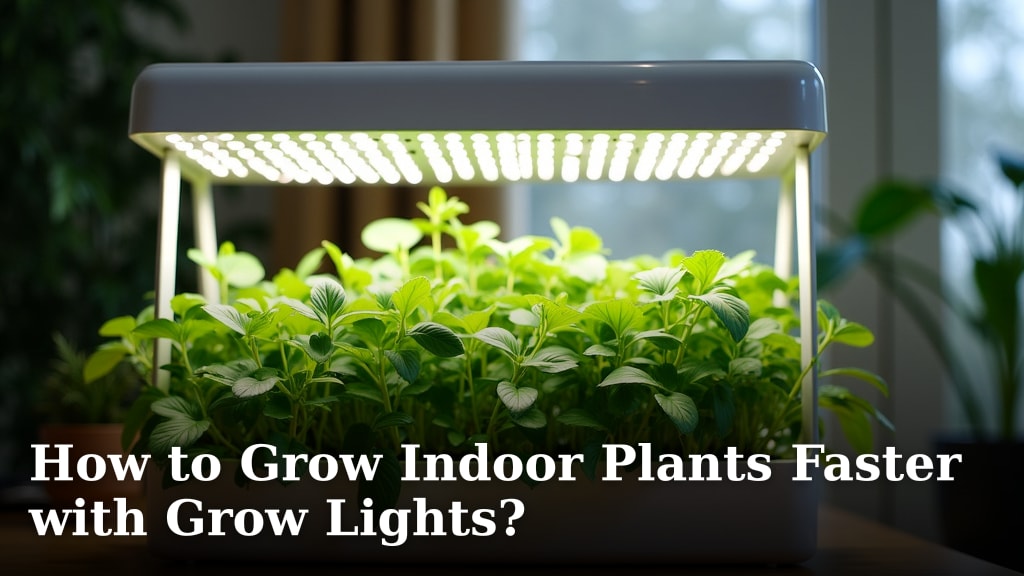
To grow indoor plants faster with grow lights, you need to provide the right intensity and spectrum of light. This boosts photosynthesis, helping your plants develop more quickly and robustly. It’s all about mimicking natural sunlight effectively.
Many indoor gardeners struggle with slow growth or leggy plants due to insufficient light. Grow lights offer a fantastic solution, letting you control their environment. We found that choosing the correct type and managing the light cycle are key for success.
- Grow lights speed up plant growth indoors.
- The right light spectrum and intensity are vital.
- Different plants need different light settings.
- Proper placement and timing maximize results.
- Avoid common mistakes for healthier plants.
Ready to give your green friends the boost they deserve? Let’s explore exactly how to choose and use grow lights for your indoor plants.
Accelerating Your Indoor Plant Growth with Smart Lighting
You want your indoor plants to thrive, right? Giving them the right grow lights is like giving them a superpower. This guide helps you choose and use lights effectively to boost their growth.
Understanding Light’s Role in Plant Development
Think of light as food for your plants. Through photosynthesis, plants convert light energy into the fuel they need to grow. Without enough light, they become weak and leggy, stretching for any available light source.
We found that sufficient light intensity and the correct light spectrum are critical. It’s not just about turning on a lamp. It’s about providing the specific light wavelengths your plants crave for healthy development.
The Science of Photosynthesis
Plants use chlorophyll, a green pigment, to capture light energy. This energy then powers a chemical reaction, turning carbon dioxide and water into glucose (sugar) and oxygen. More efficient photosynthesis means faster, stronger growth (National Institutes of Health).
Different parts of the light spectrum—colors like blue and red—trigger different responses in your plants. Understanding this helps you pick the best grow light for your green friends.
Choosing the Right Grow Light for Your Needs
With so many options, how do you pick? It can feel overwhelming, but we’ll break it down. Your choice depends on your budget, plant types, and how much space you have.
Types of Grow Lights Explained
Let’s look at the most common grow light technologies you’ll find:
- LED (Light Emitting Diode): These are very popular, energy-efficient, and last a long time. LEDs offer a wide range of spectrums, including full-spectrum options that mimic natural sunlight. They run cool, reducing the risk of heat damage to your plants.
- Fluorescent (T5, T8): A good budget-friendly option, especially for seedlings, young plants, or plants with low light needs. Fluorescent bulbs are less intense than LEDs or HIDs but are readily available.
- HID (High-Intensity Discharge): These include Metal Halide (MH) and High-Pressure Sodium (HPS) lights. MH lights are great for vegetative growth (blue spectrum), while HPS lights excel during flowering (red/orange spectrum). They are powerful but generate a lot of heat and use more energy.
Full Spectrum vs. Specific Spectrum Lights
What’s the difference? Full-spectrum lights provide a balance of red, blue, and sometimes green light, mimicking natural sunlight. They’re great for all stages of growth and are a safe bet for most indoor plants.
Specific spectrum lights, often seen as purple or pink, focus on blue and red wavelengths. Blue light encourages leafy, vegetative growth, while red light promotes flowering and fruiting. These are ideal if you’re targeting a specific growth stage, but they might not be as aesthetically pleasing in your living space.
Optimizing Light Intensity and Duration
It’s not enough to have a good grow light; you need to use it correctly. Think about how much sunlight your plants would get outdoors. You’re trying to replicate that.
Determining Light Intensity (PPFD)
Light intensity is crucial. Plants need enough light, but not too much. A common measure for grow lights is PPFD (Photosynthetic Photon Flux Density). This tells you how many photons capable of photosynthesis hit a specific area per second.
Generally, seedlings and low-light plants need lower PPFDs (100-200 µmol/m²/s), while flowering plants or high-light vegetables might need much higher levels (400-800 µmol/m²/s). Check your plant’s specific needs.
Too little light results in stretchy, weak growth. Too much can cause scorching or stress, just like a sunburn for your plants. If you notice your seedlings developing stretchy, weak growth, our guide on leggy seedlings under grow lights can help you troubleshoot.
Setting the Ideal Light Schedule
Plants need a day and night cycle, just like us. They don’t want 24/7 light. This “dark period” is vital for metabolic processes and rest.
We found that most indoor plants thrive with 12-16 hours of light per day, followed by a dark period of 8-12 hours. Leafy greens often prefer longer light periods (14-16 hours), while flowering plants may need a specific light cycle to trigger blooms (e.g., 12 hours light/12 hours dark).
A simple timer can automate this, making your life much easier and ensuring consistency for your plants.
Proper Placement and Setup of Your Grow Lights
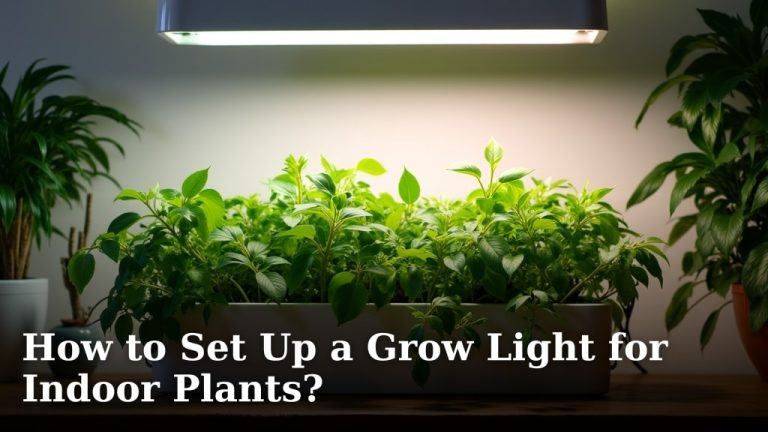
Where you put your light makes a big difference. Placement impacts intensity and how evenly the light reaches your plants.
Distance from Plants
This is often the trickiest part. The right distance depends on the type and power of your grow light. Too close, and you risk burning your plants; too far, and they won’t get enough intensity.
LEDs can usually be closer (6-18 inches) because they emit less heat. Fluorescents can be very close (4-12 inches). HIDs need to be further away (18-36 inches or more) due to their heat output. Always check the manufacturer’s recommendations for your specific light model.
Adjust as your plants grow. Seedlings need less intensity, so raise the light or dim it if possible.
Ensuring Even Light Distribution
Do all your plants get equal light? Often, plants in the center get more light than those on the edges. If your light coverage is small, consider rotating your plants every few days. This helps ensure all sides get some exposure.
For larger grow areas, you might need multiple lights or a larger light fixture to cover your entire plant collection evenly. We’ve seen many growers use reflective material (like Mylar) around their grow space to bounce light back onto the plants, maximizing efficiency.
Monitoring Plant Health and Adjusting Your Setup
Your plants will tell you if they’re happy or not. Learning to read their signals is key to success.
Signs of Too Much or Too Little Light
How do you know if your plants are getting the right amount?
- Too Little Light: Plants become “leggy,” stretching towards the light. Leaves might be small and pale, and lower leaves may yellow and drop. Growth will be slow or stunted.
- Too Much Light: Leaves might turn yellow or brown, look burnt, or develop crispy edges. They might also appear bleached or faded. Some plants curl their leaves or turn away from the light.
If you see these signs, make small adjustments to light distance or duration. Give your plants a few days to respond before making more changes.
The Importance of a Consistent Environment
Beyond light, don’t forget the other environmental factors. Grow lights can sometimes raise the temperature in your growing area. Ensure good air circulation with a small fan. This helps with gas exchange and prevents fungal issues.
Keep an eye on humidity and watering schedules. A well-lit plant will transpire more and might need more frequent watering. Think of the grow light as one piece of a larger puzzle for a happy indoor garden.
Essential Checklist for Faster Growth
Ready to supercharge your indoor garden? Here’s a quick checklist to guide you:
- Choose the right grow light type (LEDs are often best for beginners).
- Select a light with the correct spectrum for your plant’s growth stage.
- Ensure adequate light intensity (PPFD) for your specific plant varieties.
- Set a consistent light schedule (e.g., 14-16 hours light, 8-10 hours dark).
- Position lights at the correct distance to avoid burning or stretching.
- Monitor your plants for signs of light stress and adjust as needed.
Comparing Popular Grow Light Options
To help you visualize the differences, here’s a quick comparison of common grow light types:
| Light Type | Pros | Cons | Best For |
|---|---|---|---|
| LED | Energy-efficient, low heat, long lifespan, full spectrum available, customizable. | Higher initial cost. | All growth stages, seedlings, flowering, leafy greens. |
| Fluorescent | Low cost, low heat, good for beginners, easy to find. | Less intense, shorter lifespan than LEDs, limited spectrum options. | Seedlings, young plants, herbs, low-light plants. |
| HID (MH/HPS) | Very powerful, excellent for dense growth and flowering. | High heat, high energy use, shorter lifespan, bulky. | Large-scale growing, high-light demanding plants. |
Conclusion
You now have the knowledge to transform your indoor garden. By understanding light intensity, spectrum, and duration, you can create an optimal environment for your plants. Remember, it’s about replicating nature indoors. Use a timer, adjust light distances, and always listen to what your plants are telling you. With these steps, you’ll enjoy faster, healthier growth and a thriving green space.
Start experimenting with these tips today and watch your indoor plants flourish!
Frequently Asked Questions
Do I need a grow light for every indoor plant?
No, not every indoor plant requires a grow light. Many low-light tolerant plants, like ZZ plants or Pothos, can do well with natural ambient light. Grow lights are best for plants needing more light than your home naturally provides, or if you want to accelerate their growth.
Can I use a regular LED bulb as a grow light?
While a regular LED bulb provides light, it usually doesn’t offer the specific spectrum or intensity plants need for optimal growth. Grow lights are designed with a balance of blue and red wavelengths, which are crucial for photosynthesis. Regular bulbs might keep a plant alive, but won’t boost growth like a dedicated grow light.
How can I tell if my grow light is too strong?
If your grow light is too strong, you’ll see signs like yellowing or browning leaves, crispy edges, or bleached patches. Your plants might also curl their leaves or appear to be turning away from the light source. Reduce the intensity or increase the distance between the light and your plants.
Is it okay to run grow lights for 24 hours a day?
No, plants need a dark period to complete important metabolic processes, much like we need sleep. Running grow lights for 24 hours can stress plants and hinder their growth. Most indoor plants thrive on a schedule of 12-16 hours of light followed by 8-12 hours of darkness. Our article on growing plants with only artificial light further explains why plants need a dark period for healthy development.
Do different plants need different grow light setups?
Yes, absolutely. A small herb garden will have different needs than a fruiting tomato plant or a delicate seedling. Research your specific plant’s light requirements (like “full sun” or “bright indirect light”) and match your grow light’s intensity, spectrum, and duration accordingly. This ensures you meet their unique growth demands.