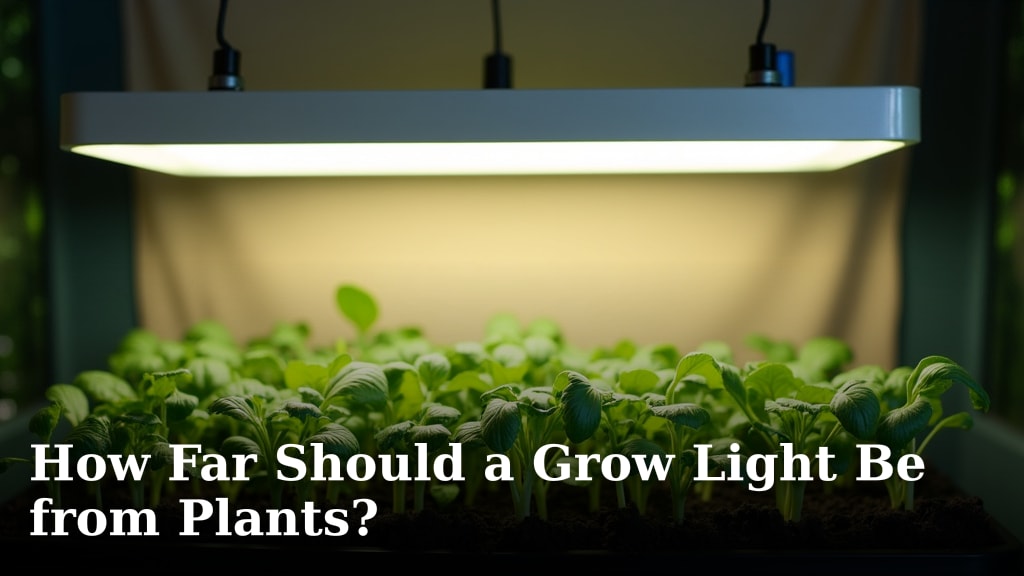
Figuring out how far should a grow light be from plants depends on the light type and plant stage. Generally, you want to get lights close enough for brightness but not so close they cause heat damage or stress.
You need to consider the wattage and intensity of your grow lights. Different plant growth phases also require varying light distances for optimal development. It’s truly a balancing act for healthy plants.
Grow light distance varies by bulb type.
LEDs can be closer than HPS or MH lights.
Seedlings need less intense light.
Flowering plants generally need more intense light.
Watch for plant stress signs like burning or stretching.
Let’s walk through exactly how to set up your grow lights for happy, thriving plants, step by step.
Optim
Conclusion
You’ve learned that getting grow light distance right is critical for plant health. It’s a dance between light intensity and plant needs. Remember to consider your specific light type, plant growth stage, and always watch for signs of stress. Too close means burning, too far means stretching.
By understanding these factors, you can provide ideal growing conditions. Don’t be afraid to adjust as your plants grow and mature. Your plants will reward you with robust growth and abundant yields.
Now, go put these tips into practice and observe your plants thriving under perfectly positioned lights!
Frequently Asked Questions
How do I know if my grow light is too close to my plants?
Look for signs of stress on your plants. Leaves might appear burned, yellow, or develop crispy edges. Stunted growth or bleaching of leaves can also indicate the light is too intense or too close.
What happens if my grow light is too far from my plants?
If your grow light is too far, your plants will “stretch” or become leggy. This means they develop long, weak stems as they reach for the light. This stretching results in less dense foliage and weaker overall plant structure.
Can I use a lux meter to measure grow light distance?
While a lux meter measures brightness, it’s not ideal for grow lights. Lux meters measure light as perceived by the human eye, not necessarily the spectrum plants need. PAR meters, which measure Photosynthetically Active Radiation, are more accurate for grow light setups.
Should grow lights be moved as plants grow?
Yes, absolutely. As your plants grow taller and bushier, you’ll need to adjust the light distance. Young seedlings need less intense light, while mature, flowering plants often tolerate and benefit from closer, more intense lighting. Regular adjustments prevent burning or stretching.
How often should I check my grow light distance?
You should check your grow light distance regularly, especially as plants go through different growth stages. During rapid growth phases, daily or every few days is a good practice. For established plants, a weekly check is usually sufficient to make minor adjustments.
GardenNJ is your trusted guide for practical gardening tools, outdoor equipment, and landscaping solutions. We review everything from beginner-friendly gardening tools and planters to home garden accessories and outdoor project gear, helping gardeners, homeowners, and outdoor enthusiasts create thriving gardens and outdoor spaces with confidence and ease.
The best indoor garden kits for cultivating fresh produce year-round include the Indoor Garden Hydroponics 10 Pods for beginner hydroponic growers, the URUQ 8 Pods Hydroponics System for its quiet…
The best hydroponic systems for beginners are those that offer simplicity, ease of setup, and automated features, such as the Ahopegarden 10-Pod Indoor Garden for new herb growers, the LETPOT…
The best planter pots for succulents prioritize excellent drainage, appropriate depth and width, and materials that allow for proper aeration, with top picks including Cute Ceramic Succulent Pots for aesthetic…
Your houseplant leaves are curling primarily because of stress, often from an imbalance in their environment. This stress can come from too much or too little water, improper light, or…
The best grow lights for succulents are those that provide optimal light spectrum and intensity without overheating, such as the Aokrean Halo Grow Light for small collections, the GooingTop Clip…
Many plants thrive in self-watering planters, especially those that prefer consistently moist soil, like ferns, African violets, and many herbs. We found that these planters are also great for plants…