What Can You Add to Improve Terrarium Lighting?
Useful things to add to your terrarium lighting include a small grow light, a timer, and a reflective surface. Choose accessories that fit the enclosure and the plants, and keep electrical parts away from water.
On this page (7 sections)
- What can you add to improve terrarium lighting?
- Which lighting accessories fit a small terrarium?
- How can you direct more light into a terrarium?
- Are light-up terrarium kits useful for plants?
- Do propagation stations need extra lighting?
- How do you add lighting without overheating a terrarium?
- What should you choose for better terrarium lighting?
Useful things to add to your terrarium lighting include a small grow light, a timer, and a reflective surface. Match them to the enclosure and plants, and keep electrical parts away from water.
First, decide whether the terrarium needs more plant light or simply a brighter display. A decorative lamp can make glass easier to see, but it may not provide the light your plants need.
What can you add to improve terrarium lighting?
A grow light is the most direct addition when a terrarium needs more light for plants. A timer can help keep the daily schedule consistent, while a reflector can direct more light toward the display.
The right choice depends on the plants, enclosure size, and existing light source. A closed glass terrarium can also trap heat and moisture, so watch the plants and enclosure after changing the lighting.
Useful additions include:
- A small LED grow light sized for the enclosure
- A timer compatible with the light
- A reflective surface placed behind or beside the terrarium
- A light stand or adjustable base that keeps the lamp in a steady position
Avoid adding several lights before checking the natural light already reaching the terrarium. Start with one change and observe the plants for signs of stress, such as bleaching or dry leaf edges.
Do you need a grow light for a terrarium?
Add a grow light if the plants are not getting enough suitable light in their current spot. The need varies by plant type and the amount of daylight in the room.
Many mosses and tropical foliage plants tolerate indirect light, while other plants may need brighter conditions. Check care guidance for the plants in your enclosure before choosing a light.
An enclosed setup can warm up under a lamp, especially if the light is close to the glass. Keep the light at a safe distance according to its instructions, and check for excess heat or condensation changes.
Can a timer help terrarium lighting?
A timer can turn a compatible light on and off on a regular schedule. This helps avoid leaving a grow light on all day by accident.
Set a schedule based on the plant’s needs and the light manufacturer’s guidance. A timer does not make an unsuitable lamp or placement safe, so keep the enclosure’s temperature and plant condition in view.
Which lighting accessories fit a small terrarium?
For a small terrarium, choose compact lights and accessories that do not crowd the enclosure. A light with an adjustable position can be easier to aim than a large fixture over a narrow container.
The AREPK Desktop Glass Plant Terrarium with Grow pairs a glass cylinder with an adjustable 10 W LED grow light and a rotating base. Its opening can also be adjusted to help manage humidity.
This setup may suit someone who wants a terrarium and its light together. Check the available space before placing it, and follow plant-specific guidance for light and humidity.
If you already have a terrarium, you may only need a separate lamp or timer. Browse the best desktop glass plant terrarium with grow light for a combined display option.
How can you direct more light into a terrarium?
Place a reflective surface behind the terrarium to bounce some room or lamp light back toward the glass. A light-colored wall or a simple reflective panel can serve this purpose without putting anything inside the enclosure.
Keep the surface outside the terrarium and avoid blocking ventilation or access. Reflected light is not a substitute for a grow light when the plants need stronger or more reliable illumination.
Move the terrarium gradually if you are testing a brighter spot. Direct sun through glass can heat an enclosure, so monitor temperature and moisture rather than assuming more brightness is always better.
Are light-up terrarium kits useful for plants?
A light-up kit can combine a display light with a planting activity, but check whether its light suits the plants you want to grow. A light designed for decoration may not serve the same purpose as a dedicated grow light.
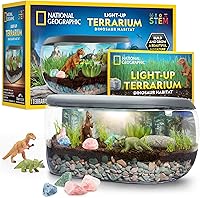
The Blue Marble National Geographic Light-Up Dinosaur Terrarium Kit includes a USB-powered light-up lid, chia and ryegrass seeds, a spray bottle, decorative materials, and a learning guide. Its lighted lid makes it a kid-focused indoor activity and display.
This kit may fit a family looking for a guided planting activity with a lighted display. For a different setup, see the best light up terrarium kit for kids and compare its activity features with your needs.
Do propagation stations need extra lighting?
A propagation station may benefit from brighter room light, but it does not need an enclosed terrarium lamp by default. Place water-rooted cuttings where they receive suitable indirect light, then follow care advice for each plant.
The Renmxj Plant Propagation Station has 3 clear glass vases in a compact tabletop stand. The removable vases let you change water or replace cuttings individually, and the clear glass makes roots and water levels easy to observe.
This station can suit readers who want to display several cuttings together. It has no included light, so consider a separate grow light only if the location does not provide enough suitable light.
How do you add lighting without overheating a terrarium?
Keep lights at the distance specified for the fixture and check the enclosure after you switch them on. A lamp that sits too close can add unwanted heat to a glass or plastic enclosure.
Keep plugs, cords, and timers away from watering and misting areas. Use electrical equipment according to its instructions, and avoid placing a light where condensation can drip onto connections.
If the terrarium starts to feel warmer or plants show stress, turn the light off and reassess its position and schedule. For a broader setup plan, follow how to grow a terrarium garden and check that drainage and watering suit the enclosure.
What should you choose for better terrarium lighting?
Choose a grow light when plants need more light, a timer when you want a regular schedule, and a reflector when you want to redirect existing light. For a ready-made display, the AREPK setup includes a grow light; for a kid-focused activity, the Blue Marble kit has a USB-powered light-up lid.
Measure the space and consider how light may affect heat and humidity before adding equipment. If your container lacks drainage, review how to improve drainage in a planter without holes as part of planning the growing setup.