How to Grow a Terrarium Garden
To grow a terrarium garden, choose plants that fit the container, add a thin drainage layer and suitable growing media, then balance light and moisture. Open terrariums suit plants that prefer drier air, while closed ones hold humidity for moisture-loving plants.
On this page (8 sections)
- What kind of terrarium container should you choose?
- Which plants work well together in a terrarium?
- What growing media should you use?
- How do you plant a terrarium garden?
- How much light does a terrarium need?
- How often should you water a terrarium?
- How do you keep a terrarium garden healthy?
- How do you grow a terrarium garden successfully?
To grow a terrarium garden, match small plants to the container, give roots a suitable growing mix, and control light and water. Open terrariums suit plants that prefer drier air, while closed containers hold humidity for plants that need a moist environment.
Start with a container you can reach for planting and care. Choose plants with similar light and moisture needs, then leave room for growth so leaves don't press against the glass.
What kind of terrarium container should you choose?
Choose an open container for plants that prefer drier conditions and a closed container for plants that thrive in higher humidity. The opening should be wide enough to place plants and remove dead leaves without damaging them.
Glass makes it easy to see the plants and the moisture inside. A narrow opening can make planting and trimming harder, especially when you are learning how to grow a terrarium garden.
For a kit with built-in illumination, compare a best terrarium kit with light option before choosing. For a compact display, see these best desktop glass plant terrariums with grow lights.
The AREPK desktop glass terrarium is designed for small plants, mosses, succulents, and miniature landscapes. Its glass cylinder measures 9.8 in high and 5.9 in across, so choose plants that can stay small in that space.
Which plants work well together in a terrarium?
Pick plants with similar needs for light, water, and humidity. Mixing a moisture-loving plant with one that needs dry conditions makes it harder to care for both in the same container.
Small ferns and other humidity-loving plants can suit a closed terrarium. For open containers, look for compact plants that tolerate lower humidity, such as some succulents; avoid crowding them together or keeping their roots constantly wet.
Check the plant's expected size before planting. A plant that quickly outgrows the glass can block light, press against neighboring leaves, or make trimming difficult.
What growing media should you use?
Use a clean, free-draining growing mix suited to your plants, rather than ordinary garden soil. A terrarium has limited space and often little or no drainage, so a heavy or constantly wet mix can leave roots sitting in excess moisture.
A simple base can include a thin layer of pebbles, a small amount of horticultural charcoal, and a suitable potting mix above it. The pebbles give excess water a place to collect, but they don't drain it out of a container without a hole.
Keep the layers modest so the roots have room. Use enough mix to cover the roots, and avoid packing it tightly around them.
Should you add rocks to a terrarium?
A thin layer of pebbles can help separate collected water from the growing mix in a container without drainage holes. It cannot prevent overwatering, so use only a small amount of water and check the base for pooling.
Decorative stones can also add color, but keep them clear of plant stems. Too much decoration reduces the space available for roots and growing media.
How do you plant a terrarium garden?
Plant a terrarium by adding the base layers, setting plants at their original root depth, and leaving space between them. Arrange taller plants toward the back or center so smaller ones remain visible.
- Clean and dry the container.
- Add a thin drainage layer and, if desired, a little horticultural charcoal.
- Add enough growing mix to cover the roots.
- Place each plant, gently firming the mix around its roots.
- Add a small amount of water, then check for standing water.
- Place the terrarium in suitable light and monitor its moisture.
Remove dead or damaged leaves as you see them. Keep foliage from pressing against the glass, where moisture can linger and make it harder to spot problems.
How much light does a terrarium need?
Most terrarium plants do best in bright, indirect light. Strong direct sun can heat glass and raise the temperature inside, especially in a closed vessel.
Start with a bright spot away from harsh sun and observe the plants. Pale, stretched growth can mean the light is too weak, while scorched or faded leaves may signal too much direct light.
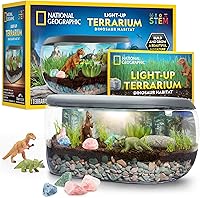
A grow light can help when a bright indoor spot isn't available. This light-up terrarium kit for kids includes an illuminated lid and seeds for a small indoor growing project.
The Blue Marble National Geographic kit also includes a spray bottle, pebbles, gemstones, a faux succulent, dinosaur figures, and a reversible backdrop.
If your plants need more light, explore things to add to your terrarium lighting for ideas on improving the setup.
Can you use a grow light for a terrarium?
Yes, a grow light can support plants when natural light is limited. Follow the light's instructions for placement and use, and check leaves and growing media regularly to see how the plants respond.
The AREPK terrarium includes a 10W LED grow light with adjustable lighting modes. Its opening can also be rotated to adjust airflow and humidity, which may help when growing plants with different moisture needs.
How often should you water a terrarium?
Water only when the growing mix needs it, since a terrarium can hold moisture for longer than an open pot. Add a little at a time and stop if water begins to pool at the bottom.
A closed terrarium may need less frequent watering because moisture stays in the container. If the glass stays heavily fogged or the mix looks saturated, open the lid to let excess humidity escape and wait before watering again.
An open terrarium loses moisture faster, so check the mix more often. Use a small pour or spray rather than soaking the roots.
For cuttings that root in water, a separate propagation vessel is easier to manage than soil in a terrarium. The Renmxj station has three clear glass vases for observing water levels and developing roots.
Pothos, philodendron, ivy, lucky bamboo, and some herbs are suitable examples for water propagation. The plants are not included, so use healthy cuttings from plants you already have.
How do you keep a terrarium garden healthy?
Keep a terrarium healthy by checking moisture, trimming dead growth, and making sure plants have enough space and light. A quick weekly look can help you catch crowded leaves or excess water early.
Remove fallen leaves before they decay in the container. If a plant grows too large, trim it or move it to another pot rather than letting it crowd the rest of the garden.
Clean the inside glass when it becomes hard to see through. Use a soft cloth and avoid leaving cleaning products where they can reach the soil or plants.
If you want to grow more plants vertically in a small room, see how to grow an indoor vertical garden. For a broader indoor setup with lighting and growing supplies, compare the best indoor garden kit.
How do you grow a terrarium garden successfully?
For how to grow a terrarium garden, choose an open or closed container to match the plants, use a suitable growing mix, and water lightly. Bright, indirect light and regular checks help you adjust care as the plants settle in.
Choose the AREPK glass terrarium if you want a small display with adjustable light and humidity. Pick the Blue Marble kit for a child-friendly growing activity, or use the Renmxj station when your goal is rooting cuttings in water.
Frequently asked questions
What plants grow well in a terrarium?
Small plants that share similar needs for light and moisture are the easiest to grow together. Closed terrariums often suit humidity-loving tropical plants, while open containers work better for plants that prefer drier air.
Check each plant's mature size, since a fast-growing plant can crowd a small glass vessel.
Do terrariums need drainage holes?
A glass terrarium often has no drainage hole, so use a modest drainage layer and water sparingly to limit standing water around roots. A layer of pebbles does not remove excess water from the container; it simply gives some water a place to collect below the growing media.
How much light does a terrarium garden need?
Most terrariums need bright, indirect light, but the right amount depends on the plants inside. Keep glass away from harsh direct sun, which can heat the enclosed space.
If natural light is weak, a grow light can help, but follow the light's directions and watch for leaf stress.
How often should you water a terrarium?
Water based on the moisture in the growing media, not a fixed calendar. Add a small amount when the surface begins to dry, and stop if water pools at the bottom.
A closed terrarium may need water less often than an open one because moisture stays inside and cycles back.