
Why Are My Grow Light Plants Not Flowering?
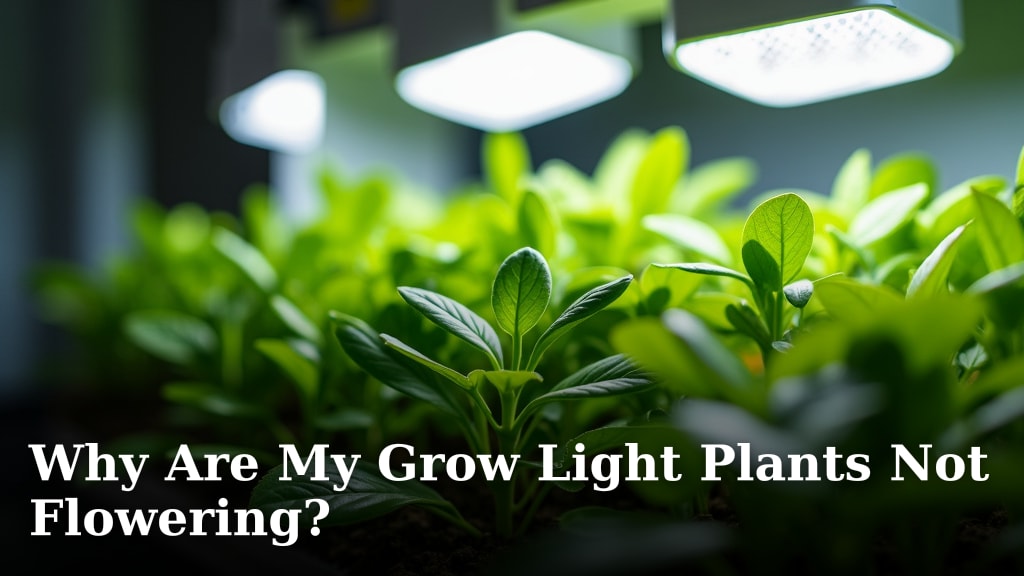
Your grow light plants aren’t flowering because they aren’t getting the right light spectrum or duration. Plants need specific light conditions to trigger blooming. This usually means a shift in light color and a change in how many hours of light they receive each day. Proper light is key for flowering.
Many factors can prevent flowering, and light is often the main culprit. Your plants might be too young, or they could be lacking certain nutrients. Stress from pests or improper watering can also play a role. But before you worry too much, let’s focus on the most common issue: your grow lights.
- Incorrect light spectrum (color)
- Wrong light duration (hours of light/darkness)
- Plant is too young
- Nutrient deficiencies
- Environmental stress
Let’s walk through exactly why your grow lights might be holding back your plants from their blooming potential, and what you can do about it.
“`htmlWhy Your Grow Lights Aren’t Triggering Flowering
It can be disheartening when your leafy friends are thriving under your grow lights, but simply won’t produce those beautiful blooms you’re hoping for. Often, the issue lies directly with the light itself. Let’s get to the root of why your grow light plants might be stubbornly refusing to flower.
Think of flowering like a plant’s personal “coming of age” moment. It’s a response to specific environmental cues, and light plays the starring role. If those cues are off, the plant just doesn’t get the signal that it’s time to reproduce.
Understanding Plant Light Needs for Blooming
Plants have very specific requirements when it comes to light for flowering. It’s not just about brightness; it’s about the type of light and how long they get it each day. Different stages of a plant’s life need different light recipes.
The Spectrum: Color Matters More Than You Think
You might have heard that light has a “spectrum.” This refers to the different colors of light within it. Plants use specific colors for different processes. For vegetative growth (leaves and stems), blue light is often dominant. But for flowering, plants typically need more red light.
Red Light’s Role in Flowering
Red and far-red light are particularly important for triggering the hormonal changes that initiate flowering. Many full-spectrum grow lights include red wavelengths, but the intensity and ratio of red light can make a big difference. If your light is too heavy on blue, your plants might stay in their leafy, vegetative state longer than you want.
What to Look for in Grow Light Spectrum
When choosing or evaluating grow lights for flowering, look for lights that are described as “full spectrum” but also have a good representation of red wavelengths. Some lights are specifically designed for the flowering stage and will clearly state this. This often means they have a warmer, more reddish or pinkish hue.
Photoperiodism: The Plant’s Internal Clock
This is a fancy term for how plants respond to the length of day and night. For many plants, flowering is triggered by specific durations of light and darkness. This is where your grow light schedule becomes critical.
Short-Day vs. Long-Day Plants
Plants are generally categorized by their light response:
- Short-day plants: These plants flower when the nights are long and the days are short. Think of them as needing a prolonged period of darkness. Examples include poinsettias and chrysanthemums. They often need 12 hours or less of light per day to bloom.
- Long-day plants: These plants flower when the days are long and the nights are short. They require a certain minimum number of hours of light to initiate flowering. Examples include spinach and some varieties of lettuce. They typically need more than 12 hours of light per day.
- Day-neutral plants: These plants aren’t affected by day length and will flower based on maturity or other environmental factors. Tomatoes and cucumbers are common examples.
The Importance of Uninterrupted Darkness
For short-day plants, that period of darkness is sacred. Even a little bit of light creeping in can disrupt the plant’s signal and prevent flowering. So, if you’re using a timer, ensure it’s accurate and that your grow tent or room is truly dark during the “night” cycle. We found that even a small light leak from a power strip can sometimes be enough to confuse sensitive plants (American Society for Horticultural Science).
Checking Your Grow Light Setup
Let’s put your current setup under the microscope. Sometimes, small adjustments can make a world of difference. You’re aiming for the right environment to encourage your plants to think, “Okay, it’s time to make flowers!”
Are Your Lights Strong Enough?
Flowering plants often need a bit more light intensity than vegetative plants. If your light is too weak, or too far away from your plants, they might not have enough energy to initiate the demanding process of flowering.
Light Intensity (PPFD)
The metric often used is PPFD (Photosynthetic Photon Flux Density). While you don’t necessarily need to buy a special meter, researching the recommended PPFD for your specific plant species during flowering can be very helpful. Many manufacturers will list the PPFD their lights produce at certain distances.
Distance from Canopy
Grow lights generate heat, and this heat can sometimes necessitate keeping the lights a certain distance away. However, if your lights are too high, the intensity reaching the plants will be significantly reduced. Check the manufacturer’s recommendations for your specific light model regarding optimal hanging height for both intensity and heat management.
Timer Accuracy and Consistency
If you’re using a timer for your grow lights, this is often the culprit for photoperiod issues. Timers can sometimes malfunction, get unplugged, or simply be set incorrectly.
Double-Checking Your Schedule
Take a moment to confirm your timer settings. Are you giving your plants the correct number of hours of light and darkness based on whether they are short-day, long-day, or day-neutral? For example, if you have a short-day plant and your timer accidentally leaves the light on for 13 hours, you’ve just created a long-day environment for it.
Preventing Light Leaks
As mentioned earlier, interruptions in the dark cycle are a major no-no for short-day plants. Make sure your grow space is completely light-proof during the “night.” This means sealing any gaps, cracks, or openings where external light could seep in.
Beyond Light: Other Factors Affecting Flowering
While light is usually the primary suspect, other environmental and care factors can certainly influence your plants’ ability to flower. It’s wise to consider these as well.
Nutrient Balance
Plants need a balanced diet. During the flowering stage, they often require more phosphorus and potassium, and less nitrogen, compared to the vegetative stage. Using a “bloom” or “flower” specific nutrient solution can help provide these necessary elements.
Too Much Nitrogen
If you’ve been feeding your plants a high-nitrogen “grow” formula for too long, it can encourage lush, leafy growth but discourage flowering. Nitrogen is like plant fertilizer for leaves; too much can mean the plant is too busy growing green things to think about making flowers.
Micronutrients and Additives
Don’t forget about the micronutrients! While needed in smaller amounts, they are vital for plant processes, including flowering. Sometimes, specific bloom-boosting additives can help, but always follow recommended dosages to avoid nutrient burn.
Plant Age and Maturity
Sometimes, the simplest answer is the right one: your plant might just not be old enough to flower yet! All plants have a natural life cycle, and they need to reach a certain level of maturity before they are capable of producing flowers and seeds.
Patience is a Virtue
Different species and even different strains within a species will have varying maturity timelines. If your plant looks healthy and robust, but hasn’t started flowering, it might just need more time. Research the typical flowering time for your specific plant variety.
Environmental Stressors
Plants under stress are less likely to invest energy into reproduction. Common stressors include:
- Temperature extremes: Too hot or too cold can halt flowering.
- Improper watering: Both overwatering and underwatering cause significant stress.
- Pests and diseases: A plant battling an infestation has bigger problems than flowering.
- Rootbound conditions: If the roots have nowhere to grow, the plant’s overall health can suffer.
Addressing any underlying stress factors is essential for overall plant health, which in turn supports successful flowering. We found that consistent environmental conditions are key for many flowering plant species (Gardening Know How).
Quick Checklist for Flowering Issues:
- Confirm your grow light’s spectrum has adequate red light for flowering.
- Verify your light timer is accurate and set for the correct photoperiod.
- Ensure total darkness during the “night” cycle for short-day plants.
- Check that your light is at the optimal distance for intensity.
- Review your nutrient solution – switch to a bloom formula if needed.
- Consider if your plant is simply too young to flower.
Conclusion
It’s frustrating when your plants under grow lights refuse to bloom. Remember, flowering is often triggered by specific light conditions. You’ve learned that the spectrum and duration of your grow lights are the most common culprits. Pay close attention to the red light wavelengths and your light/dark cycles. By adjusting your light setup and ensuring your plants are mature and unstressed, you can help them reach their full flowering potential. Your next step is to carefully review your grow light settings and make those adjustments based on what you’ve learned today.
Frequently Asked Questions
My plants are getting 12 hours of light, why aren’t they flowering?
If your plants are short-day bloomers, 12 hours of light might not be enough dark time. They need longer nights to trigger flowering. Ensure your dark period is truly uninterrupted for 12-14 hours. For long-day plants, 12 hours might be too short; they may need more like 14-16 hours of light.
Can the color of my grow light really affect flowering?
Yes, absolutely. Plants use different light colors for different stages. For flowering, they often need more red and far-red light wavelengths than blue light. Too much blue light can keep them in a vegetative state, delaying blooms.
My grow lights are bright, but my plants still won’t flower. What else could it be?
While brightness is important, it’s not the only factor. Ensure your light is the right spectrum for flowering and that your timer is accurately controlling the light and dark periods. Also, consider the plant’s age, nutrient balance, and any potential environmental stresses.
How do I know if my plant is a short-day or long-day plant?
You’ll need to research the specific plant species or strain you are growing. Many common flowering plants like poinsettias and chrysanthemums are short-day bloomers, while others like spinach or some lettuce varieties are long-day bloomers.
Is it possible my grow lights are too close or too far away?
Yes, light intensity can be affected by distance. If your lights are too far, the intensity reaching your plants might be too low for flowering. If they’re too close, they could cause heat stress, which also hinders blooming. Check the manufacturer’s recommendations for the optimal hanging height for your specific lights.
