Do Grow Lights Give Off Heat?
Yes, grow lights give off heat, but the amount depends on the type. LEDs run coolest, fluorescents run warm, and older high-intensity lamps run hottest, so spacing and airflow matter more than the watt number alone.
On this page (11 sections)
- Do grow lights give off heat in every type?
- Do LED grow lights give off heat, and how much is normal?
- How do fluorescent grow lights compare on heat?
- What about hotter grow lights and enclosed spaces?
- Do grow lights put out heat that raises room temperature?
- How far should grow lights sit from plants to limit heat?
- Which products help you manage light and heat together?
- How do you keep plants safe when grow lights run hot?
- How do you choose the right grow light for your heat limits?
- Do grow lights produce heat you can use in winter?
- Bottom line on whether do grow lights give off heat
Yes, grow lights give off heat in every type, but LEDs give off the least at plant level. The heat at a leaf depends on lamp type, distance, and how trapped the air is.
That helps you plan a setup. A small LED panel above seedlings is a different problem from a fluorescent tube on a shelf or a hot lamp in a closed tent.
Do grow lights give off heat in every type?
Yes, every grow light gives off some heat because no lamp turns all of its power into visible light. The rest leaves as heat at the bulb, housing, or driver.
LEDs waste the least power as heat, so they feel coolest at the canopy. Fluorescents waste more, and older high-intensity lamps create the most heat.
Fixture heat may rise away from plants, while heat trapped in a tent builds up. The same light can feel fine in an open room and too warm in a cabinet.
Do LED grow lights give off heat, and how much is normal?
LED grow lights do give off heat, but the heat at the leaves is usually modest at the suggested height. The driver and back of the panel often feel warmer than the light facing the plant.
Check our guide on do led lights get hot for how LED heat builds at the fixture. Cool at the canopy does not mean cool at the housing.
LED heat still matters in a small enclosed space over 14 to 18 hours. Leave room for air to move above the light and around the sides.
Judge heat by leaf condition, soil drying, and air temperature near the canopy. If the room feels stuffy, raise the light a little or add gentle airflow.
How do fluorescent grow lights compare on heat?
Fluorescent grow lights give off heat at a middle level, and the tube can feel warm after an hour or more. T5 high-output tubes are common for shelves and seed starts.
The SunBlaster SL0900304 54 Watt 6400K 4' 120V Hydroponic Grow Light Lamp Ballast Fixture with NanoTech T5HO Reflector for Indoor Home Gardens and Plants is a 4-foot T5 fixture. SunBlaster says fixtures can sit 6 to 8 inches above the canopy, and the reflector spreads light wider and deeper.
That close spacing helps seedlings, but heat sits near tender leaves. Check air at leaf level, not just at the tube, and add space if leaves curl or dry at the edges.
A small fan on low can move warm air off the shelf without blowing directly on plants. Gentle flow helps more than moving the light closer for brightness.
What about hotter grow lights and enclosed spaces?
Hotter grow lights put out heat that can stress plants fast in a tent, cabinet, or closet. The problem is the trapped air around the lamp as much as the lamp itself.
In an open room, warm air rises and mixes. In a closed space, it stays and stacks, so leaves lose water faster and soil dries out.
How do you tell heat stress from light stress?
Heat stress often shows as curling, drooping, dry edges, and soil that dries too fast. Light stress more often shows as pale or bleached leaves at the top.
Both can happen together when a hot lamp sits too close. Raise the light first, then check again after a few hours.
When does a tent need extra airflow?
Your tent needs extra airflow when the air near the canopy feels warm and still after an hour of lights. A small fan across the top of the canopy breaks up hot pockets.
Do not aim a strong fan straight at seedlings all day. Move room air through the space instead.
Do grow lights put out heat that raises room temperature?
Yes, grow lights can raise room temperature, and the rise is bigger in small or closed spaces. In a large open room, the change may be only a degree or two.
A shelf under lights for 16 hours warms the shelf, wall, and nearby air all day. That warmth fades slowly at night, which can keep the area warmer than the rest of the room.
That warm spot can help cool-loving plants in winter. It can harm seedlings or herbs in summer that prefer mild air, and a wall thermostat may not show it.
Use a thermometer at canopy height and compare readings with and without lights on. A steady gap of a few degrees tells you to adjust height or airflow.
How far should grow lights sit from plants to limit heat?
Distance is the main control for heat at the plant. More space between lamp and leaves means less heat and less intense light.
Less space makes both rise fast.
Start with the maker’s height range for your exact fixture. Then watch plants for a full day.
Leaves that stay green and grow toward the light are a good sign.
Seedlings need special care because small roots hold little stored water. A warm tube close above them can dry the surface quickly, so raise the light slightly and water at the base when the top feels dry.
Tall plants create a mixed canopy, so prune tall growth or move shorter plants lower. Heat control and light control work best together.
Which products help you manage light and heat together?
The right tool depends on your problem. A light meter helps with intensity, a T5 fixture helps with close shelf lighting, and a terrarium hood suits a different setup.
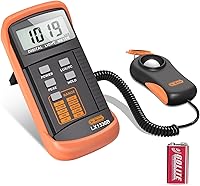
The Dr.meter Digital Illuminance Light Meter 0-200,000 Lux Range Lux Meter reads 0 to 200,000 lux and toggles between FC and LUX. It gives fast readings twice per second and has a PEAK button to lock in the highest reading.
Use a meter when you move a light up to reduce heat. You may lower heat but also drop light below what the plant needs, and a reading at leaf level shows the trade-off.
It also helps in corners and under shelves, where spots often read far darker than the room feels. That makes placement easier where light and heat both suit plants.
How do you keep plants safe when grow lights run hot?
Plant safety comes down to space, airflow, and daily checks at leaf level. No single fan or height works for every room.
Start at a safe height and run a short test. Touch the air near the canopy, not the fixture, and look at leaves after a few hours and the next day.
Warm air dries soil faster, so check moisture more often. Water at the base and remove excess from saucers, since wet leaves under a hot lamp can spot more easily.
What safety checks matter around hot fixtures?
Keep cords, housings, and hot tubes out of reach of people and pets. Read guidance on are grow lights safe for humans and Are Grow Lights Safe for Pets? before use in shared rooms.
Never rest paper, fabric, or dry leaves against a warm fixture. If a fixture smells burnt, flickers, or gets too hot to be near, switch it off and check it.
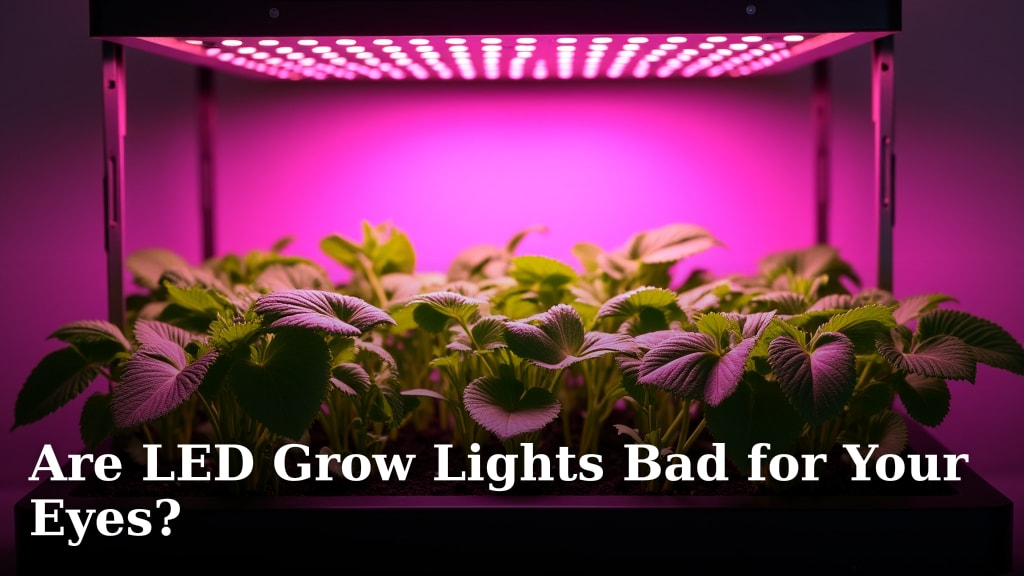
Eye comfort matters too under bright lights. Our guide on Are LED Grow Lights Bad for Your Eyes? covers viewing habits and light direction.
How do you choose the right grow light for your heat limits?
Choose by lamp type, space size, and how close the light must sit to the canopy. LEDs suit hot rooms and closed tents best.
Fluorescents suit shelves and seed starts where close light is useful.
A terrarium setup is a special case. The Zoo Med 5.0 T5-HO 14" Terrarium Hood with ReptiSun T5 HO 5.0 UVB Lamp is built for reptile enclosures, with a 14-inch hood, low-profile design, and curved reflector.
A low hood sits close to the top of an enclosure, so air space is tight. For plants, a higher fixture with open air around it gives more control.
Check our picks for Top 7 Watt LED Grow Light and the second roundup at Top 7 Watt LED Grow Light if you want lower-heat options. Compare wattage, size, and mounting before you buy.
Do grow lights produce heat you can use in winter?
Grow lights produce heat you can use as a small bonus, but you should not plan on them as a heater. The warmth is local, uneven, and tied to the light schedule.
In winter, a shelf may benefit from a couple of warmer degrees during the day. That warmth fades at night, and a cold room can still chill roots after dark.
Use heat as a side benefit, not the main plan. Keep plants away from cold windows and drafts, or move the shelf to an inner wall.
In summer, reverse the thinking. Raise lights, open a nearby window, or shorten the cycle if needed, since plants care about the full day.
Bottom line on whether do grow lights give off heat
Do grow lights give off heat? Yes, and LED types give off the least heat at plant level, while fluorescents run warmer and older lamps run hottest.
Distance and airflow decide how much reaches your leaves.
Pick LEDs for a tent, cabinet, or warm room. Pick a T5 fluorescent for close light over seedlings if you can watch spacing daily.
Use a meter when you change height, so cooler air does not mean weak light.
For your next step, check how do led lights get hot at the fixture, then set height and airflow before you add more plants.
Frequently asked questions
Do LED grow lights give off heat?
Yes, LED grow lights give off heat at the fixture and driver, but far less at the plant canopy than older lamps. Most of the heat rises upward, so good spacing and room airflow keep leaves in a safe range without extra cooling.
Do grow lights raise room temperature?
Grow lights can raise the temperature in a small closed space, especially over long light cycles. A tent or cabinet traps warm air, while an open room disperses it.
Ventilation and a gap between light and canopy help control the rise.
How close can a grow light sit to a plant?
Distance depends on type and power, not on a single rule for all lights. Fluorescent fixtures often sit 6 to 8 inches above a canopy, while hotter lamps need more space.
Watch for leaf curl, bleaching, or dry edges and adjust height.
Can grow light heat hurt pets or people?
Hot fixtures can burn skin on contact and dry the air in a small space. Keep cords and hot surfaces out of reach, and check safety guidance such as are grow lights safe for humans before use near people.