Are Grow Lights Safe for Humans?
Most common household grow lights are not considered harmful to humans when used as directed, but bright light can strain eyes, heat can burn skin, and damaged fixtures can be a fire or shock risk. Keep lights out of direct eye view, mount them firmly, and follow the maker instructions for distance and airflow.
On this page (9 sections)
- Are grow lights safe for humans in a normal room?
- Can grow lights give you sunburn?
- Are plant grow lights harmful to humans through long exposure?
- Is grow light harmful to your eyes?
- Do grow lights give off heat that can burn you?
- Are grow lights dangerous as household fixtures?
- Will grow lights fade fabric and furniture in a living space?
- How do you choose a safer grow light setup for your home?
- What final safety checks should you run before daily use?
Most common household grow lights are not considered harmful to humans when used as directed, but bright light can strain eyes, heat can burn skin, and damaged fixtures can be a fire or shock risk. Keep lights out of direct eye view, mount them firmly, and follow the maker instructions for distance and airflow.
Are grow lights safe for humans as a room feature? Separate the light itself from the fixture.
The light can be bright and hot, while the fixture adds cord, mounting, and heat risks.
Are grow lights safe for humans in a normal room?
Normal room use is low risk when the light points at plants, not at people. Most plant lights are built to run for many hours beside desks, shelves, and windows.
Risks rise with close range, long direct views, and enclosed spaces. A bar light on a shelf at eye level is different from the same light aimed across a shelf of herbs.
Think about time and distance. Short passes through a lit area are different from sitting under a bright fixture for work or reading.
Children and pets may get closer than adults to plants. Place fixtures so small hands and paws cannot touch hot tubes or pull cords.
See also Are Grow Lights Safe for Pets? for room sharing checks.
Can grow lights give you sunburn?
Most plant grow lights will not give you sunburn because they do not send out much UVB. That is the UV band most tied to skin reddening.
Some lamps are the exception. Reptile UVB lamps send out UVB on purpose, and a few discharge lamps can leak more UV than a standard LED or fluorescent plant light.
The Hood below is a good example of why lamp type matters. It includes a ReptiSun T5 HO 5.0 UVB lamp, and Zoo Med says it provides UVB, UVA, and visible light for reptiles.
That purpose is not the same as a general plant light.
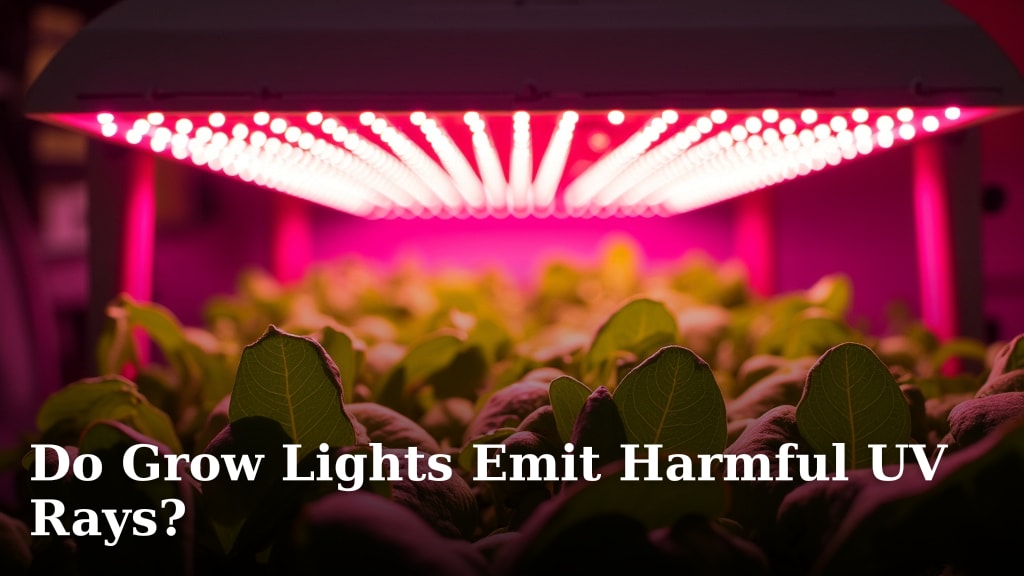
If a lamp is made for reptiles, follow its distance and exposure instructions for animals, and do not use it as a general room light where people sit close for long periods. Our guide on Do Grow Lights Emit Harmful UV Rays? explains which lamp types send out more UV.
Are plant grow lights harmful to humans through long exposure?
Long exposure to bright visible light can harm comfort and sleep, even when skin is not burned. Glare can cause eye strain, headaches, and trouble winding down at night.
Blue rich plant lights can feel harsh in the evening. Many plant lights run on a 12 to 16 hour schedule, so a room can stay bright long after sunset.
That matters in bedrooms, living rooms, and home offices. A timer helps plants, but you still need a plan for people who use the space after dark.
Dimming, pointing lights down, and keeping them off bedroom walls can reduce evening light spill. If you work under a light, an indirect setup is easier on the eyes than a direct overhead bar.
If symptoms such as pain, vision changes, or severe headaches occur, stop the exposure and seek medical advice. This post is general information, not medical advice.
Is grow light harmful to your eyes?
Direct eye exposure is the most common concern for home growers. Bright LEDs and tubes can cause glare, squinting, and temporary afterimages.
Do not stare into a lit grow light to check color or brightness. Look at the plant surface instead, and judge the setup from the side.
Sunglasses are not a fix for a poorly placed fixture. A shade, a higher mount, or a new angle will do more to protect your eyes during normal room use.
Eye safety also depends on lamp type. Some UVB and discharge lamps call for eye protection, while many standard plant LEDs do not.
Read the maker instructions for the exact lamp you own.
A light meter can help you set brightness at plant height without standing under the fixture. The Dr.meter meter below reads from 0 to 200,000 lux and switches between FC and LUX.
Dr.meter says the meter gives fast readings 2 times per second and has a PEAK button for brief high intensity sources. It runs on a 9V battery and measures 4 x 1 x 8 inches, so it fits in a drawer with other plant tools.
Do grow lights give off heat that can burn you?
Yes, some grow lights give off heat that can burn skin on contact. The amount depends on lamp type, wattage, housing, and how close you mount it.
LED lights usually run cooler than older lamps, but cords, drivers, and housings can still get warm. Tubes and ballasts can also heat up during long runs.
Our post on do grow lights give off heat breaks down heat by lamp type. For skin safety, the key point is simple: do not touch a lit fixture to test it.
The SunBlaster fixture below is a 54 watt, 4 foot T5 high output fixture with a NanoTech reflector. SunBlaster says fixtures can be placed 6 to 8 inches above the plant canopy for strong growth response.
That close mounting distance is for plants. People should keep hands, hair, and loose sleeves away from the tubes and reflector during use.
SunBlaster says the reflector can extend lamp and ballast life by reducing heat, but safe spacing still matters.
Are grow lights dangerous as household fixtures?
Fixture safety is separate from light safety. A cord, plug, mount, or timer can be the weak point in an otherwise normal setup.
Check for frayed cords, cracked housings, loose mounts, and plugs that feel hot. Replace damaged parts instead of taping over them or pushing a loose plug back into an outlet.
Keep fixtures away from water. Do not hang a light where a misting bottle, watering can, or humidifier can drip into the housing or plug.
Timers and power strips add convenience, but they also add load. Use only the outlets and strips the maker allows.
The SunBlaster fixture above includes a power cord, jumper plug, and hanging and flat surface mounting clips. SunBlaster says up to 8 units can link from a single power cord, so follow that limit and check each connection before use.
For a broader household check, read are grow lights dangerous for mount, cord, and timer checks.
Will grow lights fade fabric and furniture in a living space?
Light that fades fabric can make a room feel harsh as well. Curtains, sofas, rugs, and artwork near a plant light may fade over time.
That risk grows with brighter light, longer hours, and close distance. A shelf light aimed at a plant can spill onto a chair right beside the shelf.
Move light sensitive items back a few feet and rotate cushions and throws. Use shades or reflectors to keep light on the plant canopy.
Our related guide on will grow lights fade fabric and furniture explains the trade offs by material.
Fading is also a prompt to measure light where people sit, not only where plants grow. If a reading at a chair is very high, the setup may be too bright for comfort as well as for nearby fabrics.
Use a meter to compare plant height with seat height. The Dr.meter meter above can lock a reading with the PEAK button, which helps when you move quickly between spots.
How do you choose a safer grow light setup for your home?
Choose the lamp type for the job, then place it for people as well as plants.
Start with the plant need, because seed starting, herbs, leafy greens, and flowering plants need different brightness and hours. We compared options in What Is the Best Grow Light for Indoor Plants? and How to Choose the Right Grow Light for Your Plants?, so use those guides to set output before you mount anything.
Mount the fixture above eye level when possible. Angle it down at the canopy, use the maker distance for plants, and keep people out of the direct beam for work or seating.
Provide airflow around the fixture. Do not use do led lights get hot as a reason to touch a housing, because warm parts can still burn after a long run.
Add a timer, check cords monthly, and keep water away from plugs. Those habits do more for household safety than buying a brighter bulb.
Pick a meter for proof of brightness at plant height. Skip a UVB reptile hood for general plant use unless you truly need UVB, because that lamp type adds a UV risk category most plants and people do not need.
What final safety checks should you run before daily use?
Run a short check before the first full day of use. Confirm the mount holds the fixture at the maker distance, with no sway when you nudge a shelf.
Confirm the cord runs away from water, heat vents, and walk paths. Plug the fixture in, let it run, and check that plugs and cords stay only warm, not hot, with no smell or buzzing.
Stand in the room at normal times. If you need to squint, move the fixture, add a shade, or aim it down more.
If a chair is too bright for reading, the light is likely spilling beyond the plant area.
Check the timer for the right hours, then set a reminder to recheck cords and mounts each month. Replace tubes or lamps at the maker interval, not only when they fail.
For homes with animals, check reach and cords too. Pets can knock a shelf light, chew a cord, or sit close to a warm fixture, so use a firm mount and a cord route out of reach.
Are grow lights safe for humans? For most home growers, the answer is yes when you treat brightness, heat, UV type, and cords as separate checks.
Frequently asked questions
Can grow lights give you sunburn?
Most indoor plant lights do not give sunburn because they emit little to no UVB, but UVB reptile lamps and some unfiltered discharge lamps can. If skin feels warmth or redness after exposure, move away, let skin cool, and seek medical advice for pain, blistering, or eye symptoms.
Are plant grow lights harmful to humans?
Plant grow lights are generally low risk for people when mounted above eye level and used for normal room periods, because most are designed for plants, not direct body exposure. Bright visible light can still cause eye strain, headache, or sleep disruption, so limit direct viewing time.
Is grow light harmful if I look at it every day?
Daily brief glances are usually less of a concern than long staring sessions, but direct views of bright LEDs, tubes, or bulbs can cause temporary glare and afterimages. Avoid staring, use shades or indirect placement, and wear glasses only if a maker recommends them for that lamp type.