Regular Fluorescent Lights vs Grow Lights: Which Is Better? (October 2026)
Choose a dedicated grow light when you need plant-focused features or a setup for demanding growth; regular fluorescent lights can work for seedlings and foliage plants when placed close enough. The right choice depends on the plant, coverage and fixture you have.
On this page (8 sections)
- Regular fluorescent lights vs grow lights: what is the difference?
- Which light suits seedlings and foliage plants?
- When is a dedicated grow light the better choice?
- Can shop lights work as grow lights?
- How should you compare fluorescent tubes and LED grow lights?
- What should you check before using either light?
- Which should you choose: regular fluorescent lights or grow lights?
- How we score these lighting options
Choose a dedicated grow light when you need plant-focused features or support for light-demanding growth; regular fluorescent lights can work for seedlings and foliage plants when placed close enough. The right choice depends on your plants, fixture and coverage area.
Ordinary fluorescent tubes give broad white light for general use. A grow light is designed for plant lighting and may add spectrum modes, dimming or a timer, but the label alone doesn't tell you whether it suits your plants.
Regular fluorescent lights vs grow lights: what is the difference?
Regular fluorescent lights are general-purpose fixtures; grow lights are built around plant needs. Their usefulness depends on the light reaching the leaves, how long it runs and which plants you grow.
A regular fluorescent tube may be a sensible choice for a shelf of seedlings or lower-light foliage if you already have a compatible fixture. A dedicated lamp can be easier to aim and adjust, especially when plants have different needs or you want timer controls.
The LUXRITE F32T8/841 is a 48 in, 32W fluorescent tube with 4100K cool white light and a G13 base. It fits T8 fixtures, not T12 fixtures, so check the fixture type before choosing it.
A dedicated option such as the LEOTER offers 3 spectral modes and 10 dimming levels, along with 4 adjustable heads. That gives you more ways to aim and change light than a basic tube fixture.
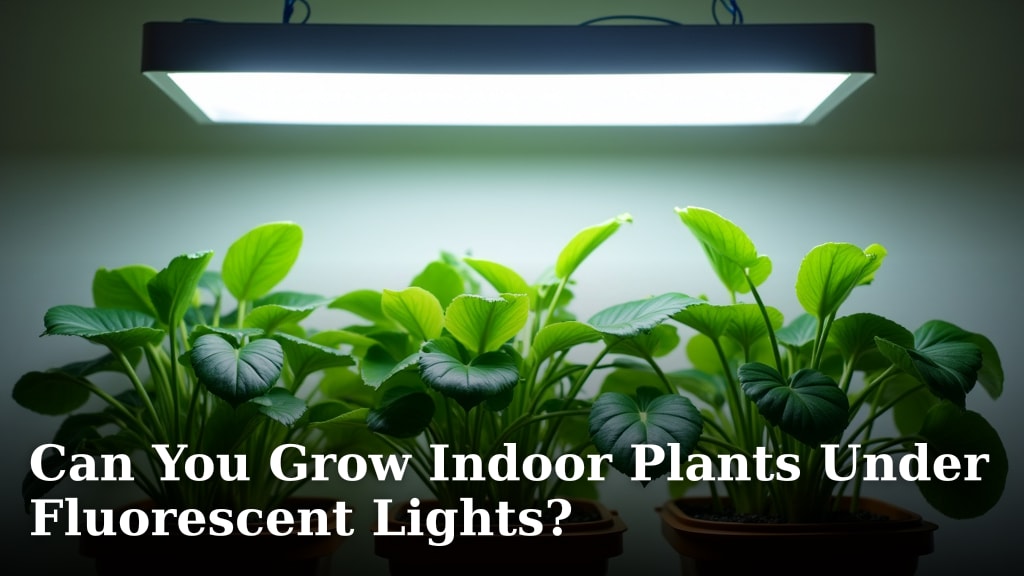
For the basic question of whether household tubes can help plants, see Can You Grow Indoor Plants Under Fluorescent Lights?.
Which light suits seedlings and foliage plants?
Regular fluorescent lights can suit seedlings and many foliage plants when the tubes are close to the leaves and cover the growing area. A long tube fixture can spread light across a shelf more evenly than a single small lamp.
Compare T5 fluorescent grow lights for plant focused tube options.
Seedlings often benefit from light close above the tray, so new stems don't stretch toward a distant source. Keep the tubes close, but leave room for air circulation and avoid letting leaves touch hot components.
Foliage plants vary in their light needs. A fluorescent setup can work for plants that tolerate moderate indoor light, but a dim corner or a tube mounted far above the leaves may not provide enough.
If plants lean strongly toward the fixture, develop long weak stems or stop making healthy new growth, check light distance, daily duration and plant placement. Those signs can have other causes too, so look at watering and temperature as well.
The best fluorescent grow light options can help if you want to keep a fluorescent setup but need a fixture made for plant use.
When is a dedicated grow light the better choice?
Choose a dedicated grow light when you need adjustable placement, spectrum settings or a lamp that serves a small group of plants. These features can make it easier to adapt the setup as plants grow.
The GooingTop Grow Light has 10 red and 74 white LEDs, a flexible gooseneck and a clamp. Its timer has 4, 8 and 12 hour settings, and it can be dimmed to 50% or 100%.
A dedicated light can also be useful when a plant needs more than the ambient room light or when you can't position a tube fixture close to the leaves. Choose by coverage and placement, not by the word “grow” alone.
For a comparison of two common grow light technologies, read What Is the Difference Between LED and Fluorescent Grow Lights?.
Can shop lights work as grow lights?
A shop light can work for some plant setups if it provides enough usable light across the leaves and can be positioned close enough. Its use for plants depends on the fixture and your growing goals.
A long shop light may cover a shelf or seed-starting tray better than a small clamp lamp. Still, a general-purpose shop fixture may lack spectrum controls or a timer, so you may need to manage placement and schedule yourself.
If you already own a shop light, test its fit with the space and monitor plant growth before adding another fixture. Our guide to shop lights as grow lights explains what to check.
How should you compare fluorescent tubes and LED grow lights?
Compare coverage, placement, controls and fixture compatibility before comparing light labels. A tube and a clamp lamp solve different layout problems.
The JESLED T8 LED tube is 4 ft long, uses 24W and provides 3200 lumens at 6000K. It can be installed with a ballast or by bypassing the ballast, subject to compatibility, but it is a general replacement tube rather than a dedicated grow light.
This type of tube may suit an existing long fixture. It won't offer the same positioning flexibility as a gooseneck lamp, and its installation requirements matter before you replace a fluorescent tube.
A dedicated lamp like the LEOTER or GooingTop can be aimed at a compact plant group, while a fluorescent or LED tube can cover a longer shelf. For more help choosing among lamp types, use How to Choose the Right Grow Light for Your Plants?.
For an overview of grow light bulb types, see our guide.
What should you check before using either light?
Match the lamp to your fixture, plant spacing and growing area before plugging it in. Confirm socket and ballast compatibility for tubes, then follow the manufacturer's installation directions.
Keep lamps away from water and place cords where they won't be pulled by pots or trays. Don't use a fixture outdoors or in a damp area unless it is rated for that setting.
Set a consistent daily schedule and watch how plants respond. A timer can simplify the routine, but the right duration varies by species and growth stage.
When considering ordinary household bulbs, see Can You Use Regular LED Lights to Grow Plants?. The same principle applies: bulb type is only one part of whether the light can meet a plant's needs.
Which should you choose: regular fluorescent lights or grow lights?
Choose regular fluorescent tubes for a simple, close-lit shelf with plants that don't need intense light; choose a dedicated grow light for adjustability and plant-focused features. If you're converting an existing fixture, first check tube size, socket and ballast compatibility.
For an existing T8 fixture, the LUXRITE tube is a straightforward fluorescent option. For a small plant group that needs adjustable direction and modes, the LEOTER or GooingTop offers more control.
A long LED tube can suit a fixture conversion when compatibility checks out, while a compact clamp light fits a desk or shelf. Choose based on your plants' needs, the space you can light and the setup you can maintain.
How we score these lighting options
Our score weighs specs and features against the needs of someone comparing fluorescent fixtures with plant-focused lights.
The LUXRITE tube ranks highest for a compatible T8 setup, while the adjustable grow lamps score well for small areas where positioning and controls matter. The JESLED tube offers a general lighting conversion option, with fixture compatibility to verify.
Frequently asked questions
Can regular fluorescent lights grow plants?
Yes, regular fluorescent lights can support seedlings and many foliage plants when the tubes are close to the leaves and run for a suitable daily period. They may be less useful for plants that need stronger light or flowering support.
Watch new growth and adjust the setup if stems stretch or growth slows.
Are grow lights better than fluorescent lights?
Dedicated grow lights can offer plant-focused spectrum options, dimming or timers, while ordinary fluorescent fixtures can be a lower-cost way to use an existing setup. Neither label alone guarantees enough light.
Match the fixture's coverage and placement to the plant's light needs.
How close should fluorescent lights be to plants?
Keep fluorescent tubes close enough to give plants useful light, while leaving room for air movement and avoiding leaf contact. There is no single distance for every tube and plant.
Check the plant's response over time, and move the light if growth becomes stretched or leaves show stress.
Can fluorescent lights grow flowering plants?
They can contribute light, but ordinary fluorescent fixtures may not provide the intensity or coverage a flowering plant needs through its full growth cycle. A dedicated grow light with adjustable output or plant-focused modes can be easier to match to that task.
Check the plant's specific light needs before choosing.
Can you replace a fluorescent grow light with an LED tube?
Sometimes, if the LED tube fits the fixture and its ballast or wiring setup is compatible. Tube installation types differ, so confirm the exact fixture requirements before replacing anything.
A general LED replacement tube also may not provide the controls or coverage of a dedicated grow light.