How to Lower Your Grow Tent Carbon Footprint
Lower your grow tent carbon footprint by reducing wasted heating and cooling, controlling humidity only when needed, and using ventilation efficiently. Start with the tent size, seal gaps, clean filters, and automate climate equipment so it runs only when conditions require it.
On this page (7 sections)
- How does tent size affect your carbon footprint?
- Can better ventilation lower a grow tent carbon footprint?
- How can you reduce electricity used by climate equipment?
- Does cooling equipment increase a grow tent carbon footprint?
- How does humidity control prevent wasted energy?
- Can better monitoring lower energy use?
- What should you change first?
To lower your grow tent carbon footprint, cut wasted electricity, control humidity and temperature by measurement, and improve airflow before adding stronger equipment. Small changes in runtime often matter more than a slightly stronger device.
That approach suits growers with a tent already in place and those planning a new setup. The same habits help you choose fan, light, and cooling sizes from the start.
For combined climate equipment, see the grow tent heater and humidifier guide. It helps you plan heating and humidity together instead of buying each device separately.
The most useful gains come from right-sizing the tent, reducing leaks, cleaning filters, and avoiding unnecessary runtime. A tent that holds conditioned air well asks less of every other piece of equipment.
Daily use makes the difference clear. A fan on full speed, a dehumidifier running all day, or a heater cycling in a leaky space will use power even when conditions are already in range.
Start by checking how the tent behaves across light and dark periods. Note when heat or humidity climbs and which device is running at each point.
Your growing space also affects the room around it. Heat and damp air do not disappear at the tent wall, so the room needs a clear path for intake and exhaust.
Review the grow tent equipment guide before changing fans, ducting, lighting, or cooling as a group. Planning those parts together helps you avoid fixing one issue while creating a new energy demand elsewhere.
Trade-offs still matter. More airflow can cool better but can also pull in warm room air, while stronger cooling can help plants and raise power use.
How does tent size affect your carbon footprint?
A correctly sized tent needs less conditioned air and less equipment capacity. An oversized tent can waste energy cooling or dehumidifying empty space, while an undersized tent may force equipment to run harder.
Size affects daily use in quiet ways. A larger tent can mean longer duct runs and more air to move, while a cramped tent can block airflow around plants and make heat or moisture build up faster.
Measure the growing area, the room around it, and the path for intake and exhaust air. Choose equipment for the actual space instead of buying the largest fan, air conditioner, or dehumidifier available.
Think about who the fit suits most. A compact setup often suits a small grow area and simpler equipment, while a larger tent needs more careful planning for lights, airflow, and room space.
Keep the tent closed during normal operation. A damaged zipper, loose duct opening, or torn fabric can let conditioned air escape and make climate equipment run longer.
Closing the tent is part of care, not just setup. Check zippers, seams, and duct openings during routine checks, and fix small gaps before they turn into constant wasted runtime.
A clean grow tent liner can also make the space easier to maintain. Choose a liner that fits the tent and does not block vents, zippers, or access points.
A good fit keeps airflow and access clear while still helping the interior stay tidy. That balance supports lower energy use because equipment does not have to fight needless leaks or blocked paths.
Measure again after any change to tent size or layout. The right size is the one your current plants, room, and exhaust path can support without excess capacity.
Can better ventilation lower a grow tent carbon footprint?
Efficient ventilation removes heat and moisture without exchanging more air than the plants need. Start with a clear intake path, a clean filter, and ducting with as few bends and restrictions as practical.
Place the exhaust path so warm, damp air leaves the growing area without immediately returning through the intake. If the tent sits in a small room, consider how the room itself handles the added heat and humidity.
Do not assume the highest fan setting is the most efficient setting. Increase airflow when heat or humidity rises, then reduce it when the conditions return to your target range.
Keep intake and exhaust openings clear of fabric, storage boxes, and loose ducting. A blocked filter can increase resistance and make the fan work harder while moving less useful air.
How can you reduce electricity used by climate equipment?
Run equipment only when the measured condition requires it. Use temperature and humidity readings to guide changes instead of relying on a fixed schedule that ignores the room and plant stage.
Group equipment by purpose. A fan moves air, a dehumidifier removes moisture, and an air conditioner removes heat while also offering fan and dehumidification modes on some models.
Avoid running two devices that cancel each other out.
Inspect filters and vents on a regular schedule. Dust and plant debris can reduce airflow, increase runtime, and make a climate problem look larger than it is.
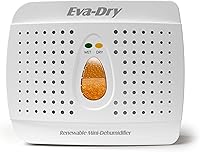
A small moisture absorber may help in a limited space where active dehumidification would be excessive. The Eva-Dry Wireless Mini Dehumidifier is designed for areas up to 333 cubic feet, absorbs up to 6 ounces, and uses a renewable cordless moisture-absorbing system.
The E-333 measures 6.25 in deep, 1.25 in wide, and 4.75 in high. It can hang from its included hanging hook or sit in a suitable location, and its silica gel beads need recharging after the moisture indicator changes.
Use it as a targeted option for a small space, not as a replacement for active dehumidification across a large grow room. Keep the unit accessible so you can check its indicator and recharge it when needed.
Does cooling equipment increase a grow tent carbon footprint?
Cooling can reduce plant stress from excess heat, but it also adds a major electrical load. First reduce heat at the source by checking light schedules, airflow, filter condition, and room temperature.
Place the tent in a room that can handle the heat released by the exhaust. If the room becomes too warm, the tent may need more cooling even when its own ventilation is working correctly.
The BLACK+DECKER Portable Air Conditioner provides 9,000 BTU of cooling power, with a 5,300 BTU SACC rating, and is designed for rooms up to 400 square feet. It also works as a fan and dehumidifier, includes a window installation kit and remote control, and has a washable filter.
This unit measures 15.3 in wide, 14 in deep, and 24.8 in high. Its 24-hour timer and sleep mode can help limit unnecessary runtime, while the window kit gives the exhaust hose a defined path outside the room.
Use the smallest effective cooling setting and keep the washable filter clean. Do not cool an open or leaking tent and expect efficient results.
Check the room layout first, because a portable air conditioner still needs space for airflow and exhaust.
How does humidity control prevent wasted energy?
Humidity control works best when you reduce moisture before switching on a dehumidifier. Watering practices, plant spacing, airflow, drainage, and room ventilation can all change the moisture load.
Avoid leaving standing water in trays or around the growing area. Keep irrigation contained, allow surfaces to dry as appropriate, and make sure exhaust air has somewhere useful to go.
A controller can prevent a dehumidifier from running continuously. A grow tent humidity controller can automate that switch.
The Inkbird Humidity Controller IHC200 measures from 5% to 99.99% relative humidity, controls from 5% to 99% RH, and has an accuracy of plus or minus 3% RH.
The IHC-200 includes a control panel, 2 sockets, and a humidity probe. It supports automatic humidification and dehumidification modes, uses a digital display, and operates at 120 volts AC.
Place the probe where it represents the plant area, away from a direct mist stream, wet surface, exhaust outlet, or hot light. Set a reasonable target range and allow a buffer so the controlled equipment does not switch on and off too often.
The controller is not a substitute for correct wiring or equipment limits. Check the connected device and keep the total load within the controller's stated power limits.
Can better monitoring lower energy use?
Monitoring helps you find waste before buying more equipment. Record temperature and humidity at different times of day, including the light period and the dark period.
Look for patterns. A humidity spike after watering may call for better timing and airflow, while a steady rise during the whole day may point to room ventilation or an undersized dehumidifier.
A camera can make remote checks easier when you need to see whether a fan is running, a duct has shifted, or a visible leak has appeared. Use the best grow tent camera options as a starting point, then place the camera where it can observe the equipment without blocking airflow.
Mounting also matters. Keep cables and camera hardware away from wet surfaces and hot equipment, and use grow tent mounting bars if your setup needs a stable attachment point.
What should you change first?
Start with low-energy fixes before adding powered equipment. Seal leaks, clean filters, shorten restricted duct runs, move heat-producing equipment outside the tent when practical, and measure the room as well as the plants' space.
Next, automate only the equipment that solves a measured problem. The Inkbird controller suits humidity switching, the Eva-Dry unit suits a small moisture problem, and the BLACK+DECKER unit suits a room that needs portable cooling with fan and dehumidification functions.
A carbon filter can affect fan resistance and exhaust planning. If odor control is part of the setup, compare the best carbon filters for grow tents and check the airflow needs before choosing a fan.
For a fresh setup, the best grow tent kits can help you compare the tent, ventilation, and accessory choices together. Still measure the room and plan the exhaust path before installing anything.
Lowering a grow tent carbon footprint is mainly a sizing and runtime decision. Use the smallest effective equipment, control it from real measurements, and improve airflow before increasing power.
Frequently asked questions
What is the biggest way to lower a grow tent carbon footprint?
Reduce wasted electricity first. Match the grow tent size to the growing area, use efficient lighting, keep ventilation paths clear, and control humidity or cooling equipment with measured settings.
Avoid running fans, dehumidifiers, or air conditioners continuously when the tent already sits within your target range.
Does better ventilation reduce a grow tent carbon footprint?
It can reduce wasted energy when the airflow matches the tent and room. Keep ducting short and clear, clean filters, seal unwanted gaps, and avoid exhausting conditioned room air without a plan.
Stronger airflow is not always better if it creates unnecessary heating or cooling demand.
Should a grow tent use a dehumidifier?
Use a dehumidifier when humidity stays above your chosen range after improving watering, spacing, and airflow. A small cordless moisture absorber may suit a limited damp area, while a larger room problem may need active equipment.
Measure first so you do not add power use without solving the cause.
Can automation reduce grow tent energy use?
Yes. A humidity controller can switch compatible humidification or dehumidification equipment as conditions change, instead of leaving both devices running continuously.
Set a reasonable target range, allow a small buffer, and check the probe position so the controller responds to the tent rather than a hot or wet corner.