How to Choose a Grow Tent Heater and Humidifier
Choose a grow tent heater and humidifier by matching output to tent volume, then control both with accurate sensors. Add dehumidification when humidity stays high after watering or lights-out.
On this page (10 sections)
- How to Choose a Grow Tent Heater and Humidifier
- What should a grow tent heater and humidifier control?
- How do you match equipment to tent size?
- Which controller should manage both temperature and humidity?
- When is a humidity-only controller enough?
- When should you add a dehumidifier?
- How should you place the heater, humidifier and probes?
- How do you avoid unstable humidity?
- What should you check before buying?
- Which grow tent heater and humidifier setup fits your space?
How to Choose a Grow Tent Heater and Humidifier
Choose a grow tent heater and humidifier setup by tent volume, room conditions and the humidity range your plants need. For a wider view of temperature control, see grow tent heating and cooling.
A heater corrects low temperature, a humidifier corrects dry air, and a controller helps prevent both devices from running too long.
Start by measuring the tent and checking the room temperature when the lights are off. A small tent in a warm room needs less heating than the same tent in a cold basement.
Your equipment should also fit the available outlets and airflow pattern. Keep warm air and mist from blowing directly at leaves, sensors or electrical connections.
For a wider look at fans, controllers and moisture tools, see our grow tent equipment guide.
What should a grow tent heater and humidifier control?
A grow tent heater and humidifier should respond to temperature and relative humidity readings near the plant canopy. The goal is steady conditions, not constant operation.
Temperature and humidity near the canopy tell you more than readings at the floor or near the tent door. Warm air can collect at the top, cool air can settle low, and mist can make one corner feel wetter than the leaves actually are.
Lights add heat during the day, and that heat fades when the lights go off. The temperature drop at night can make the same air hold less moisture, so humidity may rise even when no humidifier is running.
Plants also release water through their leaves as they grow. Watering, wet soil and a crowded canopy can add moisture through the day, while dry soil and strong exhaust can pull moisture out again.
That is why a heater and humidifier work best when they follow measured conditions. A fixed timer may run equipment when it is not needed and leave it off when the canopy is already too cold or too dry.
Set a temperature range with enough room between the on and off points to prevent rapid cycling. A narrow gap can make a heater switch on and off in quick bursts, which can create uneven heat around the plants.
Use the same approach for humidity. Leave a sensible spread between the point where the humidifier starts and the point where it stops, so the air has time to mix before the equipment reacts again.
If the humidifier starts every few minutes, move the sensor, reduce the target range, or improve air mixing. Short cycles often mean the probe is sitting in a pocket of mist or dry air rather than in the air the plants are actually using.
Avoid placing the humidity probe in the mist stream or in direct heater flow. A wet probe can read higher than the surrounding air, and a probe in warm moving air may report conditions that do not match the canopy.
Check readings during both light and dark periods before you settle on settings. Watch the trend rather than chasing a single number, and take notes for a few days after setup, including when equipment runs and how the canopy feels.
How do you match equipment to tent size?
Match equipment to the tent's air volume and the room around it, rather than choosing by tent size alone. A heater that suits a cold room may overshoot in a warm room, while a small humidifier may struggle against dry ventilation.
Calculate tent volume by multiplying length, width and height. Use the result as a comparison point, then consider how often fresh air enters and whether the tent sits in a conditioned room.
A humidifier's useful output depends on the moisture already in the room. Frequent exhaust can remove humidified air before it reaches the target, while a sealed setup may gain humidity quickly.
For more humidifier options, compare our best humidifiers for grow tents and best tall plant humidifier choices.
What heater size is suitable?
Choose a heater that can raise the tent temperature without creating a strong hot spot. Smaller output with thermostat control is often easier to manage than a large heater that runs in short, intense bursts.
Keep the heater on a stable, nonflammable surface. Leave clearance around the intake and outlet, keep cords away from water, and inspect the plug before each growing cycle.
Use a separate thermometer during setup. Compare its reading with the controller's sensor at canopy height before trusting the automatic schedule.
Your grow light also adds heat. Read our guide on How to Choose the Right Grow Light for Your Plants? before sizing supplemental heat.
What humidifier size is suitable?
Choose a humidifier that can raise humidity gradually while the tent's ventilation is running. Oversizing can create wet surfaces, while undersizing may leave the unit running continuously.
Use clean water and follow the humidifier's care instructions. Empty standing water, clean the reservoir on schedule and keep mist away from electrical equipment.
A compact humidifier may suit a small tent, but a taller plant canopy can change where moisture needs to travel. For nearby rooms and plant shelves, see Best Plant Humidifier For Indoor Plants and best small plant humidifier options.
Which controller should manage both temperature and humidity?
A controller with separate temperature and humidity functions is the most flexible choice when one tent needs heating and moisture control. It can coordinate equipment around measured conditions instead of fixed timer blocks.
The Inkbird Temperature and Humidity Controller ITC-608T Pre-Wired includes a temperature probe and humidity probe, with WORK1 for a heating or cooling device and WORK2 for a humidifier or dehumidifier.
Its temperature range is minus 40 to 212 °F, and its humidity range is 5 to 99% RH. It supports calibration, Fahrenheit or Celsius readings, automatic setting saves and a compressor delay.
The ITC-608T is rated for 120 V, 15 A and 1,800 W. Check the combined electrical plan before connecting equipment, and keep the controller away from mist and spills.
Its dimensions are 1.37 in deep by 8.1 in wide by 3.34 in high. The metal and plastic controller is wall-mounted and uses corded electric power.
Choose this model when you want temperature and humidity handled together. If you only need humidity control, a simpler controller may be easier to set up.
Our best temperature and humidity controller guide covers more ways to compare this type of equipment.
When is a humidity-only controller enough?
A humidity-only controller is enough when temperature is already stable or managed by a separate thermostat. It can simplify a tent where the main problem is dry air, excess moisture or both.
The Inkbird Humidity Controller IHC200 Humidistat for Mushroom Greenhouse measures from 5 to 99.99% RH and controls from 5 to 99% RH.
It has a digital display, a humidity probe and 2 sockets. Its stated accuracy is plus or minus 3% RH, with 1% RH resolution.
The IHC200 supports automatic humidification and dehumidification modes. Its sensor cable is 6.56 ft long, which can help place the probe near the canopy while keeping the control panel outside the wettest area.
The controller uses 120 V AC and has a maximum power output of 10 A at 100 to 240 V AC. Confirm that your connected equipment stays within the controller's limits.
Choose it when humidity is the main variable. If your heater and humidifier need coordinated temperature and humidity control, the ITC-608T offers the broader setup.
For sensor-focused comparisons, see best humidity controller for grow tent.
When should you add a dehumidifier?
Add a dehumidifier when humidity remains high after ventilation, spacing and watering adjustments. Persistent moisture can also appear when the room is damp or the temperature drops after lights-out.
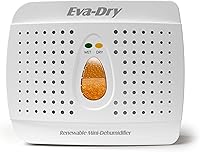
The Eva-Dry Wireless Mini Dehumidifier is a compact moisture absorber for areas up to 333 cubic feet. It holds up to 6 oz and uses renewable silica gel beads.
The Eva-Dry E-333 is white plastic and measures 6.25 in deep by 1.25 in wide by 4.75 in high. It weighs 1.5 lb and includes a hanging hook.
It needs no batteries or cord during use. The beads can last about 20 to 30 days before recharging, depending on moisture conditions, and the unit can be hung or placed on a stable surface.
This is best suited to a small space with modest moisture load. It is not a substitute for correcting heavy condensation, poor airflow or a humid room that overwhelms a compact absorber.
For smaller enclosed setups, compare best small dehumidifier for grow tent. A larger moisture problem may call for best dehumidifier for grow tent.
How should you place the heater, humidifier and probes?
Place equipment so air mixes before it reaches the sensor or plant canopy. Direct heat can dry leaves, and direct mist can create a false humidity reading or wet nearby surfaces.
Keep the heater away from tent fabric, cords, water and foliage. Do not cover its intake or outlet.
Place the humidifier where mist can disperse through moving air. Do not aim mist at the controller, light fixtures, power strips or the tent wall.
Mount or position the probe at canopy height. Keep it out of direct light, heater flow, exhaust flow and humidifier mist.
Use a small circulating fan to reduce hot and damp pockets. A fan should mix air without constantly blasting the plants or drying one side of the canopy.
Step back after placement and check leaves, fabric and nearby surfaces for dry edges, damp spots or pooling water. Move equipment a little at a time, then watch the canopy for a full light cycle before making another change.
How do you avoid unstable humidity?
Avoid unstable humidity by changing one factor at a time and watching the reading through both light and dark periods. Large swings often come from poor probe placement, excessive mist, rapid exhaust or a wet growing surface.
Check the sensor against another hygrometer during setup. A second reading can show whether the controller is seeing canopy conditions or a local pocket of air.
For simple monitoring, compare a best digital hygrometer probe. Remote monitoring may suit a plant room, so review best digital bluetooth hygrometer and best wifi digital hygrometer.
If the tent is in a room with several plants, the room itself may affect the tent. See best plant humidifier for small greenhouse and best large humidifier for plants when the surrounding space needs moisture control.
What should you check before buying?
Check tent volume, room temperature, humidity swings, electrical limits and maintenance needs before choosing equipment.
Use this short checklist:
- Measure the tent's length, width and height.
- Record the lowest room temperature during the dark period.
- Record humidity near the canopy during both light and dark periods.
- Decide whether you need heating, humidification, dehumidification or all 3.
- Check each device's voltage, current and wattage limits.
- Plan safe cord routes away from water.
- Leave access for cleaning, refilling and recharging.
- Choose a controller that matches the number of devices you need to manage.
Tent volume gives a starting point for comparing equipment. A tall tent holds more air than a short tent with the same footprint, so height matters as much as width when you judge how much heat or moisture a space will need.
Room temperature matters because the tent does not sit on its own. A tent in a cold garage, basement or spare room near an outside wall will lose heat faster than one in a warm interior room.
Record the lowest room temperature during the dark period, since that is often when heating needs rise. A heater that seems fine in the evening may struggle after lights-out if the room cools through the night.
Record humidity near the canopy during both light and dark periods as well. Morning readings can differ from evening readings after watering, plant activity and changes in ventilation.
Decide whether you need heating, humidification, dehumidification or all 3. Some spaces need heat and moisture at different times, while others only swing toward dry air or only stay damp after watering.
Check each device's voltage, current and wattage limits before you buy. The controller, heater, humidifier and any fan or dehumidifier should all fit the electrical plan you have in mind.
Plan safe cord routes away from water. Keep connections dry, avoid cords crossing wet floors or dripping paths, and leave enough slack that routine cleaning does not pull a plug loose.
Leave access for cleaning, refilling and recharging. A humidifier that is hard to reach may sit with dirty water or an empty reservoir, and a heater tucked behind plants can be harder to inspect.
Match the controller to the number of devices you need to manage. Do not choose by maximum range alone, as a controller still needs accurate placement and sensible target settings.
Think about care as part of the purchase, not as an afterthought. Compare readings at canopy height with a separate thermometer or hygrometer during a short test period, then adjust placement or targets before the plants are fully settled in.
Which grow tent heater and humidifier setup fits your space?
Choose the Inkbird ITC-608T when one controller needs to coordinate heating and humidity equipment. Choose the Inkbird IHC200 when humidity is the main concern and temperature already has separate control.
The ITC-608T suits a grower who wants temperature and humidity handled from one panel. It can manage heating or cooling through one outlet and humidification or dehumidification through another.
The IHC200 suits a simpler humidity problem. It is a better fit when temperature stays stable or a separate thermostat already handles heat.
Choose the Eva-Dry E-333 for a small space with modest excess moisture, especially where a cordless absorber is easier to place than another powered appliance. It will not correct a large tent, a wet room or heavy condensation on its own.
For a humidifier, size matters more than extra features. A unit that is too small may run without reaching the target, while a unit that is too large can push humidity up too fast and leave surfaces damp.
A controller helps either choice stay in bounds. It can start and stop equipment based on readings and reduce the risk of a heater or humidifier running for hours without a check.
Match the setup to the space you actually have. A small tent in a warm room may need light humidity control and little heat, while a tent in a cold room may need heating first and only occasional humidification.
Consider who will care for the setup day to day. Equipment that is easy to reach, clean and refill is more likely to be maintained well.
Once the equipment is installed, confirm readings at canopy height and inspect every water and power connection. Give the setup a few days before making big changes, then adjust one setting at a time so you can see what helped.
The right choice is the one that fits your tent volume, room conditions and daily routine. When those pieces line up, the heater, humidifier and controller can work together without constant correction.
Frequently asked questions
How do I choose a heater for a grow tent?
Choose a heater by the tent's volume, the room's lowest temperature and the temperature target for your plants. Use a thermostat or temperature controller, keep the heater clear of fabric and foliage, and check temperatures at plant height instead of relying on the heater's dial alone.
Do I need both a humidifier and dehumidifier in a grow tent?
You may need both when the tent swings between dry and humid conditions. A humidifier helps raise humidity during dry periods, while a dehumidifier removes moisture after watering or during dark periods.
Ventilation, plant density and room humidity affect whether both are necessary.
Where should I place a humidity sensor in a grow tent?
Place the sensor near the plant canopy, away from direct mist, heater airflow and tent walls. Keep the probe at a consistent height so readings reflect the air around the leaves.
Check for wetness, dust and damaged cables during routine inspection.
Can one controller run a heater and humidifier?
Some dual-stage controllers can manage heating or cooling on one outlet and humidification or dehumidification on another. Confirm the controller's voltage, current and wattage limits, then connect only equipment that stays within those limits.