9 Best Hydroponic Nutrients for Lettuce (November 2026)
The best hydroponic nutrients for lettuce include the MARPHYL All-Purpose Plant Food for simple organic feeding, the General Hydroponics FloraSeries Hydroponic Nutrient Fertilizer System for custom leaf growth control, and the ALIINKD Hydroponic Plant Food for A and B beginners.
On this page (8 sections)
- The best hydroponic nutrients for lettuce, ranked for leaf growth
- How to compare hydroponic nutrients for lettuce
- What NPK ratio do lettuce leaves need?
- One-part, A and B, or three-part: which is easiest?
- How strong should lettuce nutrient solution be?
- Organic or synthetic: does it matter for lettuce?
- Which system are you feeding: NFT, DWC, or a countertop unit?
- Our verdict on the best hydroponic nutrients for lettuce
The best hydroponic nutrients for lettuce are MARPHYL for the simplest organic routine and FloraSeries for the most control.
Lettuce is a leaf crop, so you want nitrogen, calcium and micronutrients first, with phosphorus and potassium in support.
Our score weighs specs, features and buyer feedback against what lettuce growers need: fast leaf growth, easy mixing, and a feed that stays balanced over a short cycle.
If you are new, start with a one-part or A and B feed.
If you like to tune, pick a three-part system.
Our picks at a glance
-
1

-
2
 Best for custom leaf growth control
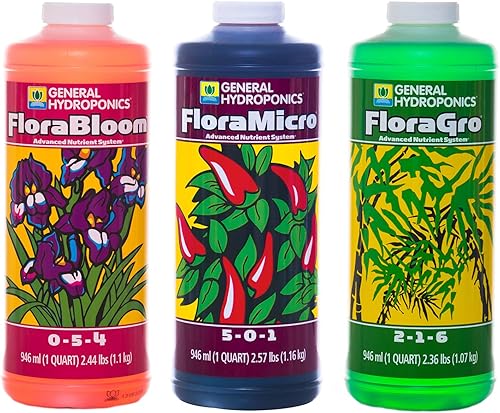
General Hydroponics FloraSeries Hydroponic Nutrient Fertilizer System
9.5/10 our score
See it on Amazon -
3

- 4
 Best as a potassium add-onCheck it
- 5
 Check it
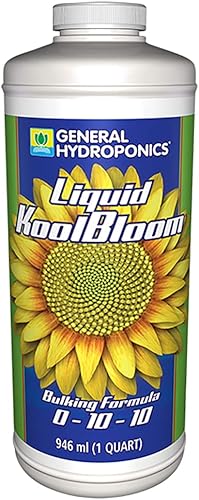
General Hydroponics Liquid KoolBloom 0-10-10
Best for late-stage P and K boost - 6
 Check it
TPS NUTRIENTS Hydroponic Nutrients- Liquid Plant Food
Best one-part reservoir feed - 7
 Best for chelated micronutrientsCheck it
- 8
 Check it
Generic Jack's 321 Hydroponic Nutrients Fertilizer Plant
Best for precise dry mixing - 9
 Check it
Microbe Life Hydroponics Premium All-in-One Nutrient
Best for low-dose weekly feeding
The best hydroponic nutrients for lettuce, ranked for leaf growth
The picks below cover the main ways to feed lettuce: one-part organic, three-part custom, A and B, dry precision mixing, and add-ons.
Read the trade-off under each pick before you choose, since a bloom booster and a leaf feed do different jobs.
MARPHYL All-Purpose Plant Food: Best for simple organic feeding
- 16.9 fluid ounces
- 1:20 mixing ratio
- Liquid organic fertilizer
- For hydroponics and indoor plants
A single-bottle organic liquid made from marine phytoplankton, diluted at 1 part to 20 parts water. It fits lettuce growers who want one feed for hydroponics, pots and garden beds.
Pros
- One bottle, no A and B steps
- Clear 1:20 dilution
- Works in hydroponics and soil
Cons
- Less control than a three-part system
- 16.9 oz size suits small reservoirs
MARPHYL suits growers who want a single bottle for lettuce in hydroponics, pots and raised beds.
The 1:20 dilution is easy to remember: 1 part MARPHYL to 20 parts fresh water, or 50ml per liter.
The 16.9 fluid ounce liquid uses one ingredient, marine phytoplankton, and MARPHYL describes it as organic and environmentally safe.
That simplicity cuts measuring errors, which matters with lettuce's short, fast cycle.
For daily use, mix a fresh batch, feed, and repeat every 2 weeks for most plants, with longer gaps for succulents.
In hydroponics you will still top up water between feeds, so check strength as the reservoir drops.
The balanced macro and micronutrients, plus soil conditioning and root support, suit a crop that needs steady uptake over 3 to 6 weeks.
Its trade-off is control.
You cannot raise nitrogen for leaf growth or add calcium separately, so a three-part system beats it for tuning.
For a first lettuce jar or a small AeroGarden-style setup, that trade is often worth it.
General Hydroponics FloraSeries Hydroponic Nutrient Fertilizer System: Best for custom leaf growth control
- FloraMicro, FloraGro and FloraBloom
- 1 qt trial pack with 3 bottles
- 1:1:1 mixing ratio
- Nitrogen, calcium and chelated micronutrients in FloraMicro
A three-part system that lets you lean on FloraGro for leaf growth while keeping FloraBloom low for lettuce. It is the flexible pick when you want to adjust the feed as heads and leaves size up.
Pros
- Three parts for stage control
- Strong tuneability for leafy crops
- Widely used hydroponic system
Cons
- Three bottles to measure and store
- More steps than a one-part feed
FloraSeries suits growers who want to steer lettuce by stage.
FloraMicro supplies nitrogen, calcium and chelated micronutrients, FloraGro supports structural and foliar growth, and FloraBloom adds phosphorus, potassium, magnesium and sulfur for flowering and fruiting.
For lettuce you lean on Micro and Gro and keep Bloom low or out.
The 1:1:1 trial pack gives three 1 qt bottles, 32 fluid ounces total, so you can build your own ratio as leaves size up.
Daily use follows a fixed order: start with water, add FloraMicro first and stir, then FloraGro or FloraBloom.
That order helps the mix dissolve evenly and makes repeat batches consistent.
The system is designed for hydroponic feeding at every stage, and the trial pack lets you test ratios before buying larger bottles.
Its trade-off is complexity.
Three bottles, three measures, and more storage than a one-part feed.
If you enjoy tuning and grow several crops, the control pays off.
If you grow only lettuce, a simpler feed may save time.
ALIINKD Hydroponic Plant Food: Best for A and B beginners
- A and B nutrients, 1000ml total
- 10 pack with 8 refill packs
- 5ml A and 5ml B per 1L water
- For all hydroponic grow systems
An A and B kit with refill packs and a dispensing cup, dosed at 5ml of each per liter. It suits countertop and small reservoir lettuce where a simple two-part routine is easy to repeat.
Pros
- Refill packs for repeat batches
- Simple equal A and B dose
- Clear per-liter direction
Cons
- Two parts to keep separate
- Granule form needs full dissolving
ALIINKD suits beginners who prefer two parts over three.
The pack totals 1000ml with 2 bottles and 8 refill packs, and the dose is 5ml of A and 5ml of B per 1L of water.
That equal ratio is simple to scale: double the water, double both parts.
The dispensing cup helps you measure the small 5ml amounts without a syringe or scale.
ALIINKD says the feed contains essential micronutrients and works with all hydroponic grow systems and growing mediums.
For countertop lettuce, that means you can drop it into most reservoirs without checking compatibility first.
The refill packs matter for repeat sowings, since a lettuce cycle uses only a small share of 1000ml per batch.
Its trade-off is that A and B still need separate care.
Keep the parts apart, dissolve each fully, and do not mix concentrates together.
Compared with the FloraSeries, you get less stage control, but you also get fewer decisions.
Terpinator Liquid Nutrients: Best as a potassium add-on
- 1 qt liquid
- 0-0-4 NPK
- 5-10 ml per gallon vegetative
- 10-30 ml per gallon flowering
A potassium-only liquid derived from potassium sulfate, used across the life cycle at 5 to 10 ml per gallon in the vegetative stage. It is an add-on for vigor, not a complete lettuce feed on its own.
Pros
- Simple potassium support
- Same rate in hydroponics and soil
- Small dose per gallon
Cons
- Not a complete nutrient
- Needs a base feed alongside it
Terpinator suits growers who already have a base feed and want potassium support.
It is a 0-0-4 liquid derived from potassium sulfate, dosed at 5 to 10 ml per gallon in the vegetative stage and 10 to 30 ml per gallon later.
For lettuce, the vegetative rate is the relevant one, since the crop stays in leaf growth.
The 1 qt bottle lasts a long time at those small doses, and Terpinator says it fits all plant types and grow applications at the same feed rate.
Daily use is simple: add the dose to your reservoir water alongside your main nutrients.
Potassium helps regulate plant metabolic activity, which supports overall vigor when a base feed is already balanced.
Because it has no nitrogen or phosphorus, it will not fix pale leaves caused by a weak base feed.
Its trade-off is scope.
It is an add-on, not a complete food, so it ranks below full feeds for a lettuce-only grower.
Buy it to support vigor with a base feed, not as your only bottle.
General Hydroponics Liquid KoolBloom 0-10-10: Best for late-stage P and K boost
- 1 qt concentrated additive
- 0-10-10 NPK
- 1:50 mixing ratio
- For hydroponic and soil use
A concentrated phosphorus and potassium additive for flowering and ripening. Lettuce rarely needs it, so it sits lower here, useful only if you also grow fruiting crops on the same feed program.
Pros
- High P and K in a small dose
- Pairs with a FloraSeries base
- Hydroponic and soil use
Cons
- Not suited to leafy lettuce alone
- Bloom focus can unbalance a lettuce feed
KoolBloom suits growers who also run flowering or fruiting plants and want a late-stage P and K boost.
The 0-10-10 concentrate uses a 1:50 mixing ratio, so a small amount adds a large share of phosphorus and potassium.
General Hydroponics positions it for the flowering and ripening stage, for both hydroponic and soil use.
A 1 qt bottle goes a long way when the dose is this concentrated.
It also enhances essential oils and fragrance in flowers and herbs, which explains why it appeals in mixed gardens.
For lettuce, the honest advice is restraint.
Lettuce is cut before any bloom stage, so a high phosphorus and potassium feed can crowd out the nitrogen and calcium leaves need.
Using it as your main lettuce food would likely slow leaf growth and waste the strength of the concentrate.
Its trade-off is fit.
It is a useful specialist in a mixed garden, but a poor primary choice for a lettuce-only reservoir.
Keep it for tomatoes, peppers or herbs in flower, and feed lettuce with a leaf-oriented base.
TPS NUTRIENTS Hydroponic Nutrients- Liquid Plant Food: Best one-part reservoir feed
- Quart liquid plant food
- One-part formula
- For herbs, vegetables and flowers
- Made in USA
A one-part liquid for hydroponics, water culture and containers, aimed at vegetables and herbs. The quart size and single bottle make reservoir changes quick for a lettuce-only setup.
Pros
- One-part, easy reservoir mixing
- Quart size for repeated batches
- Suited to vegetables and herbs
Cons
- Fixed formula, limited tuning
- Less detail on dose in the data
TPS Nutrients suits growers who want one quart bottle for hydroponics, water culture and containers.
The one-part liquid is aimed at herbs, vegetables and flowers, which puts lettuce squarely in scope.
One-part feeding saves steps each time you change a reservoir.
You measure one liquid, mix, and feed, with no A and B separation and no three-part order to remember.
TPS says the formula supports roots and balanced plant growth and mixes easily in reservoirs.
The quart size gives several batches for a small lettuce system, which helps you keep a steady routine across sowings.
That steady routine matters for lettuce, where a missed feed or a doubled dose shows quickly in leaf color.
Its trade-off is a fixed recipe.
You cannot shift ratios by stage the way FloraSeries or Jack's 321 allows.
If lettuce growth stalls, you adjust strength or switch products rather than tuning one part.
For simplicity, that is a fair price.
GARDENWISE Liquid Plant Food: Best for chelated micronutrients
- 16oz liquid, 4-3-6 ratio
- Chelated iron, zinc, manganese, copper, boron, molybdenum
- Made for hydroponic and aero systems
- Lists lettuce as a target plant
A 4-3-6 liquid with chelated micronutrients, formulated for hydroponic and aero growing and naming lettuce directly. It is a balanced option when you want NPK plus micronutrients in one bottle.
Pros
- Balanced 4-3-6 for leaf growth
- Chelated micronutrients
- Names lettuce and herbs
Cons
- 16 oz bottle for larger systems
- Fixed ratio, no stage parts
GARDENWISE suits lettuce growers who want NPK plus chelated micronutrients in one bottle.
The 4-3-6 ratio puts nitrogen first, which matches leaf growth, and it lists lettuce, tomatoes, strawberries and herbs as target plants.
Chelated micronutrients include iron, zinc, manganese, copper, boron and molybdenum, which GARDENWISE says support uptake in hydroponic and aero systems.
The 16oz PET bottle with a child-resistant cap is sized for indoor gardens.
Daily use is a single measure into your reservoir, with no A and B steps.
That makes it a good fit for a countertop or small tent setup where you feed lettuce and herbs on the same schedule.
The formula is made in the USA and described as suitable for indoor vegetable gardens and all soil-less systems.
Its trade-off is a fixed ratio and a smaller bottle.
Large reservoirs will use 16oz quickly, and you cannot raise nitrogen alone if leaves lag.
For a mid-size indoor setup, the balanced formula and named lettuce fit make it a strong pick.
Generic Jack's 321 Hydroponic Nutrients Fertilizer Plant: Best for precise dry mixing
- 2 lb kit, 3 parts
- 3:1:2 mixing ratio
- Makes 150 gallons standard solution
- 16 oz Part A, 10.67 oz Part B, 5.33 oz magnesium sulfate
A dry three-part kit with weighed packets for the classic 3-2-1 style mix in a 3:1:2 order. It rewards growers with a scale who want low cost per gallon for a steady lettuce cycle.
Pros
- Dry parts keep well
- Accurate weighed packets
- Large batch volume
Cons
- Needs a scale for best results
- Order of dissolving matters
Jack's 321 suits growers who like dry nutrients and precise weighing.
The 2 lb kit holds 16 oz of Hydro 5-12-26, 10.67 oz of Calcium Nitrate 15-0-0, and 5.33 oz of Magnesium Sulfate, in a 3:1:2 ratio.
The packets are weighed to make 150 gallons of standard solution at full strength, so cost per gallon stays low for repeated lettuce cycles.
Dry parts also store well and take less shelf space than large liquid bottles.
The 5-12-26 base is designed to remain in true solution over long periods, which helps roots take up nutrients evenly.
The order matters: dissolve the 5-12-26 first, then magnesium sulfate, then calcium nitrate, with warm water if needed.
A scale improves accuracy, though volume measures are also given at half a teaspoon, quarter teaspoon and half a teaspoon per gallon.
Its trade-off is effort.
Weighing, dissolving in sequence, and storing three parts takes more time than a one-part liquid.
If you value precision and batch size, it beats most liquids.
If you want speed, it does not.
Microbe Life Hydroponics Premium All-in-One Nutrient: Best for low-dose weekly feeding
- 16 ounces liquid
- 1-2 oz per 10 gallons
- Once or twice weekly
- For NFT, DWC, drip and aeroponic systems
An all-in-one micro and macro nutrient dosed at 1 to 2 oz per 10 gallons once or twice a week. The low dose and weekly rhythm suit small lettuce systems where light feeding is the goal.
Pros
- Low dose per batch
- Clear weekly schedule
- Wide system compatibility
Cons
- Low analysis, light feed
- 16 oz size for small setups
Microbe Life suits growers who prefer light, weekly feeding.
The dose is 1 to 2 oz per 10 gallons, once or twice a week, in a 16 ounce bottle of all-in-one micro and macro nutrients.
That low dose and weekly rhythm fit small lettuce setups where overfeeding is an easy mistake.
The formula works with NFT, DWC, drip, aeroponic, aquaponics and liquid feeding systems, plus soil and soilless media.
Microbe Life says it enhances photosynthesis, nutrient uptake and cell health, and that it will not damage or clog hydroponic systems.
For lettuce, the practical point is a gentle feed you can repeat without heavy measuring.
Shake well before using, add to water, and keep the weekly schedule tied to your reservoir change.
That rhythm suits growers who top up rather than replace the whole reservoir each week.
Its trade-off is strength.
A low analysis feed gives less power to correct a weak reservoir, and the 16 oz size suits small systems best.
Choose it for light weekly care, not for pushing maximum leaf size in a large setup.
How to compare hydroponic nutrients for lettuce
The best hydroponic nutrients for lettuce balance nitrogen and calcium first, then add phosphorus, potassium and micronutrients in support.
We compared each pick on that balance, plus mixing effort, bottle size, and fit for growing systems.
We checked specs for each product: NPK where given, mixing ratio, volume, form, and target plants.
We also weighed whether the feed is one-part, A and B, three-part, dry, or an add-on, since that choice drives daily effort.
Our score weighs specs, features and buyer feedback against what you're shopping for.
A bloom-heavy additive scores lower for lettuce even if it is a fine product for fruiting crops.
No pick here was tested by our team.
Counts, ratios and uses above come from each brand's own details, and buyer patterns are noted as such.
How volume and form affect real cost per harvest
Bottle size changes how often you reorder, not just shelf price.
A 16oz bottle suits a countertop unit for many lettuce sowings, while a quart lasts longer in a larger reservoir.
Dry kits such as Jack's 321 change the math again, since 2 lb makes 150 gallons at standard strength.
Liquid form mixes faster, while granules and dry salts need full dissolving and a clear order of operations.
Form also affects storage: dry parts keep well in small bags, while liquids need space for bottles and caps that seal well.
For lettuce, where cycles are short, a form you will actually mix correctly beats a cheaper form you skip or rush.
What NPK ratio do lettuce leaves need?
Lettuce leaves need a nitrogen-forward feed with steady calcium and micronutrients.
Nitrogen drives leaf size, calcium supports cell walls and tip growth, and micronutrients help the plant use what you feed.
A ratio like 4-3-6, as in GARDENWISE, fits that leaf-first goal.
FloraSeries lets you lean the same way by favoring FloraGro and holding FloraBloom back.
Bloom formulas such as 0-10-10 reverse that balance.
They can suit flowering crops, but for lettuce they add phosphorus and potassium the crop does not need in large amounts.
How to read a ratio on a bottle
The three numbers are nitrogen, phosphorus and potassium in that order.
For lettuce, read the first number closely, since it sets the leaf-growth push.
Then check for calcium and chelated micronutrients, which matter in water culture where roots have no soil to draw from.
When a bloom booster still helps
Potassium add-ons like Terpinator can support overall vigor at the vegetative dose of 5 to 10 ml per gallon.
They help most when your base feed already covers nitrogen and calcium.
Use them as a partner, not a replacement, and keep the dose at the low end for a leaf crop.
One-part, A and B, or three-part: which is easiest?
One-part feeds are easiest for lettuce, A and B feeds are a close second, and three-part feeds give the most control.
Your choice depends on how much tuning you want to do each batch.
One-part options here include MARPHYL at 1:20, TPS Nutrients as a quart liquid, GARDENWISE at 4-3-6, and Microbe Life at 1 to 2 oz per 10 gallons.
Each needs one measure per reservoir change.
A and B feeds, such as ALIINKD at 5ml of each per liter, add one extra step but keep the ratio simple.
Three-part feeds, such as FloraSeries and Jack's 321, add a third part and a dissolve order.
Which suits a first lettuce grow?
Pick one-part or A and B for a first grow.
Lettuce cycles are short, so fewer steps means fewer chances to mix a weak or doubled batch.
Our guide on how to mix hydroponic nutrients walks through adding concentrates to water in a safe order.
Which suits growers who tune?
Pick FloraSeries or Jack's 321 if you grow many crops and like to adjust.
You can shift the leaf push without buying a new product.
For a broader look at feeding other crops, see our best hydroponic nutrients for vegetables guide.
How strong should lettuce nutrient solution be?
Start at half to three-quarter strength, then raise it in small steps as roots and leaves grow.
Young lettuce seedlings take up less than a full head, and a strong first mix can burn small roots.
Many growers mix at the stated ratio, check leaf color after a few days, and adjust only one variable at a time.
Pale leaves often mean the feed is too weak or too old, while dark, curled tips can mean it is too strong.
How to check strength without guessing
Use a record: date, dose, water volume, and how leaves look 3 days later.
That record is more useful than memory across sowings.
Our best hydroponic nutrients pillar explains strength concepts for all hydroponic crops in one place.
When to change the reservoir
Change solution every 1 to 2 weeks for lettuce, or sooner if water smells, roots brown, or algae builds up.
Fresh water and a clean reservoir keep uptake steady.
Organic or synthetic: does it matter for lettuce?
Both can feed lettuce well, and the choice is about your goals, not leaf quality alone.
Organic-leaning feeds such as MARPHYL use one natural ingredient, while synthetic systems give precise ratios.
If you want organic-style feeding, compare options in best organic hydroponic nutrients.
Read labels for what each bottle actually contains.
Synthetic feeds like FloraSeries and Jack's 321 are not automatically harsher on roots.
Precision and clean reservoirs matter more than the label for a fast lettuce crop.
What to check on an organic label
Look for the ingredient list, dilution ratio, and whether the feed is made for hydroponics.
MARPHYL gives a clear 1:20 ratio and names hydroponics as a use.
What to check on a synthetic label
Look for NPK, calcium, and chelated micronutrients.
FloraSeries names nitrogen, calcium and chelated micronutrients in FloraMicro, which is the part lettuce relies on most.
Which system are you feeding: NFT, DWC, or a countertop unit?
Match the nutrient to your system size and water movement, not just the crop.
Large DWC reservoirs use more product per batch, while small NFT channels need light, frequent checks.
Your system choice also shapes the nutrient pick.
Our best hydroponic system for growing lettuce guide pairs system types with feeding needs.
Dry Jack's 321 makes sense for large batches, since the kit makes 150 gallons at standard strength.
Liquids such as MARPHYL or GARDENWISE suit small indoor units where a 16 to 16.9 oz bottle lasts through many sowings.
Signs your system, not your feed, is the problem
Wilting leaves with a full reservoir often point to root, water or temperature issues.
Our guide on why hydroponic lettuce leaves wilt helps you check those causes before changing nutrients.
Our verdict on the best hydroponic nutrients for lettuce
Pick MARPHYL if you want the simplest organic feed, FloraSeries if you want full control, and ALIINKD A and B if you want a middle path.
Each covers the nitrogen, calcium and micronutrient needs lettuce asks for in a leaf stage.
Pick GARDENWISE for a balanced 4-3-6 bottle with chelated micronutrients, TPS Nutrients for a one-part quart, and Microbe Life for light weekly feeding.
Pick Jack's 321 if you own a scale and want low cost per gallon.
Skip bloom boosters as your main lettuce feed.
KoolBloom and Terpinator fit as add-ons or for mixed gardens, not as the base for leafy growth.
Start with one product, keep a simple dose record, and adjust strength in small steps.
That routine will do more for your lettuce harvest than switching bottles every cycle.
Our top 3 picks at a glance
-
1
-
2
Best for custom leaf growth control
General Hydroponics FloraSeries Hydroponic Nutrient Fertilizer System
9.5/10 our score
See it on Amazon -
3
Frequently asked questions
What NPK ratio works for hydroponic lettuce?
Lettuce needs nitrogen forward feeding for leaf growth, with calcium and micronutrients to support steady uptake. A balanced feed such as 4-3-6 or a leaf-leaning three-part mix often fits better than a bloom formula.
Watch leaf color and growth rate, then adjust strength in small steps rather than switching products often.
Can I use one-part nutrients for lettuce?
Yes. One-part liquids such as MARPHYL, TPS Nutrients and Microbe Life simplify reservoir changes for short lettuce cycles.
You trade stage control for speed and fewer measuring errors.
If leaves stay pale or growth slows, check strength and pH before adding a second product.
Do I need a bloom booster for lettuce?
No. Lettuce is harvested for leaves, so phosphorus and potassium boosters like KoolBloom or Terpinator are not the core feed.
They can support overall vigor as add-ons, but they do not replace nitrogen and calcium.
Use them only when you also grow fruiting crops or when a base feed already covers leaf growth.
How often should I change lettuce nutrient solution?
Many growers change reservoir solution every 1 to 2 weeks for fast lettuce crops, or top up and adjust strength between changes. Fresh solution helps avoid salt build-up and keeps uptake steady as roots fill the system.
Clean the reservoir at each change and check that roots look white and healthy.