How to Fix Leggy Seedlings Under Grow Lights?
The easiest way to fix leggy seedlings under grow lights is to adjust your grow light setup. You will need to move your lights closer to your plants. This ensures your seedlings get enough light to grow strong and healthy, not tall and weak.
You’ve probably noticed your young plants stretching thin and pale. This often happens when there isn’t enough light intensity. We found that leggy seedlings are reaching for light that feels too far away. Don’t worry, it’s a common problem with an easy solution.
- Move grow lights closer to seedlings.
- Increase light intensity for stronger growth.
- Avoid overwatering leggy seedlings.
- Provide good air circulation.
- Transplant carefully when ready.
Let’s walk through exactly how to diagnose and fix leggy seedlings under grow lights, step by step. We’ll help you get your garden off to a great start!
Correcting Leggy Seedlings Under Grow Lights
If your seedlings are stretching, they are telling you they need more light. This guide helps you understand why it happens and how to fix it.
Understanding Leggy Seedlings
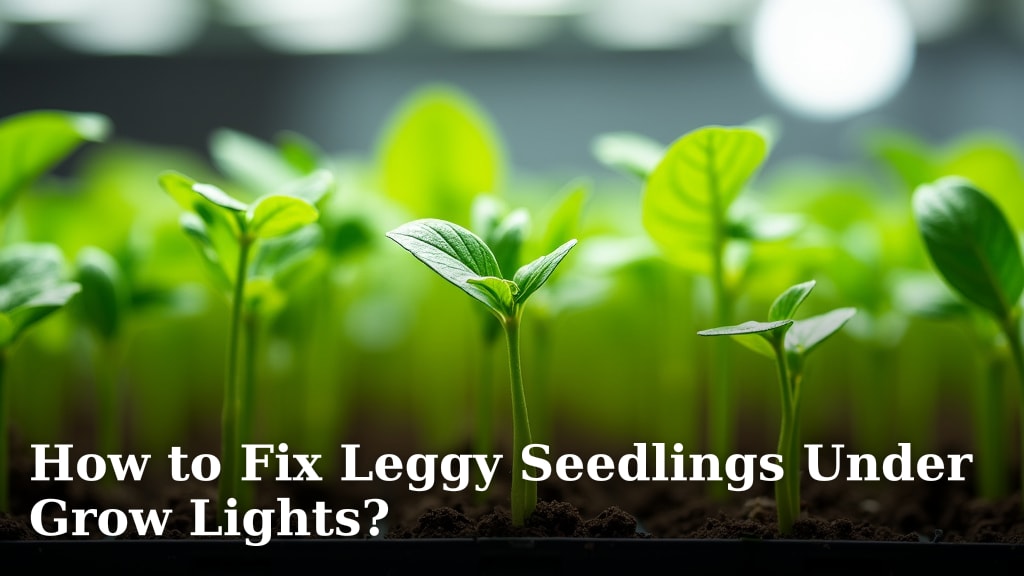
What exactly are “leggy” seedlings? You’ll notice them by their long, thin stems and small, pale leaves. They look like they’re reaching too hard for something.
This happens because plants naturally seek light. When light is too far away or too dim, they grow tall quickly to try and find it. This growth is weak, not strong. Think of a teenager trying to peek over a fence; they stretch tall but can be easily pushed over.
We found that insufficient light intensity is the main culprit. Your seedlings need strong, close light to develop properly (University of Maryland Extension).
Signs You Have Leggy Seedlings
- Tall, stretched-out stems.
- Pale green or yellowish leaves.
- Weak, floppy stems that can’t stand upright.
- Long distances between leaf sets (internodes).
Optimizing Your Grow Light Setup
The most direct way to fix leggy seedlings is to change your grow light environment. It’s all about providing the right amount of light.
Adjusting Light Distance
This is often the quickest fix. Move your grow lights closer to your seedlings. How close? It depends on the type of light you’re using.
- Fluorescent lights (T5/T8): Place these 2-4 inches above your plant tops. They produce less heat, so they can be quite close.
- LED grow lights: The distance varies greatly by wattage and model. Start at 6-12 inches. Check your specific light’s recommendations. Stronger LEDs need to be further away.
- Incandescent/Halogen lights: We don’t recommend these for seedlings. They produce too much heat and not the right light spectrum.
Always monitor your seedlings after adjusting. Are they looking healthier? Are the leaves getting too hot? You don’t want to burn them.
Increasing Light Duration
How long should your lights be on? Most seedlings thrive with 12-16 hours of light per day. This mimics natural sunlight during spring and summer.
Using a simple timer can help you maintain a consistent schedule. Your plants need a period of darkness too, typically 8-12 hours. This rest period is important for their growth cycles.
Assessing Light Intensity (PPFD)
Light intensity is important. It’s not just about how close the light is, but how strong it is. Many experts say that for seedlings, you want a Photosynthetic Photon Flux Density (PPFD) of around 100-200 µmol/m²/s (Purdue University Extension).
You can use a light meter (or a phone app, though less accurate) to measure PPFD. If your readings are too low, you might need a stronger light or to move your existing light closer.
Don’t just turn up the brightness if your light has that option. First, ensure it’s at the correct distance. Too much intensity too close can cause light burn.
Environmental Factors That Help
Light is key, but other environmental conditions also play a big role in fixing and preventing leggy seedlings. These factors work together to create a healthy growing environment. Understanding how plants can grow with only artificial light can help you optimize your indoor gardening setup.
Temperature Control
Warm temperatures can encourage stretching, especially if light is limited. We found that keeping your growing area a bit cooler can help. Aim for 65-70°F (18-21°C) during the day and slightly cooler at night.
A cooler environment slows down rapid vertical growth, allowing stems to thicken. Think of it like a gentle nudge to grow stocky instead of stringy.
Good Air Circulation
Did you know air movement can strengthen stems? A gentle breeze helps plants build stronger cell walls. It’s like a tiny workout for your seedlings!
Use a small oscillating fan to create a light breeze. Don’t point it directly at your seedlings; you just want a gentle sway. This also helps prevent fungal diseases that thrive in still, humid air.
Watering Wisely
Overwatering leggy seedlings can make the problem worse. Weak stems in soggy soil often lead to damping-off disease. This is a common and deadly fungal problem for young plants.
Always let the top inch of soil dry out before watering again. Water from the bottom if possible, by placing pots in a tray of water for 15-20 minutes. This encourages roots to grow deeper.
Check the soil with your finger. If it feels moist, wait. Your seedlings will thank you.
Repotting and Support for Leggy Seedlings
Sometimes, simply adjusting lights isn’t enough, especially if your seedlings are very leggy. You might need to give them some physical support.
Burying Stems During Transplant
When it’s time to transplant your seedlings into larger pots or the garden, you have a chance to correct some of that leggy growth. Bury the elongated stem deeper into the soil.
Many plants, like tomatoes, can grow new roots from their buried stems. This makes for a stronger, more stable plant. Carefully remove the lowest leaves before burying.
Providing Physical Support
For extremely leggy seedlings that are flopping over, you might need temporary support. Small sticks, toothpicks, or even paper clips can act as tiny stakes.
Gently tie the stem to the support using soft string or plant ties. Be careful not to damage the delicate stem. This helps them stay upright until they can strengthen themselves.
Prevention is Your Best Strategy
While you can fix leggy seedlings, preventing them in the first place is always easier. It saves you time and stress.
Start Strong with the Right Setup
Begin with your grow lights positioned correctly from day one. Don’t wait until you see stretching. Set up your lights at the recommended distance immediately after seeds sprout.
Use fresh seed-starting mix. It provides the right nutrients and drainage. Ensure your trays have good drainage holes too.
Choosing the Right Grow Lights
Not all grow lights are created equal. For seedlings, full-spectrum fluorescent (T5/T8) or LED lights are generally best. They provide the blue light spectrum needed for compact, bushy growth.
Avoid standard incandescent bulbs. They lack the correct spectrum and generate too much heat. Invest in lights designed for plant growth.
Here’s a quick comparison of common grow lights for seedlings:
| Light Type | Pros | Cons | Recommended Distance |
|---|---|---|---|
| Fluorescent (T5/T8) | Affordable, low heat, good spectrum for seedlings. | Less powerful than LEDs, bulbs need replacing. | 2-4 inches |
| LED Grow Lights | Energy-efficient, long-lasting, customizable spectrum. | Higher initial cost, intensity varies widely. | 6-12 inches (varies by wattage) |
| Incandescent/Halogen | Cheap. | High heat, poor spectrum for plants, energy inefficient. | Not recommended |
Checklist for Preventing Leggy Seedlings
- Position grow lights correctly (2-12 inches).
- Provide 12-16 hours of light daily.
- Maintain a cool temperature (65-70°F).
- Ensure good air circulation with a gentle fan.
- Water only when the topsoil is dry.
- Use a full-spectrum grow light.
Conclusion
You’ve seen how easily seedlings can stretch and become weak, but now you have all the tools to prevent and fix this common issue. By simply adjusting your grow light distance, optimizing light duration, and paying attention to environmental factors like temperature and air circulation, you can transform leggy plants into sturdy, thriving ones. Remember, your seedlings are always communicating their needs, and providing them with the right light and care is key to a successful garden. Take these steps, and you’ll be well on your way to strong, healthy plants ready for transplanting!
Frequently Asked Questions
Can leggy seedlings recover completely?
Yes, most leggy seedlings can recover. By immediately correcting the light deficiency and providing good environmental conditions, you’ll see new, healthier growth. Burying the stretched stem when transplanting also helps them develop a stronger root system.
How do I know if my grow light is too close?
If your grow light is too close, you’ll notice signs of stress like bleached or yellowing leaves, crispy leaf edges, or stunted growth. The leaves might also appear “burnt” at the tips. Always monitor your plants closely after adjusting light distance.
Should I water leggy seedlings more or less?
You should water leggy seedlings less, not more. Leggy plants often have weaker root systems, and overwatering can lead to root rot or damping-off disease. Allow the top inch of soil to dry out completely between waterings.
What is the ideal light spectrum for seedling growth?
Seedlings benefit most from a full-spectrum light, particularly one rich in blue light. Blue light encourages compact, bushy growth and strong stems. Many LED and fluorescent grow lights are designed to provide this optimal spectrum.
Can a fan really help strengthen leggy seedlings?
Absolutely! A gentle breeze from a small oscillating fan mimics outdoor conditions, causing seedlings to sway slightly. This movement signals to the plant to produce thicker, stronger stems, making them more resilient and less prone to flopping over.