How to Choose an LED Grow Light Spectrum
Choose an LED grow light spectrum that suits the plant and its current growth stage. Blue and red wavelengths support different growth needs, while a balanced full-spectrum light is a practical choice when you grow mixed plants or want one setup for several stages.
On this page (7 sections)
- What does an LED grow light spectrum tell you?
- Which colors matter for plant growth?
- How should you match spectrum to a growth stage?
- Is full spectrum always the best choice?
- What should you check besides spectrum?
- How can you tell if the spectrum fits your plants?
- Which LED grow light spectrum should you choose?
Choose an LED grow light spectrum by matching its spectral mix to your plants and growth stage. Blue and red light are common parts of grow-light designs, while a balanced full-spectrum fixture can simplify care for mixed plants.
Spectrum is only one part of the decision. Light intensity, distance, coverage, and daily hours also affect whether a fixture fits your growing space.
What does an LED grow light spectrum tell you?
An LED grow light spectrum describes the wavelengths of light the fixture emits. Grow-light labels may use terms such as full spectrum, red and blue, or white light, but those labels alone don't show how much usable light reaches each leaf.
Plants use light for photosynthesis, and different wavelengths can play different roles in growth and development. For a specialized wavelength option, compare UV grow lights for plants.
A fixture with more than one spectral mode may let you adjust the mix as your plants grow.
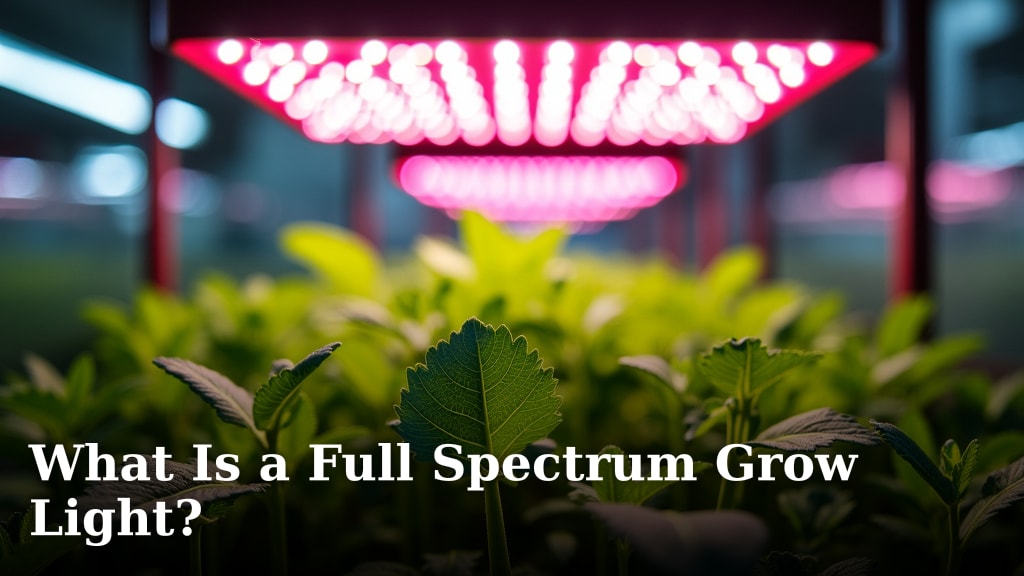
The phrase “full spectrum” doesn't mean every fixture gives the same output. Our guide to what a full-spectrum grow light is explains the term and what to look for beyond the label.
Which colors matter for plant growth?
Blue and red wavelengths are commonly included in grow lights because they support different plant needs. For fixtures that let you change the mix, compare adjustable spectrum grow lights.
Look at the intended use and the complete spectral mix, rather than choosing a lamp by color alone.
| Light description | Common reason to consider it | What to check |
|---|---|---|
| Blue light | Seedlings and leafy growth | Whether the fixture also supports later stages |
| Red light | Blooming and fruiting needs | Whether the light offers enough coverage |
| Red and blue mix | A targeted mix for several growth needs | Whether the color is comfortable in your room |
| Full spectrum or white light | Mixed plants and general indoor growing | Intensity, distance, coverage, and controls |
These descriptions are starting points, not a promise that every plant will respond the same way. Species, growth stage, distance from the fixture, and daily light hours all matter.
A blue and red fixture can cast a colored glow that some growers find distracting in living spaces. White or full-spectrum light may be easier to live with, especially near a desk or in a shared room.
How should you match spectrum to a growth stage?
Choose the spectral mode that fits what your plant is doing now, then check that the lamp can cover the plant as it grows. For plant specific guidance, see grow light specs for banana plants.
Seed starting, leafy growth, and flowering can call for different mixes, but intensity and timing matter too.
What spectrum suits seedlings and leafy plants?
For seedlings and leafy plants, consider a light that includes blue wavelengths or a balanced full-spectrum mode. The Barrina LED Grow Light combines blue and red light in its full-spectrum design and is intended for seed germination and leafy growth.
The strips are designed to link together, so they may suit a shelf or tent setup with several growing areas. Compare full spectrum LED grow light strips if you are considering that format.
Plan where the lights will hang and how many plants each strip will cover before choosing a set.
Keep seedlings close enough to receive useful light, while following the fixture's guidance and watching for signs of stress. A spectrum label doesn't tell you the right distance by itself.
What spectrum suits flowering and fruiting plants?
For plants moving into flowering or fruiting, consider a fixture that includes red light or offers a red-and-blue mode. The LEOTER Grow Light for Indoor Plants has selectable full-spectrum, red-and-blue, and combined modes.
Its full-spectrum mode is described for rooting and sprouting, while its red and blue mode is aimed at blooming and fruiting. The flexible head and dimming levels also give you ways to adjust placement and output in a small indoor setup.
Choose a flexible lamp based on the plants it can reach, not just its available colors. A single small fixture may not cover a large shelf or a cluster of tall plants evenly.
What if you grow different plants together?
For a mixed collection, a balanced full-spectrum light is a useful place to start because you can use one mode across plants at different stages. The GooingTop Grow Light uses white LEDs with red LEDs and has dimming options.
Its white light may suit a room where you also read or work, while the clamp and flexible neck help aim it at nearby pots. Check that the lamp can reach the full group without leaving plants at the edges in dimmer light.
For a broader comparison of spectral choices, use our grow light spectrum guide. If you're considering a particular brand, see what spectrum Miracle LED grow lights use.
Is full spectrum always the best choice?
Full spectrum is a convenient general choice, but it isn't automatically the right choice for every garden. A grower focused on one plant stage may prefer a fixture with a dedicated mode, while a mixed collection may benefit from a balanced light.
Consider a full-spectrum fixture when:
- You grow several plant types or stages under the same light.
- You want a white or more natural-looking light in your living space.
- You prefer to keep the setup simple rather than switch among separate lamps.
Consider a fixture with selectable modes when:
- Your plants have different needs at different stages.
- You want to adjust between full spectrum and red-and-blue output.
- Dimming or repositioning would help as plants grow.
The label doesn't confirm that a lamp can light every plant in a group. Compare its shape, mounting options, distance guidance, and coverage with your actual growing area.
What should you check besides spectrum?
Check coverage, intensity, distance, and controls before you choose a fixture. These details help you decide whether the light can reach your plants evenly and fit your space.
- Measure the growing area. Note the shelf, tent, or tabletop dimensions and where the pots sit.
- Check fixture coverage. A narrow lamp may suit one plant row; a larger space may need more than one fixture.
- Plan the distance. Follow the fixture's guidance and leave room to raise or reposition it as plants grow.
- Look for dimming or modes. These can help you adjust output or spectral mix without changing fixtures.
- Plan the daily schedule. Use a timer if you want the light to turn on and off consistently.
- Consider the room. Colored light can be distracting in shared spaces, while white light may blend in more easily.
Don't use wattage alone as a measure of how well a light will grow plants. A fixture's power draw doesn't tell you its coverage, intensity at the leaves, or how evenly it lights your garden.
If you're still choosing a fixture type, see our guide on how to choose the right grow light for your plants. For a different power-focused comparison, read about 7 watt LED grow lights.
How can you tell if the spectrum fits your plants?
The spectrum is more likely to fit when the light suits the plant's stage, reaches the whole canopy, and lets you keep a consistent schedule. Watch how new growth responds, then adjust distance, intensity, or timing if the fixture allows it.
Leggy seedlings can point to too little light or a lamp positioned too far away. Pale or scorched leaves can have several causes, including excess light, heat, or watering issues, so don't change spectrum without checking the whole setup.
Use the plant's care needs as your guide and change one lighting factor at a time. That makes it easier to see whether moving the lamp, adjusting its intensity, or changing the schedule helped.
Which LED grow light spectrum should you choose?
Choose a balanced full-spectrum light for mixed plants and a simple setup, or select a fixture with red-and-blue modes when you want to adjust the mix for different stages. Then confirm its coverage, distance, intensity, and controls for your growing space.
A strip set can suit shelves or tents, while a flexible clamp lamp can work for a few nearby pots. Compare the best full-spectrum grow light options if you want to weigh more fixtures for an all-purpose setup.
Frequently asked questions
What LED grow light spectrum is best for seedlings?
A balanced full spectrum is a practical choice for seedlings when you want one light for early growth and later stages. Blue light is often included in seedling and leafy growth setups, but spectrum alone doesn't tell you how much light reaches the leaves.
Check the light's coverage, distance guidance and intensity controls.
Do plants need red and blue grow lights?
Plants can grow under different spectral mixes, so a separate red and blue fixture isn't required for every indoor garden. Red and blue wavelengths are common in grow lights, but a balanced white or full-spectrum lamp can be easier to use around mixed plants.
Match the fixture to plant needs and coverage.
Is full spectrum better than red and blue?
Full spectrum isn't automatically better for every plant or setup. It can be a useful all-purpose option for mixed plants and different growth stages, while a red and blue mode may suit a targeted use.
Compare the light's intensity, coverage, controls and placement along with its spectrum label.
Can one grow light spectrum work for every growth stage?
One balanced spectrum can support a simple setup across several stages, but plants still need suitable light intensity and exposure time. A fixture with selectable modes can give you more control as plants change from seedlings to leafy growth or flowering.
Follow guidance for each plant instead of relying on color alone.