How Many Watts Does a Grow Light Need?
Choose grow light wattage by the area you need to cover, the plants’ light needs and the fixture’s actual power draw. Treat advertised wattage as a starting clue, then check coverage, placement and the maker’s guidance for the specific light.
On this page (7 sections)
How many watts for a grow light depends on the growing area, plant light needs and the fixture’s actual power draw. A single bulb may supplement light for one houseplant, while a broader canopy or higher-light plants may need a more powerful fixture or more than one light.
Don’t choose by the biggest wattage number alone. Check the coverage guidance, hanging distance and light output information for the specific fixture, then match those details to your plants.
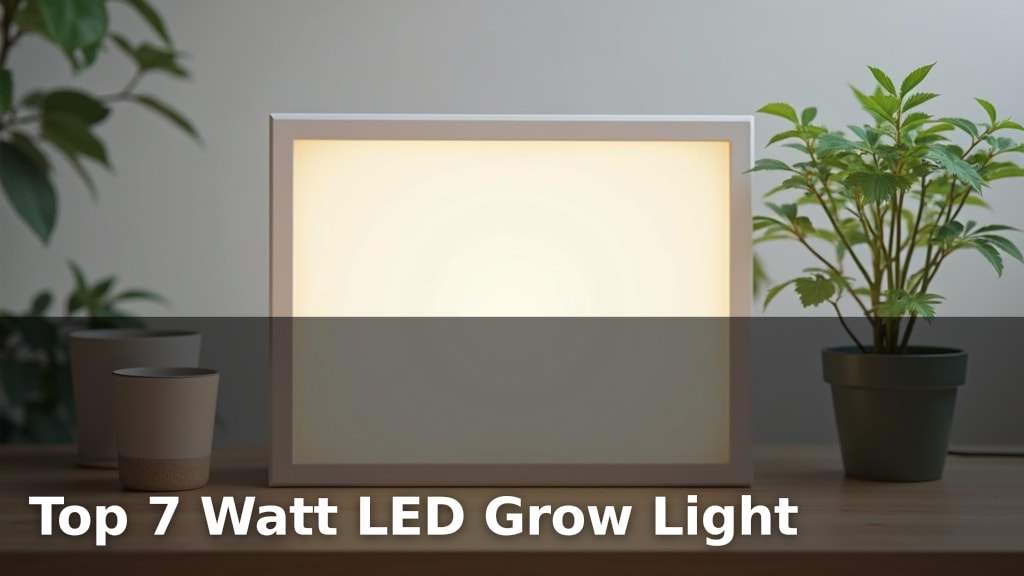
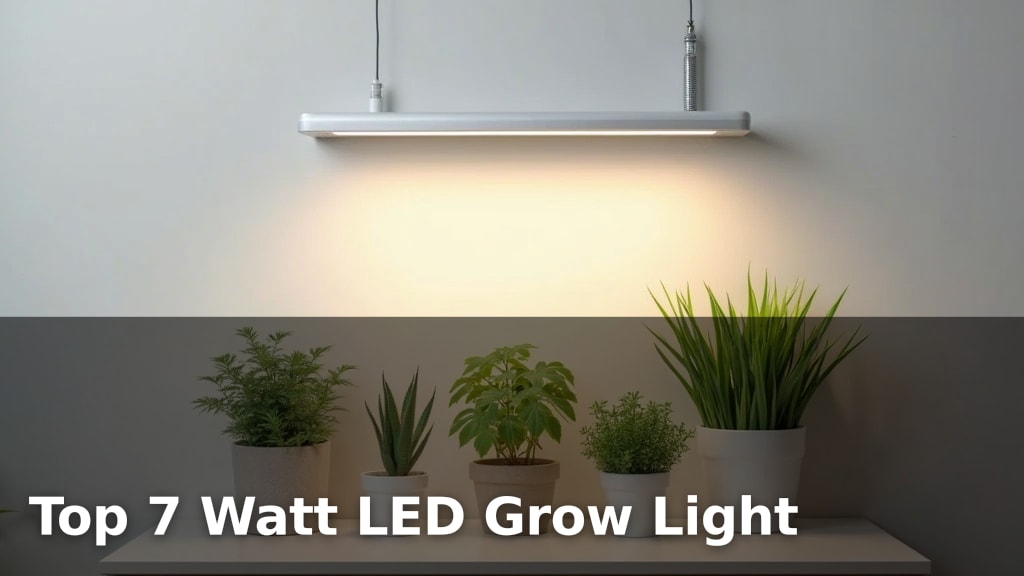
For a quick comparison of lower-power options, see our Top 7 Watt LED Grow Light guide. The wattage in a product name may not tell you its actual electricity use.
How many watts does a grow light need for your space?
Start with the area the light must cover, then consider what you’re growing there. A small shelf with a few plants has different needs from a broad tray of seedlings or a dense canopy.
Measure the growing area’s length and width. If you grow plants at different heights, note that too, because placement affects how much light reaches each one.
| Growing setup | What to check first |
|---|---|
| One houseplant | Whether a bulb or small fixture covers the plant at its recommended distance |
| A few plants on a shelf | Shelf width, plant spacing and whether the beam reaches the outer plants |
| A seedling tray | Tray dimensions and even coverage across the full tray |
| A tent or larger growing area | Fixture coverage guidance, canopy size and plant stage |
These are starting points, not wattage formulas. Two fixtures with similar wattage can differ in light output, coverage and recommended hanging height.
Check the manufacturer’s guidance for the area you want to illuminate. If that information isn’t available, look for usable details such as PPFD at a stated distance, and avoid treating the fixture’s wattage as proof of coverage.
For a more powerful option intended for a defined growing area, compare our best 100 watt grow light guide. Confirm the light’s actual draw and coverage before deciding it fits your setup.
What does actual grow light wattage tell you?
Actual wattage tells you how much electrical power a light draws while operating. It helps estimate energy use, but it doesn’t tell you by itself how much useful light reaches your plants.
A model name might include a large wattage number that differs from its measured power consumption. Read the stated draw when comparing electricity use, and check separate coverage or light-output information when choosing for plant growth.
For example, the MARS HYDRO 300W TSW2000 is described as consuming 300W. Its maker gives coverage guidance of 3 x 3 ft for flowering and 4 x 4 ft for vegetative growth, so use those details alongside your own canopy size.
A bulb is a different kind of option. For a linear option, compare four foot grow light bulbs.
The SANSI grow bulb is described as 24W, with PPFD information at 1 ft; check the recommended placement and whether its coverage suits the plant you want to light.
Use the watt figure for energy estimates, not as a stand-alone measure of plant light. If two products list different wattages, compare their coverage details and light-output information before deciding which one fits better.
How do plant needs change the wattage you choose?
Plants that need stronger light or have a larger canopy may need more usable light across the leaves. The right fixture depends on plant type, growth stage, distance and how much daylight the space already gets.
Seedlings, leafy plants, flowering plants and fruiting plants don’t all need the same lighting conditions. Start with care guidance for the plants you grow, then check whether the fixture supports the area and stage you have in mind.
The BESTVA DC1000, for example, combines VEG and BLOOM modes and gives guidance for using VEG for seedlings and early vegetative growth, then adding BLOOM as plants grow. It also gives tent coverage guidance for 2 x 2, 2 x 3 and 2 x 4 ft spaces.
Light can also be blocked by a dense canopy. BESTVA notes that very dense foliage may need extra side or in-canopy lighting, so a single overhead fixture may not reach every leaf.
If you’re choosing among lower-output fixtures for indoor plants, see our Best Low Wattage Grow Light For Houseplants guide. For a broader overview of fixture types, read What Is the Best Grow Light for Indoor Plants?.
How do you estimate electricity use?
Estimate energy use with actual watts and daily run time. Divide watts multiplied by hours by 1,000 to get kilowatt-hours.
For example, a light drawing 100W and running for 12 hours uses 1.2 kWh per day: 100 × 12 ÷ 1,000. Multiply that daily amount by your electricity rate to estimate the daily cost.
Your real use depends on the actual draw and the schedule you follow. A dimmable light may draw less when turned down, but check its instructions or power data instead of assuming the wattage scales evenly with the dimmer setting.
To compare fixture sizes, see our guides to the best 200 watt grow light and the best 300 watt grow light. Use the actual draw for your energy estimate and coverage guidance for your growing area.
How high should you hang a grow light?
Hang a grow light at the distance its maker recommends for your plant and growth stage. Moving it farther away can spread light over a wider area, while moving it closer concentrates light on a smaller area.
Follow the model’s directions and watch how your plants respond. Leaves that show stress, bleaching or unusual stretching may signal that you should review distance, intensity and lighting duration.
For a fixture with adjustable output, follow the manufacturer’s instructions for setting brightness. The MARS HYDRO TSW2000 has a dimming button described as adjustable from 0 to 100%, which can help tailor output to a growth stage.
Don’t assume all fixtures with the same wattage should hang at the same height. Their optics, coverage and output can differ.
How many grow lights do you need?
The number of lights depends on the size and shape of the growing area and the coverage of each fixture. One broad fixture may cover a compact space, while a long shelf or separated groups of plants may need multiple lights.
Lay out where each plant sits and compare that arrangement with each light’s coverage guidance. Look for dark edges or gaps between fixtures, especially if plants will grow taller or spread out.
Our guide to how many grow lights you need walks through planning fixtures for a growing space. For a smaller example, see how many lights for 3 plants.
For larger setups, compare the coverage details in our best 1000 watt LED grow lights guide. The wattage label alone won’t tell you how many fixtures your layout needs.
What wattage should you choose?
Choose wattage by matching the fixture’s actual draw and coverage to your plants and growing area. Then check hanging distance, light-output details and energy use before you buy.
A bulb may suit one plant or a small shelf. A larger fixture can cover a broader area, but it still needs to match the canopy and plant stage rather than simply having the highest number on its label.
Use the stated power draw to estimate electricity use. Use coverage guidance and plant-care requirements to decide whether the light can serve your setup.
If you’re comparing compact fixtures, start with our Top 7 Watt LED Grow Light guide. Pick a light for the area and plant needs you have now, with enough coverage for the plants as they grow.
Frequently asked questions
How many watts does a grow light need for one plant?
There is no fixed wattage for one plant because the answer depends on the plant’s light needs, its distance from the fixture and how much natural light it receives. For one houseplant, a grow bulb may be a practical starting point; check its coverage and follow the maker’s placement guidance.
Is a 100 watt grow light enough?
A 100 watt grow light may suit a small growing area or plants with modest light needs, but wattage alone cannot confirm coverage. Check the fixture’s actual power draw, recommended area, hanging height and your plants’ light needs before choosing.
Does a higher wattage grow light use more electricity?
A light that draws more watts uses more electricity per hour when it runs. Estimate energy use by multiplying actual watts by hours of use, then dividing by 1,000 to get kilowatt-hours; multiply that result by your electricity rate for the cost.
Can I use a low wattage grow light for houseplants?
A low wattage grow light can help supplement daylight for houseplants when its coverage and placement fit the plant. Check whether it is meant for one plant or a wider area, and adjust the distance and schedule using the maker’s directions.
What is the difference between advertised watts and actual watts?
Advertised wattage may describe a model class or comparison, while actual power draw tells you how much electricity the light uses. Read the fixture’s stated consumption and use that number for energy estimates; use coverage guidance and light output information to judge plant suitability.