9 Best Slow Release Fertilizers for Plants (November 2026)
The best slow release fertilizer for plants include the FoxFarm Happy Frog Acid Loving Plants Fertilizer for acid-loving plants, the GARDENWISE 10-10-10 Plant Fertilizer Slow Release for balanced all-purpose feeding, and the Grow Queen All-in-One Complete Organic Plant Food for containers and single servings.
On this page (8 sections)
- How we compared slow release fertilizers
- The best slow release fertilizers for plants, ranked
- Which slow release fertilizer is best for indoor plants?
- What NPK ratio should you choose?
- How do you apply slow release fertilizer?
- Organic or synthetic: which should you choose?
- Which products did we leave out, and why?
- Verdict: best slow release fertilizer for plants
The best slow release fertilizer for plants depends on pH, NPK, and feeding length. FoxFarm Happy Frog leads for acid-loving plants, while GARDENWISE 10-10-10 leads for balanced everyday feeding.
Slow release granules help when you want fewer container applications. They release nutrients over weeks or months, so you can water and let the granules do the work between feedings.
This matters most for containers, where watering washes nutrients out faster than in open ground. A granule that feeds for 40 days, 8 weeks, or 4 months changes how often you need to open the bag and measure again.
Our score weighs specs, features and buyer feedback against what you are shopping for. We compared NPK, feeding length, form, and size across all nine picks below.
Our picks at a glance
-
1
 Best for acid-loving plants
FoxFarm Happy Frog Acid Loving Plants Fertilizer
9.7/10 our score
See it on Amazon -
2
 Best for balanced all-purpose feeding
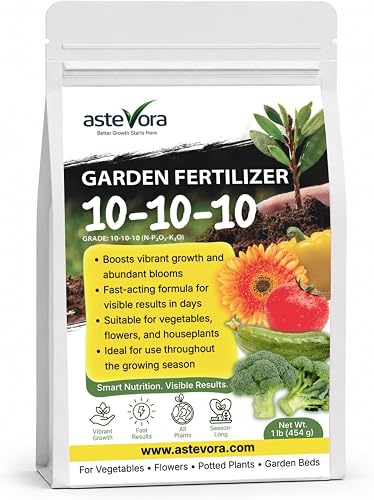
GARDENWISE 10-10-10 Plant Fertilizer Slow Release
9.6/10 our score
See it on Amazon -
3
 Best for containers and single servings
Grow Queen All-in-One Complete Organic Plant Food
9.5/10 our score
See it on Amazon
- 4
 Check it
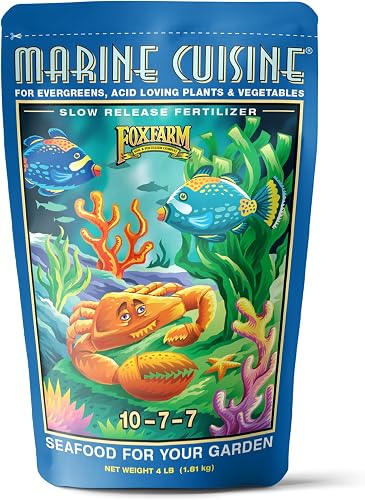
FoxFarm Marine Cuisine All Purpose Fertilizer
Best for heavy feeders - 5
 Best for organic granular coverageCheck it
- 6
 Check it
Schultz 018065 Spf48270 Slow-Release Bloom Fertilizer 3.5
Best for blooms and roots - 7
 Check it
Gardenera 𝐁𝐄𝐒𝐓𝐒𝐄𝐋𝐋𝐄𝐑 10-10-10 Plant Fertilizer Slow Release
Best for up to 40 days feeding - 8
 Check it
Osmocote 4 Month 14-14-14 Slow Release Vegetable
Best for 4 month feeding - 9
 Check it
Root 98 Warehouse Southern Ag Osmocote Controlled Release
Best for potted plants in bulk
How we compared slow release fertilizers
We checked NPK, feeding length, form, and target plants for each pick. We also looked at size, since a 1 quart bag and a 5 lb bag suit very different jobs.
Feeding length was the first filter, because it sets your calendar. Gardenera lists up to 40 days, GARDENWISE lists up to 8 weeks, and both Osmocote options list up to 4 months.
NPK was the second filter, because it sets the job. Balanced 10-10-10 and 14-14-14 suit general growth, 12-24-12 suits blooms and roots, and 10-7-7 suits heavy feeders.
Form came third, because granules, powder, and single servings suit different hands. Granules spread by hand or spreader, powder pours over soil, and servings remove guesswork for pots.
Size came last, because coverage changes value. A 4 lb bag that covers 1,000 square feet is not comparable to a 5.28 ounce pack that treats 14 gallons, even if both are slow release.
Slow release pellets and tablets sit in that same comparison. Our slow release fertilizer tablets guide explains when that pressed form helps, and when granules are simpler.
If you are torn between dry and liquid feeding, our slow release fertilizer vs liquid guide breaks down timing and control.
What we did not count as slow release
We did not treat a fast liquid feed as slow release, even if the brand name sounds similar. Slow release means the nutrients meter out over the stated weeks or months.
We also separated soil conditioners from plant food. A product that feeds soil microbes can help, but it still needs a clear NPK or feeding claim to rank here for plant feeding.
For the difference between soil amendments and fertilizer, see worm castings vs fertilizer.
The best slow release fertilizers for plants, ranked
Each pick below has a unique job. Read the badge first, then check NPK and feeding length before you buy.
FoxFarm Happy Frog Acid Loving Plants Fertilizer: Best for acid-loving plants
- 4 lb granular slow release fertilizer
- Contains mycorrhizal fungi and soil microbes
- OMRI Listed
- For azaleas, rhododendrons, blueberries and more
A gentle, low pH focused formula with mycorrhizal fungi and soil microbes for azaleas, blueberries, hydrangeas and similar plants.
Pros
- Made for low pH plants
- Contains mycorrhizal fungi
- OMRI Listed
Cons
- Not a balanced all-purpose choice
- 4 lb size suits larger beds best
This pick suits azaleas, rhododendrons, blueberries, hydrangeas, camellias, evergreens, and strawberries. It is made for low pH soil, so it fits plants that struggle when soil is too alkaline.
For a related FoxFarm growing medium, read the Ocean Forest potting soil review.
In daily use, the 4 lb granular formula gives gentle feedings that will not overwhelm roots. FoxFarm says it contains mycorrhizal fungi and soil microbes that may help with nutrient uptake and water absorption.
Those microbes are a real difference from plain balanced granules. They are aimed at root contact and uptake, which matters in beds where acid-loving shrubs stay in place for years.
The OMRI Listed status matters if you want an organic input. The mixing ratio is 1/16 cup per gallon, which helps you measure for containers and beds.
The trade-off is focus. This is not a balanced all-purpose fertilizer for lawns or leafy vegetables.
If your plants do not love acid soil, a 10-10-10 option will be a better fit. For African violets, compare soil mixes for African violets.
For acid lovers, this is the clear first choice.
GARDENWISE 10-10-10 Plant Fertilizer Slow Release: Best for balanced all-purpose feeding
- Balanced 10-10-10 NPK
- Slow release up to 8 weeks
- Fine granules for even spreading
- 1/2 quart, 16 oz
Equal nitrogen, phosphorus and potassium with quick and slow release nitrogen for vegetables, flowers, shrubs and lawns.
Pros
- True balanced 10-10-10 ratio
- Up to 8 weeks of feeding
- Fine granules spread evenly
Cons
- Smaller 1/2 quart bag
- Needs reapplies across a season
This pick suits gardeners who want one balanced bag for vegetables, flowers, shrubs, fruit trees, and lawns. The 10-10-10 ratio gives equal nitrogen, phosphorus, and potassium.
GARDENWISE says it feeds for up to 8 weeks with slow release nutrition. It also has quick release nitrogen for faster early growth, then slower feeding after.
In daily use, that quick plus slow pattern helps new plantings. You get early leaf response without having to add a separate liquid feed in the first weeks.
Fine granules spread evenly by hand, which helps in beds and lawns. The 1/2 quart, 16 oz bag suits small gardens, pots, and spot feeding rather than a large lawn.
The trade-off is reapplication. You will reapply during a season.
Apply twice per season for gardens and three times per year for trees and shrubs, per the brand. For longer feeding, look at the 4 month Osmocote picks.
Grow Queen All-in-One Complete Organic Plant Food: Best for containers and single servings
- 7 single servings
- Fast and slow release
- Treats up to 14 gal of soil
- Powder form
Seven single servings that feed 14 gallons for 1 to 3 months, with fast and slow release nutrition for houseplants and vegetables.
Pros
- Single servings reduce waste
- Covers up to 14 gallons
- Fast and slow release in one pack
Cons
- Powder, not granules
- Small 5.28 oz total weight
This pick suits houseplant owners who want measured servings instead of a large bag. It has 7 single servings that feed 14 gallons of soil for 1 to 3 months.
The formula combines fast and slow release nutrition. Grow Queen says it works for indoor potted plants, hanging pots, and garden beds, and may reduce transplant shock.
In daily use, the powder form pours evenly over the soil area. One serving covers 1 to 2 plants, so you can match servings to pot count and avoid waste.
That portion control is the main benefit in containers. You are less likely to dump a large bag amount into a small pot and then live with it for months.
The trade-off is form and size. Powder is less familiar than granules for many buyers, and the total weight is only 5.28 ounces.
If you prefer granules you can spread by hand, Organic Plant Magic or GARDENWISE may fit better. For portion control, this wins.
FoxFarm Marine Cuisine All Purpose Fertilizer: Best for heavy feeders
- 10-7-7 ocean-based formula
- Crab meal, seabird guano and kelp
- 4 lb bag
- Apply twice per season
An ocean-based 10-7-7 blend with crab meal, shrimp meal, seabird guano and kelp for heavy feeding vegetables and flowers.
Pros
- Ocean-based ingredient blend
- Suits heavy feeders
- 4 lb bag for season use
Cons
- Higher nitrogen than many all-purpose options
- Powder form, not pellets
This pick suits heavy feeders like vegetables, flowers, roses, and container plants. The 10-7-7 ratio gives more nitrogen than phosphorus and potassium.
FoxFarm uses an ocean-based blend with crab meal, shrimp meal, seabird guano, and kelp. It gives a quick boost plus steady slow release feeding for bud development.
In daily use, that blend is aimed at plants that eat hard through a season. Tomatoes, peppers, and flowers often need more than a light balanced feed to keep setting growth and buds.
The 4 lb bag is applied twice per season, about 3 to 4 months apart. That timing suits a full growing season in beds and containers with simple measured feeding and thorough watering.
The trade-off is specialization. Heavy feeder formulas are not ideal for every plant or for lawns.
If you want a balanced 10-10-10 for lawns and shrubs, choose GARDENWISE instead. For heavy feeders, Marine Cuisine is the stronger match.
Organic Plant Magic: Best for organic granular coverage
- Truly Organic slow release granules
- 4 lb bag covers 1,000 sq ft
- 55+ trace minerals, kelp and mycorrhizae
- Monthly top dressing
Spreadable organic granules with trace minerals, amino acids, humic acids, kelp and mycorrhizae for indoor and outdoor plants.
Pros
- Covers 1,000 sq ft per bag
- Granules for hand or spreader use
- Includes mycorrhizae and kelp
Cons
- Monthly use, not 4 month feeding
- No NPK ratio stated
This pick suits organic gardeners who want granules they can add by hand, mix into planting holes, or top dress. One 4 lb bag covers 1,000 square feet.
Organic Plant Magic uses Truly Organic slow release granules with 55+ trace minerals, amino acids, humic acids, kelp, and mycorrhizae. It suits flowers, vegetables, fruit trees, shrubs, and houseplants.
In daily use, the rate is 1/4 cup per gallon of soil. You can sprinkle a handful monthly and water as normal, which is simple for pots and beds.
That monthly rhythm works well if you already visit plants to water or prune. It fits a routine, rather than a single spring application you forget about.
The trade-off is frequency and detail. Monthly use is more often than 4 month Osmocote feeding, and there is no NPK ratio stated.
Buyers who want exact numbers may prefer 10-10-10 or 14-14-14. For organic granules with wide coverage, this is a strong pick.
Schultz 018065 Spf48270 Slow-Release Bloom Fertilizer 3.5: Best for blooms and roots
- 12-24-12 NPK ratio
- 3.5 lb, 56 oz
- Slow release granules
- For roses, annuals and perennials
A 12-24-12 bloom formula with highest phosphorus share for roses, annuals and perennials that need root and flower support.
Pros
- High phosphorus for blooms
- 3.5 lb bag
- Slow release granules
Cons
- Not balanced for leafy growth
- Focused on flowering plants
This pick suits roses, annuals, and perennials that need bloom and root support. The 12-24-12 ratio puts phosphorus highest, which supports roots and flowers.
Schultz makes this a slow release granule in a 3.5 lb, 56 oz bag. Apply it to soil, then water in, so nutrients release over time rather than all at once.
In daily use, that high phosphorus share changes the job. It is a better match for flowering plants than for lawns or leafy vegetables that need leaf growth first.
The medium coverage and granule form suit beds and borders. You can spread by hand around established perennials and water the area well after applying.
The trade-off is leaf growth. Leafy growth may need more nitrogen than 12-24-12 gives.
If your main goal is green leaves, choose 10-10-10 or 14-14-14. For blooms and roots, this formula has a clear job.
Gardenera 𝐁𝐄𝐒𝐓𝐒𝐄𝐋𝐋𝐄𝐑 10-10-10 Plant Fertilizer Slow Release: Best for up to 40 days feeding
- Balanced 10-10-10 NPK
- Slow release up to 40 days
- 1 quart granules
- Apply by hand or spreader
A balanced 10-10-10 granule with fast acting ingredients plus slow release feeding for up to 40 days.
Pros
- Balanced ratio
- Up to 40 days feeding
- Hand or spreader use
Cons
- Shorter feeding than 4 month options
- 1 quart size
This pick suits buyers who want a balanced granule with a shorter, predictable feeding window. Gardenera says it feeds for up to 40 days.
The 10-10-10 ratio supports roots, foliage, and blooms for vegetables, flowers, trees, shrubs, and lawns. It has fast acting ingredients plus slow release granules.
In daily use, that dual action helps after transplant or spring start. Fast acting ingredients jumpstart growth, while slow release granules continue feeding without daily attention.
The 1 quart granules apply by hand or with a spreader, then you water them in. That form suits flower beds, vegetable rows, and small lawn areas.
The trade-off is length. 40 days is shorter than 8 weeks or 4 months, so you will reapply more often.
If you want fewer applications, Osmocote 4 Month is a better fit. If you want a mid-length balanced feed, Gardenera fits well.
Osmocote 4 Month 14-14-14 Slow Release Vegetable: Best for 4 month feeding
- 14-14-14 balanced NPK
- Feeds up to 4 months
- Two 2 lb canisters
- For vegetables and flowers
A 14-14-14 slow release granule that feeds vegetables and flowers for up to 4 months with one application.
Pros
- Up to 4 months feeding
- Two canisters included
- Balanced 14-14-14 ratio
Cons
- Two pack is more than small gardens need
- Vegetable and flower focus
This pick suits busy gardeners with vegetables, flowers, annuals, and perennials. Osmocote says it feeds for up to 4 months with one application.
The 14-14-14 ratio is balanced and stronger than 10-10-10. It supports top growth, roots, and vibrant blooms through the season.
In daily use, the slow release formula is the point. You apply to soil around plants, water thoroughly, and then avoid repeated feeding through the growing season.
This pack has two 2 lb canisters, so it suits multiple beds or a full season of planting. That quantity works for a full vegetable patch or flower border, not just one pot.
The trade-off is pack size. Two canisters may be more than a few pots need.
For a single container, Grow Queen servings are easier to portion. For beds you feed once and forget, this is one of the best options here.
Root 98 Warehouse Southern Ag Osmocote Controlled Release: Best for potted plants in bulk
- 14-14-14 controlled release
- 5 lb bag
- Feeds up to 4 months
- Mix .25 to .5 cups per cubic foot
A 5 lb controlled release 14-14-14 granule for potted plants, hanging baskets, flower beds and vegetable gardens.
Pros
- 5 lb bulk size
- Up to 4 months feeding
- Clear pot and bed rates
Cons
- Bulk size is large for one pot
- Requires measuring by soil volume
This pick suits potted plants, hanging baskets, flower beds, and vegetable gardens. It is a 14-14-14 controlled release granule in a 5 lb bag.
Southern Ag Osmocote meters nutrients for up to 4 months. The rate is .25 to .5 cups per cubic foot of soil, with specific rates for bedding plants and pots.
In daily use, that clear rate helps if you mix soil for many containers. You can measure by soil volume instead of guessing a handful per pot.
The listed rates also help in beds. Bedding plants use a different rate than pot culture, so you can match dose to planting size and soil volume.
The trade-off is bulk size. 5 lb is a lot for one or two pots, and it requires measuring by soil volume.
For many pots and beds, this size makes sense and lasts through a season. For a single pot, a smaller pack will fit better.
Which slow release fertilizer is best for indoor plants?
The best slow release fertilizer for indoor plants is usually a measured, low dose granule or powder. Grow Queen servings and balanced 10-10-10 granules are the easiest to portion for pots.
For containers, feeding length matters more than bag size. A 4 month granule means fewer repeat applications, which helps if you travel or have many houseplants.
Container soil also dries faster and holds fewer nutrients than a garden bed. That is why single servings and pot rates matter more indoors than total bag weight.
Start with our indoor potting mix guide if your soil is old or compacted. Fresh mix plus slow release food often works better than food alone.
If roots are circling or soil stays wet, fix the pot and mix first. Fertilizer cannot fix a pot that is too small or soil that never drains.
Granules vs pellets vs powder for pots
Granules spread well and mix into soil. Pellets are larger and easy to place around a plant.
Powder pours evenly but can dust, so use it over moist soil and water in.
For pots, the best form is the one you can measure accurately. A serving pack removes guesswork, while a large bag needs a spoon and a rate for your pot size.
How much to use in a pot
Follow the rate for your pot size, not the bed rate. Too much slow release food can sit in a small pot for months, so measure servings or teaspoons as directed.
Water after applying so granules start to release. Keep granules off stems and especially off orchid bark or sensitive roots unless the label allows it.
What NPK ratio should you choose?
Balanced 10-10-10 and 14-14-14 ratios suit most plants that need steady growth. Higher phosphorus 12-24-12 suits blooms and roots.
Higher nitrogen 10-7-7 suits heavy feeders.
The first number is nitrogen, and it drives leaf and stem growth. The second is phosphorus, and it supports roots and flowers.
The third is potassium, and it supports overall plant function and resilience.
That simple reading helps you match a bag to a goal. A rose bed needs a different ratio than a lawn, even if both are outdoors.
Our best balanced slow release fertilizer guide compares balanced options in more detail. Read it if leaf growth is your main goal.
For organic inputs, our best slow release organic fertilizer guide narrows the organic picks. Organic Plant Magic and Grow Queen are the organic options in this roundup.
When to pick 10-10-10
Pick 10-10-10 for lawns, shrubs, vegetables, and general beds. It is the safe balanced choice when you are not sure what a plant needs.
It is also a good starting point for new gardeners. Equal parts reduce the risk of pushing one kind of growth too hard.
When to pick 14-14-14
Pick 14-14-14 for stronger, longer feeding in beds and pots. The Osmocote picks use this ratio and feed up to 4 months.
Use the longer feeding length to plan your season. You can feed in spring and then focus on watering and pruning, rather than repeat feeding.
How do you apply slow release fertilizer?
Apply granules to soil, then water well so nutrients start to release. You can mix granules into planting holes, top dress by hand, or use a spreader for beds and lawns.
Mixing into the planting hole puts food near roots from the start. Top dressing works for established plants and avoids disturbing roots.
Our how to use Osmocote guide walks through the 4 month options. It covers soil mixing, top dressing, and watering after use.
For vegetables, our best slow release fertilizer for vegetables guide matches formulas to heavy feeding crops. Marine Cuisine and the Osmocote 14-14-14 picks are strong there.
Measure rather than guess, especially in containers. The Southern Ag rate of .25 to .5 cups per cubic foot shows why soil volume matters.
Timing by season
Feed in spring for growth, then repeat by feeding length. An 8 week product needs more repeats than a 4 month product across one season.
Fall feeding suits trees, shrubs, and lawns in some regions, but it can push tender growth before winter. Follow the timing for your plant type, not just the bag.
Safety and watering
Water after applying and keep granules off stems and leaves. Store bags dry and out of reach of children and pets, and follow the label rate for your plant type.
Wash hands after handling fertilizer, and sweep granules off paths where they can be tracked inside. Keep powder away from faces and use it over moist soil to limit dust.
Organic or synthetic: which should you choose?
Organic slow release options use ingredients like kelp, guano, and mycorrhizae, and they often feed soil biology as well as plants. Synthetic options give exact NPK and predictable feeding lengths.
Organic inputs can feed more slowly at first, because microbes need to break them down. That can be a benefit for soil health, but it means you should not judge results in the first few days.
Synthetic granules give you a clear ratio and a stated feeding window. That clarity helps if you are trying to correct a specific need, like more phosphorus for blooms.
Our organic vs synthetic fertilizers guide compares cost, speed, and soil effects. Read it if you are deciding between the two approaches.
For soil building, our worm castings vs compost guide explains how those amendments differ from fertilizer. They improve soil, but they are not a direct replacement for NPK feeding.
Best organic picks here
Organic Plant Magic, Grow Queen, and FoxFarm Happy Frog are the organic or OMRI Listed options here. They suit buyers who prefer organic inputs and soil microbes.
FoxFarm Happy Frog also covers a niche the others do not. It is built for low pH plants, so organic status is only part of its value.
Best synthetic picks here
GARDENWISE, Gardenera, Schultz, and the Osmocote picks give exact NPK ratios. They suit buyers who want predictable feeding and spreader use.
That exactness also makes them easier to compare. You can line up 10-10-10 against 14-14-14 and see the strength and feeding length side by side.
Which products did we leave out, and why?
We left out liquid fertilizers because they feed fast and often, not slow and long. If you want that control, start with our Best Indoor Plant Fertilizer guide.
Liquids still have a place for correction and for plants in active growth. They just do not belong in a roundup built around slow release granules and feeding length.
We left out fruit tree specific formulas because this roundup focuses on general plant food. For orchards, see our best slow release fertilizer for fruit trees guide.
We also left out tablets, because granules cover more beds and pots in this group. Tablets can still work for single plants, as noted earlier.
We left out large lawn-only bags as well, because most readers here grow mixed beds and containers. A lawn bag with low phosphorus would not suit flowers or vegetables.
If you are still deciding what your plants need, our What Is the Best Fertilizer for Indoor Plants? guide helps you match nutrients to symptoms and growth stage.
Verdict: best slow release fertilizer for plants
Pick FoxFarm Happy Frog for acid-loving plants, GARDENWISE 10-10-10 for balanced all-purpose feeding, and Osmocote 4 Month for the longest feeding with fewest applications. Pick Grow Queen if you want single servings for containers.
For heavy feeders, Marine Cuisine is the better match than a light balanced bag. For blooms and roots, Schultz 12-24-12 has the clearest ratio.
Match the NPK to your goal, check feeding length before you buy, and water granules in after applying. That simple rule will help you choose the best slow release fertilizer for plants without overfeeding.
Our top 3 picks at a glance
-
1
Best for acid-loving plants
FoxFarm Happy Frog Acid Loving Plants Fertilizer
9.7/10 our score
See it on Amazon -
2
Best for balanced all-purpose feeding
GARDENWISE 10-10-10 Plant Fertilizer Slow Release
9.6/10 our score
See it on Amazon -
3
Best for containers and single servings
Grow Queen All-in-One Complete Organic Plant Food
9.5/10 our score
See it on Amazon
Frequently asked questions
How long does slow release fertilizer last?
It depends on the formula. Gardenera feeds up to 40 days, GARDENWISE up to 8 weeks, and Osmocote options up to 4 months.
Check the feeding length on the bag before you buy, then water after applying.
Is slow release fertilizer good for indoor plants?
Yes, for many houseplants. Granules reduce repeated container applications, so you feed less often.
Use a product for indoor plants, follow the amount for your pot size, and avoid adding liquid fertilizer at the same time.
What NPK should I choose?
Choose 10-10-10 or 14-14-14 for balanced growth. Choose 12-24-12 for blooms and roots.
Choose 10-7-7 for heavy feeders.
Match the ratio to leaves, flowers, or fruit rather than using one bag for every job.
Can I mix slow release granules into soil?
Yes, many growers mix granules into the soil at planting or top dress and water in. The Southern Ag Osmocote rate is .25 to .5 cups per cubic foot of soil.
Keep granules off stems and water well after use.
What is the difference between granules and pellets?
Granules spread evenly by hand or spreader and suit beds and lawns. Pellets are larger and often placed by hand around plants.
Both can be slow release, so check feeding length and NPK rather than form alone.


