How Much Does a Good Grow Light Cost?
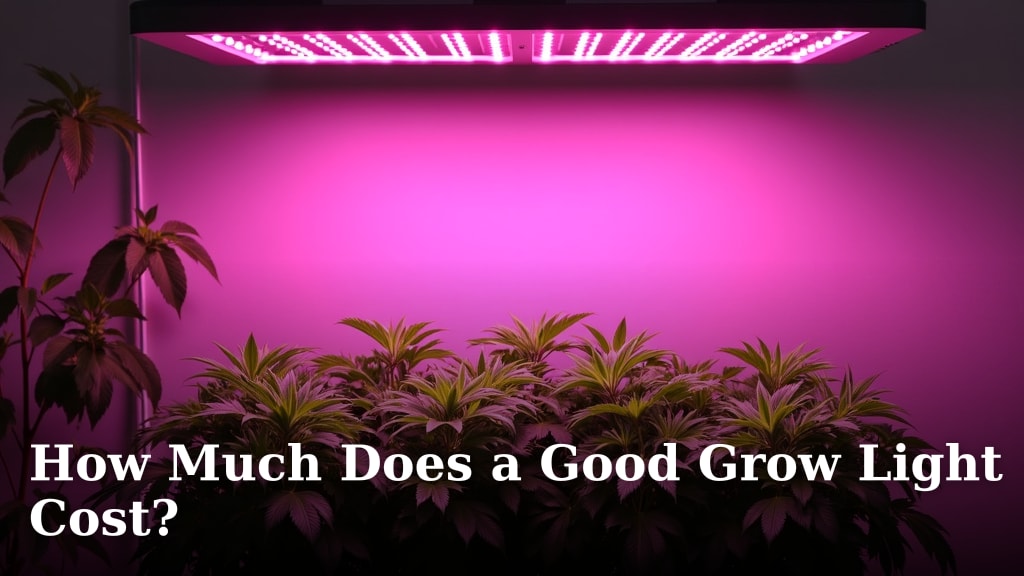
A good grow light for indoor plants generally costs anywhere from $50 to $500 or more, depending on its type, power, and features. For most home growers, a quality LED grow light will be between $100 and $300.
The price you pay for a grow light will greatly depend on your specific needs. Are you growing a few herbs or a large indoor garden? Do you want a simple setup or advanced features like dimmers and timers? These factors significantly influence the cost of a good grow light.
- Expect to spend $50-$500+ for a grow light.
- LED grow lights are often the best value for home growers.
- Small setups are much cheaper than large ones.
- Advanced features add to the overall price.
Ready to figure out what kind of grow light makes sense for your indoor garden? Let’s break down the different types, features, and price points so you can make the best choice without breaking the bank.
The Real Cost of a Good Grow Light
Understanding the cost of a good grow light starts with knowing what “good” means for your specific plants and space. It’s not just about the sticker price; it’s about efficiency, longevity, and ultimately, what helps your plants thrive without costing a fortune in electricity.
We found that grow light prices vary widely. You can find basic lights for under $50, while professional setups might run well over $1,000. For most home growers, a budget of $100-$300 hits the sweet spot for quality and performance.
Types of Grow Lights and Their Price Tags
The type of grow light you choose is the biggest factor in its cost. Each technology has its own benefits and drawbacks, impacting both initial price and long-term operating costs.
Fluorescent Grow Lights (CFL & T5)
Fluorescent lights are often the most budget-friendly option upfront. They’re great for seedlings, clones, or plants with low light needs like leafy greens.
- CFL (Compact Fluorescent Light): These screw into standard light sockets. You can get a good one for $15-$30 each. They’re easy to find and set up.
- T5 (High-Output Fluorescent): These come as bars or fixtures, offering more intense light. A small T5 fixture might cost $50-$150. They are more efficient than CFLs.
While cheap to buy, fluorescents generally have higher electricity costs over time compared to LEDs. They also produce more heat, which can sometimes be an issue in small spaces. Their light spectrum is often not ideal for flowering plants.
High-Intensity Discharge (HID) Grow Lights
HID lights, like Metal Halide (MH) and High-Pressure Sodium (HPS), are powerful. They’re commonly used for larger grows or plants that need a lot of intense light to flower and fruit.
- Metal Halide (MH): Best for vegetative growth, these usually cost $100-$300 for a complete fixture (ballast, reflector, bulb).
- High-Pressure Sodium (HPS): Excellent for flowering, an HPS setup will also range from $100-$300. Many growers use both MH and HPS or switch between them.
HID lights produce a lot of light, but they also generate a lot of heat. This means you might need extra ventilation, adding to your overall setup cost. Their energy consumption is higher than LEDs, and bulbs need replacing every year or so.
LED (Light Emitting Diode) Grow Lights
LED grow lights are the most popular choice for many home growers today. They offer a great balance of efficiency, spectrum control, and lifespan.
- Budget LEDs: Simple, smaller LED panels can cost $50-$150. These are good for a few small plants or starting seeds.
- Mid-Range LEDs: For quality and versatility, expect to pay $150-$400. These often include dimming features and better light distribution.
- High-End LEDs: Professional-grade LED fixtures can range from $400-$1000+. These offer advanced features, precise spectrum control, and cover larger areas efficiently.
LEDs have a higher upfront cost than fluorescents or HIDs. However, they use much less electricity and last a very long time (50,000+ hours). This often makes them cheaper in the long run. They also produce less heat, simplifying your ventilation needs.
Key Factors Influencing Grow Light Prices
Beyond the type of light, several features and specifications play a big role in how much you’ll pay.
Power and Coverage Area
The more plants you have, or the larger your grow space, the more powerful a light you’ll need. A small light for a couple of herbs will be cheaper than a large panel for a 4×4 foot tent.
- Small areas (1×1 ft to 2×2 ft): Often covered by lights in the $50-$150 range.
- Medium areas (2×4 ft to 3×3 ft): You’ll likely spend $150-$350 for adequate coverage.
- Large areas (4×4 ft and up): These require more substantial lights, costing $350-$1000+.
Always consider the “actual wattage” or “true wattage” for LEDs, not just the “equivalent” rating. That tells you how much power the light actually draws.
Light Spectrum
Plants need different light colors (spectrum) at different growth stages. Some lights offer a fixed “full spectrum” designed for all stages, while others allow you to adjust the spectrum.
- Basic full-spectrum lights are common and reasonably priced.
- Lights with adjustable spectrum controls (e.g., separate switches for veg/bloom, or tunable diodes) tend to be more expensive. This added flexibility is often worth the extra cost for advanced growers.
Features and Controls
Extra features can make growing easier but also add to the price.
- Dimmable lights: Allow you to adjust light intensity, saving power and protecting young plants. This is a highly recommended feature.
- Timers and smart controls: Some lights have built-in timers or can connect to apps for scheduling.
- Daisy-chaining ability: Useful for connecting multiple lights from one outlet, often found on mid to high-end fixtures.
- Cooling systems: Better heatsinks or built-in fans can add to the cost but improve light longevity and performance.
Understanding the Long-Term Investment
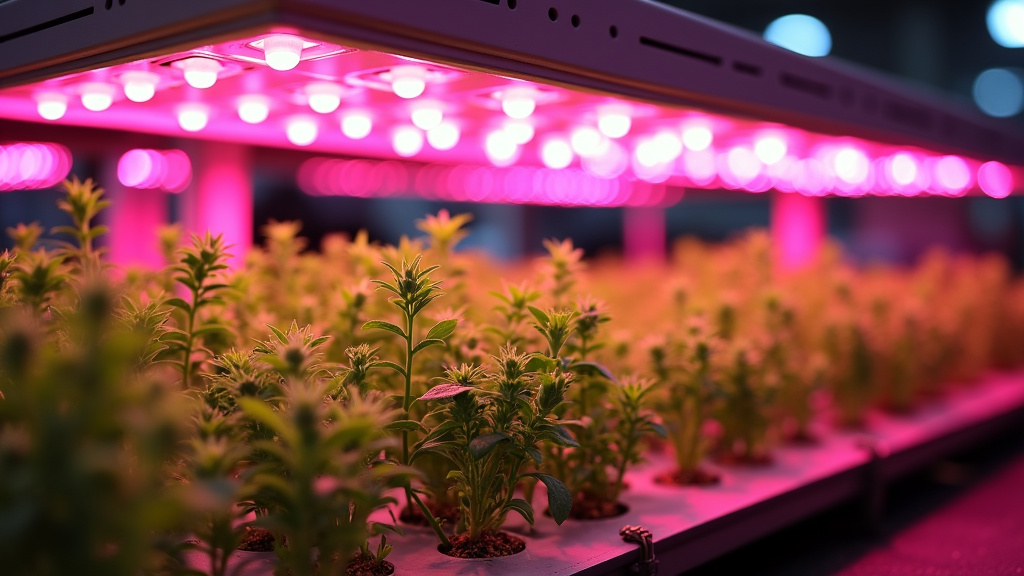
When you’re asking “how much does a good grow light cost?”, it’s smart to think beyond just the purchase price. The true cost includes electricity and bulb replacements.
| Light Type | Initial Cost | Energy Efficiency | Bulb Lifespan | Heat Output |
|---|---|---|---|---|
| Fluorescent | Low ($15-$150) | Medium | 10,000 hrs | Medium |
| HID (MH/HPS) | Medium ($100-$300) | Medium-High | 10,000-24,000 hrs | High |
| LED | High ($50-$1000+) | Very High | 50,000+ hrs | Low |
As you can see, LEDs, while pricier initially, generally save you money on your electricity bill and last for many years. This means fewer replacements and lower running costs. For example, replacing an HPS bulb every year can add up quickly (NCBI research often highlights energy savings in LED applications).
How to Choose a Grow Light Without Overspending
You don’t need the most expensive light to grow healthy plants. Smart choices can save you money without sacrificing your garden’s success.
Assess Your Needs First
Before you even look at prices, think about what you’re growing and where. Are you starting seeds, growing herbs, or trying to flower a large fruit-bearing plant? The answer drastically changes your light requirements.
- How many plants will you have?
- What is the size of your grow area (length x width)? Our guide on what size grow light you need for your grow tent can help you determine the right fit.
- What stage of growth are your plants in (seedling, vegetative, flowering)?
- What’s your budget for electricity?
Being clear on these points helps narrow down your options significantly.
A Checklist for Your Grow Light Purchase
Use this quick checklist to guide your decision and ensure you’re getting a good value.
- Matches your grow area size.
- Provides appropriate light spectrum for your plants.
- Has good energy efficiency (lower electricity bills!).
- Fits your overall budget (initial + running costs).
- Offers dimming options if you want flexibility.
- Comes from a reputable brand with good reviews.
Remember, a “good” grow light isn’t necessarily the priciest one. It’s the one that best fits your plants’ needs, your space, and your budget. Take your time, do a little research, and you’ll find a light that brings your indoor garden to life without emptying your wallet.
Conclusion
Choosing the right grow light means balancing initial cost with long-term efficiency. You’ve seen that while LEDs might cost more upfront, their energy savings and longevity often make them the most economical choice over time. Fluorescents are great for beginners or seedlings, and HIDs offer intense power for larger, established plants.
Ultimately, a “good” grow light is one that perfectly matches your plants’ needs, your space, and your budget. By assessing your specific goals and understanding the different options, you can confidently invest in a light that helps your indoor garden flourish without overspending. Take the next step and pick the light that will make your plants happy!
Frequently Asked Questions
What is the cheapest grow light I can buy that still works?
For basic needs like starting seeds or keeping a few herbs, you can find simple fluorescent (CFL) bulbs for $15-$30. Small, entry-level LED panels also start around $50-$70 and can be effective for very small setups.
Do I really need a full-spectrum grow light?
While many plants benefit from full-spectrum light, it’s not always strictly necessary. For leafy greens, basic blue and red spectrums work well. For flowering and fruiting plants, a full-spectrum light with a good balance of wavelengths will yield better results.
How much does it cost to run a grow light per month?
The running cost depends on the light’s wattage and your local electricity rates. A 100W LED running 12 hours a day might cost around $5-$10 per month. A 400W HID running for the same duration could easily be $20-$40+ per month due to higher wattage and heat output.
Can I use regular household LED bulbs instead of a dedicated grow light?
You can, but they are often not ideal. Household LEDs typically lack the specific light spectrum and intensity plants need for strong growth. While they might keep a plant alive, they usually won’t promote robust development or flowering. You can learn more about whether you can use regular LED lights to grow plants in our dedicated guide.
Is it worth spending more on an LED grow light?
For most home growers, yes, it’s worth it. While the upfront cost is higher, LEDs consume significantly less electricity and last for many years without needing bulb replacements. This often results in substantial savings over the lifespan of the light compared to HID or fluorescent options.