What Is Hydroponics?
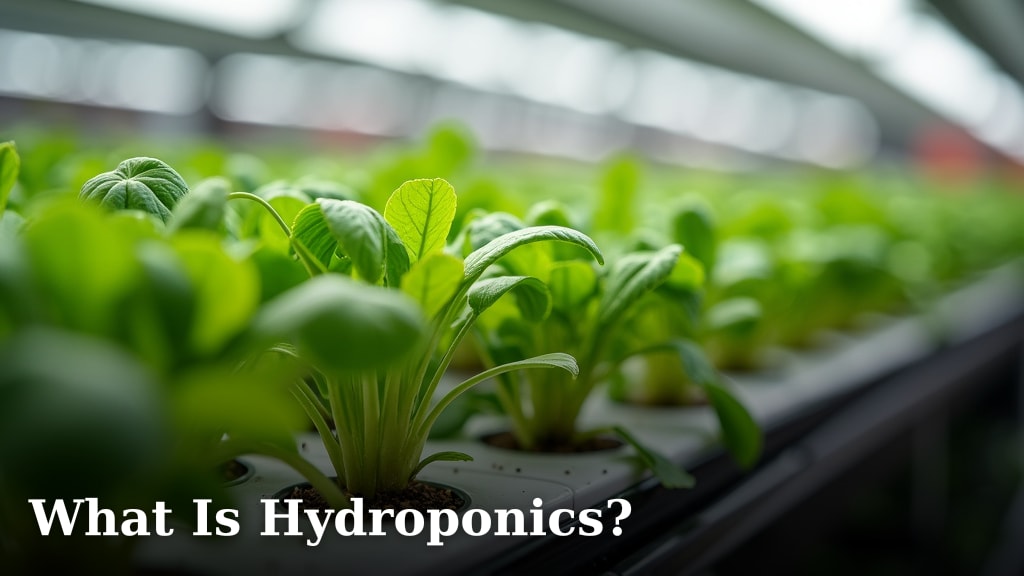
Hydroponics is a method of growing plants without soil. Instead, plants grow in a nutrient-rich water solution. This system supports the plant roots directly in the mineral solution or an inert medium.
You might be wondering how plants can thrive without dirt, right? We found that hydroponic systems use special growing mediums like rockwool or coco coir to support the plants physically. This lets you grow all sorts of crops, even in places where traditional gardening isn’t possible. It’s a method that offers many environmental benefits too.
- Hydroponics means growing plants without soil.
- Plants get nutrients directly from water.
- Various growing mediums offer physical support.
- You can grow many different kinds of plants.
- It uses less water than traditional farming.
So, are you curious about how this innovative gardening method works? Let’s dive deeper into the world of hydroponics and see what makes it so special.
Understanding Hydroponic Systems
So, you know hydroponics skips the soil. But how does it actually work? We found that the magic lies in delivering nutrient-rich water directly to plant roots. This method allows plants to absorb everything they need much more efficiently than in traditional soil gardening.
Imagine your plants getting a perfectly balanced meal delivered right to their mouths, all the time. That’s essentially what happens in a hydroponic setup. You control the environment, giving your plants optimal growing conditions.
Key Components of Any Hydroponic System
Every hydroponic system, no matter how simple or complex, relies on a few core elements. These work together to keep your plants happy and healthy.
Nutrient-Rich Water Reservoir
This is where it all begins. Your water reservoir holds a special blend of water and nutrients. We found that the quality of your water matters a lot here. It’s like the pantry for your plants.
- Water: Clean, fresh water is essential. Many growers use filtered water to remove impurities.
- Nutrients: These aren’t just any plant food. They’re specially formulated for hydroponics, containing all the essential minerals plants need to thrive.
- Aeration: Often, an air pump and air stone keep the water oxygenated. Roots need oxygen to breathe, just like we do!
Growing Medium
Since there’s no soil, plants need something to anchor themselves. This is where the growing medium comes in. It provides physical support for the roots.
We found many options for growing mediums, each with its own benefits. They’re all inert, meaning they don’t add nutrients themselves. They just hold moisture and provide stability.
- Rockwool: Made from spun molten rock, it’s great at retaining water and air.
- Coco Coir: This is made from coconut husk fibers and is very sustainable. It offers excellent aeration.
- Clay Pebbles (Hydroton): Lightweight and reusable, these provide good drainage and air circulation.
- Perlite/Vermiculite: Often used in mixes, these improve aeration and moisture retention.
Pump and Delivery System
How does that nutrient-rich water get to the plants? A pump is usually involved, along with some tubing. This system ensures a consistent supply of nutrients.
Think of it as the circulatory system of your hydroponic garden. It keeps everything flowing smoothly.
Different Types of Hydroponic Systems
Hydroponics isn’t a one-size-fits-all approach. There are several popular methods, each with its own design and operational style. Each system has its strengths, making some better suited for certain plants or environments.
We found that understanding these differences helps you choose the best setup for your needs. Let’s explore some of the most common ones.
Deep Water Culture (DWC)
This is one of the simplest and most popular methods, especially for beginners. In DWC, plant roots are suspended directly in a nutrient solution. It’s like a perpetual spa day for your plant’s roots!
- How it works: Plants are often held in net pots with a growing medium, and their roots dip directly into the oxygenated nutrient solution.
- Benefits: It’s very affordable to set up and maintain. Plants often grow quickly due to constant nutrient access.
- Best for: Leafy greens like lettuce, herbs, and some larger fruiting plants.
Nutrient Film Technique (NFT)
NFT is a system where a very thin film of nutrient solution flows over the roots of plants. It’s a continuous, gentle stream that provides constant hydration and nutrients.
- How it works: Plants sit in channels or tubes, and the nutrient solution recirculates over their roots.
- Benefits: Uses less water than some other systems and provides excellent oxygenation to the roots.
- Best for: Fast-growing, shallow-rooted plants like lettuce, spinach, and strawberries.
Drip Systems
Just like it sounds, drip systems deliver nutrient solution directly to the base of each plant, slowly and precisely. This method is highly customizable.
- How it works: A pump sends nutrient solution through small tubes to individual drip emitters near each plant. Excess water often drains back to the reservoir.
- Benefits: Offers precise control over nutrient delivery and is great for larger plants.
- Best for: Tomatoes, peppers, cucumbers, and other large fruiting plants.
Wick Systems
Wick systems are incredibly simple and don’t require pumps or electricity. They use a passive method to deliver water and nutrients.
- How it works: A wick (like a piece of rope or felt) draws nutrient solution from a reservoir up to the growing medium around the plant roots. Capillary action does all the work.
- Benefits: Very low cost, easy to set up, and requires minimal maintenance.
- Best for: Smaller, less water-demanding plants like herbs in small-scale setups.
Advantages of Growing with Hydroponics
Why would you choose hydroponics over traditional gardening? We found that there are several compelling reasons, ranging from efficiency to environmental benefits. Many experts point to these advantages as key drivers for its growing popularity (National Agricultural Library).
Resource Efficiency
Hydroponics is often lauded for its impressive resource efficiency. This means you get more out of less.
- Water Savings: We found that hydroponic systems can use up to 90% less water than traditional soil farming. This is because water is recycled and recirculated, minimizing waste.
- Space Savings: Since plants aren’t competing for soil nutrients, they can be grown much closer together. This allows for vertical farming and higher yields in smaller areas.
- Nutrient Control: You deliver exact nutrients, so nothing is wasted in the soil. Plants get precisely what they need, when they need it.
Faster Growth and Higher Yields
Who doesn’t love a faster harvest? Hydroponic plants often grow at an accelerated rate compared to their soil-bound counterparts. This is due to several factors.
- Optimized Nutrient Access: Roots don’t have to spread out and search for nutrients; they’re constantly bathed in them. This saves energy.
- Ideal Conditions: Growers can precisely control temperature, humidity, and light. This creates a perfect growing environment year-round.
- Absence of Soil-Borne Pests: Without soil, many common pests and diseases that live in the ground are eliminated. This reduces plant stress.
Environmental Benefits
Beyond personal gardening, hydroponics offers significant benefits for the planet. It’s a stepping stone towards more sustainable food production.
We found that reduced water usage and the ability to grow food locally are major environmental pluses. Think about fresh produce grown right in your city, cutting down on transportation costs and emissions.
- Less land required for cultivation.
- Reduced need for pesticides and herbicides.
- Minimizes nutrient runoff into natural ecosystems.
- Allows for year-round local food production.
- Supports food security in various climates.
- Reduces transportation carbon footprint.
Is Hydroponics Right for You?
After learning all about these systems, you might be asking: “Could I actually do this?” The great news is that hydroponics is surprisingly accessible. While it has advantages, it also comes with a learning curve.
We found that with a little research and dedication, many people successfully grow their own food hydroponically. Consider these points as you weigh your options.
| Factor | Hydroponics | Traditional Soil Gardening |
|---|---|---|
| Water Use | Highly efficient; recirculates | Can be water-intensive; evaporation losses |
| Space Needed | Less space; good for vertical/indoors | More space; typically outdoors |
| Growth Rate | Often faster and more consistent | Slower; dependent on soil quality |
| Pest Control | Fewer soil-borne pests/weeds | More prone to soil-borne pests/weeds |
| Cost (Initial) | Can be higher for setup | Lower for basic setup |
| Skill Level | Requires learning system management | Requires understanding soil/plant needs |
Conclusion
Hydroponics offers a fascinating shift from traditional gardening, letting you grow plants with incredible efficiency. You’ve discovered how it simplifies nutrient delivery and maximizes space, often leading to faster growth and bigger yields. While it involves a learning curve and initial setup costs, the environmental benefits and control you gain are substantial. We found it’s a rewarding way to connect with your food source and cultivate a greener future. Ready to give it a try?
Frequently Asked Questions
Is hydroponic food safe to eat?
Yes, hydroponically grown food is perfectly safe and often even cleaner than soil-grown produce. Because it’s grown without soil, there’s less risk of contamination from soil-borne pathogens or pesticides. You can enjoy your hydroponic harvests with confidence.
What are the biggest challenges with hydroponics for beginners?
For beginners, the main challenges are usually getting the nutrient solution balance right and monitoring pH levels. Also, managing water temperature and ensuring enough light can initially seem complex. However, many starter kits simplify these factors, helping you learn the ropes.
Can I grow any plant using hydroponics?
While many plants thrive in hydroponic systems, some are better suited than others. Leafy greens, herbs, and most fruiting vegetables like tomatoes and peppers do very well. Root vegetables like carrots or potatoes can be grown, but they often require specialized systems and more effort.
How often do I need to change the water in a hydroponic system?
The frequency depends on your system type, plant size, and reservoir volume. Generally, you’ll need to top off the water every few days as plants absorb it. A full reservoir change, where you replace all the water and nutrients, is typically recommended every 1-2 weeks to prevent nutrient imbalances.
Does hydroponics require a lot of electricity?
The electricity usage varies greatly based on your system’s size and complexity. Smaller systems, especially wick systems, use very little or no electricity. Larger, more automated setups with pumps, lights, and environmental controls will naturally consume more power, but many home growers find it manageable.