
What Is the Best LED Grow Light Wattage for a 4×4 Tent?
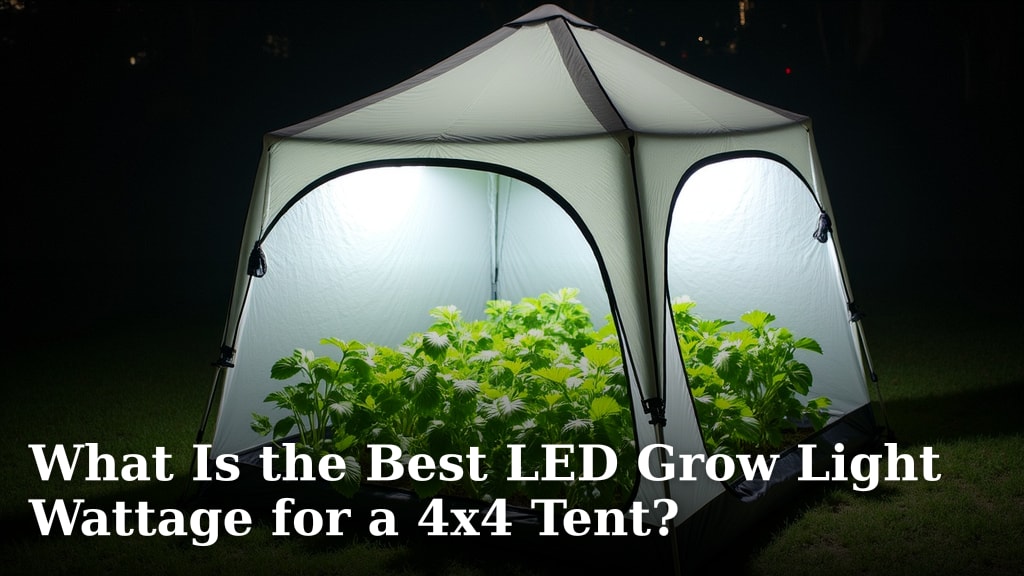
For a 4×4 grow tent, a good starting point for LED wattage is between 400 and 600 true watts. This range generally provides enough light intensity for healthy plant growth. Aiming for 30-40 watts per square foot is a widely recommended target. Your plants will thank you for not being underlit!
Choosing the right LED wattage is key to a successful indoor garden. Too little, and your plants might stretch and become weak. Too much, and you risk light burn. We found that matching wattage to your tent size is a smart way to maximize yields. Many growers agree that proper wattage is a foundational element.
- 400-600 true watts is the sweet spot for a 4×4 tent.
- Aim for 30-40 watts per square foot.
- This ensures enough light without causing damage.
- It helps you get the best possible harvests.
Let’s break down exactly how to pick the best LED wattage for your 4×4 grow tent so you can get your plants thriving!
Finding the Right LED Wattage for Your 4×4 Tent
So, you’ve got a 4×4 grow tent and you’re ready to light it up! Deciding on the best LED wattage for this space can feel a bit like navigating a maze. But don’t worry, we’re here to help you find that sweet spot. The goal is to give your plants enough light to thrive without scorching them. It’s all about balance.
Many growers find that between 400 and 600 true watts is the magic range for a 4×4 tent. This isn’t the wattage listed on the box, but the actual power the light draws from the wall. Why is this number so important? Because it directly impacts how much light energy your plants receive. Too little light, and your plants might get leggy, stretching for the sky in search of more. Too much, and you risk “light burn,” which can damage your precious greenery.
Understanding True Wattage vs. Advertised Wattage
This is a really common point of confusion. When you see an LED light advertised as 1000 watts, it often doesn’t mean it’s actually using 1000 watts of electricity. Manufacturers might use this number to indicate the power of the diodes or to compare it to older, less efficient lighting technologies. We always recommend looking for the “true wattage” or “power draw” on the product specifications.
This true wattage is what tells you how much power the light actually consumes. It’s the number you need for calculations. Think of it like a car’s horsepower versus its actual engine size. You need to know how much fuel it burns to understand its real performance.
The “Watts Per Square Foot” Rule of Thumb
A widely accepted guideline for indoor growing is to aim for a certain number of true watts per square foot of your grow space. For a 4×4 tent, your total growing area is 16 square feet (4 feet x 4 feet). Most experts and experienced growers suggest a range of 30 to 40 true watts per square foot for flowering plants.
Let’s do the math for your 4×4 tent:
- Minimum: 16 sq ft * 30 watts/sq ft = 480 true watts
- Maximum: 16 sq ft * 40 watts/sq ft = 640 true watts
This calculation confirms that the 400-600 true watt range mentioned earlier is a solid target. It provides enough light intensity to support robust growth and good yields. Going much lower than 30 watts per square foot might leave your plants wanting more. Pushing significantly above 40 watts per square foot can increase the risk of light burn if not managed carefully.
Factors That Influence Your Wattage Needs
While the watts per square foot rule is a great starting point, it’s not the only factor. Several other things can affect how much light your plants need and how much wattage is ideal for your setup. It’s good to consider these variables to fine-tune your choice.
Plant Type and Growth Stage
Not all plants have the same light requirements. Seedlings and young plants generally need less intense light. They are more sensitive and can be easily damaged by too much power. As your plants enter the vegetative stage, their light needs increase. During the flowering or fruiting stage, they demand the most light energy.
For a 4×4 tent, if you’re primarily growing light-loving plants like tomatoes or peppers, you’ll want to be at the higher end of the recommended wattage range (closer to 600 true watts). If you’re growing more shade-tolerant plants, or if you’re focusing on the seedling and vegetative stages, you might be perfectly fine with the lower end (around 400-500 true watts).
Light Spectrum and Efficiency
The spectrum of light your LED produces is just as important as its wattage. Modern LEDs offer full-spectrum light, meaning they emit wavelengths across the visible light range, mimicking natural sunlight. Some lights have adjustable spectrums, allowing you to tailor the light to different growth stages.
Also, consider the efficiency of your LED light. Higher efficiency lights provide more usable light (measured in PPFD – Photosynthetic Photon Flux Density) for the same amount of power consumption. A highly efficient light might allow you to achieve optimal light levels with slightly fewer true watts compared to a less efficient model. We found that looking at the manufacturer’s PPFD charts for your tent size can be very revealing.
Light Penetration and Canopy Management
In a grow tent, light needs to penetrate the plant canopy to reach the lower leaves and branches. Taller plants or dense foliage can create shade, starving lower parts of the plant. A light with good penetration is essential. This is often related to the quality of the diodes and the design of the light fixture.
If your plants grow very tall or bushy, you might need a more powerful light to ensure the lower levels get enough energy. Alternatively, you can manage your canopy through techniques like training (e.g., LST – Low-Stress Training) and pruning. Good canopy management helps distribute light more evenly, reducing the need for extremely high wattage.
Distance from Canopy
The distance between your LED light and your plants is a critical factor. Light intensity decreases rapidly with distance. Most LED manufacturers provide recommended hanging heights for their lights based on wattage and tent size. Generally, you want to hang your light as close as possible without causing heat stress or light burn.
If your light fixture produces minimal heat, you can often hang it closer, increasing the light intensity (PPFD) at the canopy. If your light runs hotter, you’ll need to hang it higher, which can reduce intensity. For a 4×4 tent, we’ve seen many successful growers adjust their light height to get the perfect PPFD reading.
Putting It All Together: What to Look For
When you’re out shopping for an LED grow light for your 4×4 tent, keep these points in mind. You want a light that balances power, efficiency, and spectrum for optimal plant growth.
Reviewing Manufacturer Specifications
Always check the manufacturer’s specifications carefully. Look for the true wattage (power draw). Also, see if they provide PPFD charts or recommended coverage areas. Many reputable brands will offer data showing the light intensity they provide at different distances and coverage sizes.
A light that claims to cover a 4×4 tent is a good sign. But verify that it provides enough *intensity* for the flowering stage. We found that lights designed specifically for a 4×4 footprint often perform best. They are engineered to distribute light evenly across that area.
Considering Your Budget and Goals
LED grow lights can be a significant investment. While it’s tempting to go for the cheapest option, remember that quality often correlates with performance and longevity. Higher-quality LEDs tend to be more efficient and have better heat management.
Think about your long-term goals. Are you looking to maximize yields, or are you a hobbyist grower? Your budget might influence whether you can afford a top-tier, highly efficient light or if you need to find a solid performer within a more modest price range. A light around 450-550 true watts is often a great balance of performance and cost for a 4×4 tent.
Example Light Comparisons for a 4×4 Tent
Let’s imagine a couple of scenarios for a 4×4 tent:
| Scenario | Ideal True Wattage Range | Plant Type/Stage | Light Considerations |
|---|---|---|---|
| Seedling/Early Veg | 300-450 watts | Young, sensitive plants | Lower intensity, wider spread, dimmer option beneficial |
| Full Veg/Early Flower | 450-550 watts | Robust growth, building structure | Good intensity, full spectrum |
| Peak Flower/Fruiting | 500-650 watts | Maximum energy demand, dense buds | High intensity, excellent penetration, full spectrum |
This table shows how your needs can change. For a 4×4 space, you’re generally looking for a light that can deliver at least 400-600 true watts effectively during the critical flowering phase. If your light has a dimmer, you can use it to adjust intensity for different stages.
Your 4×4 Tent Lighting Checklist
To make sure you’re on the right track, consider this quick checklist:
- Confirm the true wattage (power draw) is between 400-600 watts.
- Calculate your target watts per square foot (aim for 30-40).
- Look for a full-spectrum light.
- Check the manufacturer’s PPFD charts or recommended coverage.
- Consider if the light has a dimmer for flexibility.
- Read reviews from other growers using the light in similar tent sizes.
Conclusion
So, you’ve navigated the wattage maze for your 4×4 tent! Remember, aiming for 400 to 600 true watts is your sweet spot. This range ensures your plants get the light they crave for bountiful harvests. Always prioritize true wattage over advertised numbers. Consider your specific plants and their growth stages. Fine-tuning light distance and spectrum will help too. Now, go ahead and choose a light that fits your needs. Your thriving plants are waiting!
Frequently Asked Questions
What’s the difference between “true wattage” and advertised wattage on LED grow lights?
Advertised wattage often represents the light’s potential or equivalent to older bulbs. True wattage, or power draw, is the actual electricity the light consumes from the wall. You need to focus on true wattage for accurate calculations.
Is 300 true watts enough for a 4×4 tent?
For a 4×4 tent, 300 true watts might be a bit low for optimal flowering plants. While it could work for seedlings or the vegetative stage, it likely won’t provide enough intensity for maximum yields during bloom. We found 400-600 watts to be the ideal range.
Can I use two smaller LED lights instead of one large one in my 4×4 tent?
Yes, using two smaller lights can work well! It can help provide more even coverage across your 4×4 canopy. Just ensure the combined true wattage meets your target of 30-40 watts per square foot.
How important is the light spectrum for my 4×4 tent’s wattage needs?
Spectrum is very important alongside wattage. Full-spectrum lights mimic sunlight and are best for all stages. While wattage provides intensity, the right spectrum ensures your plants utilize that energy effectively for healthy growth and flowering.
What does “dimmable” mean on an LED grow light, and do I need it for a 4×4 tent?
A dimmable light allows you to adjust its intensity. This is beneficial for your 4×4 tent because you can lower the light for seedlings and early growth, then increase it for flowering. It adds flexibility and can help prevent light burn.
