
Do LED Grow Lights Use a Lot of Electricity?
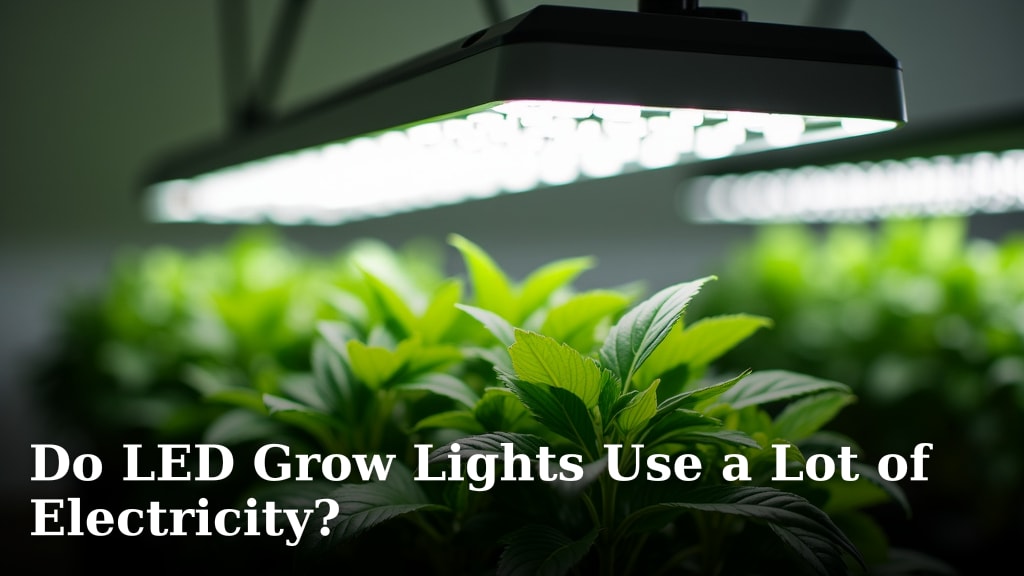
No, LED grow lights generally do not use a lot of electricity when compared to older grow light technologies. They are known for their energy efficiency. This means they can save you money on your power bill.
You might be wondering if making the switch to LEDs is worth it. Many growers find that these lights offer better performance with lower energy costs. We found that the upfront investment often pays for itself over time.
- LED grow lights use less power.
- They save money on electricity bills.
- LEDs are very energy efficient.
- The initial cost can be higher, but it pays off.
Let’s dive into the details of exactly how much power LED grow lights use. We will also look at how they compare to other options.
Understanding LED Grow Light Power Consumption
You want to know if LED grow lights will drain your wallet, right? We found that these lights are actually quite efficient. They use much less power than older lighting options, which can really add up in savings over time.
Think of it this way: LEDs are like the compact fluorescent bulbs of the grow light world. They do the job with less energy. This means your plants get the light they need without a huge electricity bill.
How Many Watts Do LED Grow Lights Use?
The wattage of an LED grow light tells you how much electricity it consumes. This is a key factor in your energy bill. We found that most home grow lights range from 50 to 500 watts.
A 100-watt LED grow light, for example, uses about as much power as a bright incandescent bulb. However, it gives off much more light for plant growth. The actual power draw is what you pay for, not the “equivalent” wattage often advertised.
Comparing True Wattage vs. Equivalent Wattage
When you shop for grow lights, you might see “1000W equivalent” on some LED packaging. This can be misleading. That number usually refers to the light output compared to an old HPS or MH light, not the actual power draw. Always look for the “true wattage” or “actual power draw” listed in the specifications. This is the number that impacts your electricity usage directly.
The Cost of Running Your LED Grow Lights
You’re probably wondering, “How much will this actually cost me?” The good news is, calculating the cost is straightforward. You just need a few pieces of information.
We found that understanding these factors helps you budget effectively. You can plan your grow room setup with confidence, knowing your approximate energy costs upfront.
Calculating Daily and Monthly Electricity Costs
To figure out your daily cost, you’ll need three things:
- The true wattage of your LED grow light (let’s say 200 watts).
- The number of hours you run the light per day (e.g., 18 hours).
- Your local electricity rate (e.g., $0.15 per kilowatt-hour).
Here’s a simple formula: (Watts x Hours per day) / 1000 x Rate per kWh = Daily Cost.
So, for a 200W light running 18 hours a day at $0.15/kWh:
(200 x 18) / 1000 x $0.15 = $0.54 per day.
Multiply that by 30 days, and you get about $16.20 per month. That’s a pretty reasonable cost for a significant light source!
Factors Affecting Your Electricity Bill
Several things can change your final bill. The number of lights you use is a big one. Running multiple lights will naturally increase your consumption. Also, the length of your lighting cycle, such as 12 hours versus 18 hours, directly affects usage. Your electricity provider’s rates also play a huge role; these can vary significantly by region (U.S. Energy Information Administration).
LEDs vs. Traditional Grow Lights: An Energy Showdown
When it comes to energy use, LEDs are typically the champions. They often beat older lighting technologies hands down. We found that this efficiency is one of the main reasons growers switch to LEDs.
You’ll notice a difference in your energy bill. It’s like upgrading your old, gas-guzzling car to a fuel-efficient hybrid. You still get where you need to go, but with less money spent on fuel.
Comparing HPS/MH vs. LED Grow Lights
Traditional grow lights, like High-Pressure Sodium (HPS) and Metal Halide (MH), were once the standard. They use a lot of electricity. They also produce a lot of heat, which requires more energy for cooling.
LEDs, by contrast, use their energy more effectively to produce light for plants. They convert a higher percentage of electricity into photosynthetically active radiation (PAR). We found this means less wasted energy as heat (U.S. Department of Energy).
| Light Type | Typical Wattage (for similar plant coverage) | Energy Efficiency | Heat Output |
|---|---|---|---|
| HPS/MH | 600-1000W | Lower | Very High |
| LED | 200-500W | Higher | Moderate to Low |
Why LED Efficiency Matters for Your Grow
High efficiency means more than just a lower electricity bill. It also means less heat in your grow space. This can simplify your climate control setup. You might not need as many fans or a powerful air conditioner, saving even more energy.
Plus, less heat means a more stable environment for your plants. We found that stable temperatures lead to healthier, more productive plants. This is a win-win for both your plants and your wallet.
Making the Most of Your LED Grow Light Investment
You’ve chosen LEDs for their efficiency, which is a smart move. But there are still ways to optimize their performance and save even more. It’s all about being strategic with your setup and usage.
Think of it as fine-tuning your gardening process. Small adjustments can lead to bigger savings and better results. We’re here to guide you through some of those key adjustments.
Tips for Reducing Energy Consumption with LEDs
Here are some straightforward tips to ensure you’re getting the most out of your LED grow lights while keeping costs down:
- Choose the right wattage: Don’t over-light your space. Match your LED wattage to the size of your grow area.
- Use a timer: Automate your lighting schedule. Consistent light cycles prevent wasted electricity from lights being on too long.
- Clean your reflectors and lights: Dust and dirt can block light, making your lights work harder. Keep them clean for maximum output.
- Optimize plant spacing: Group plants efficiently so light isn’t wasted on empty spaces. This ensures all your plants get enough light.
- Utilize dimming features: Many modern LEDs have dimmable drivers. Dim your lights during vegetative growth or if plants show signs of stress.
- Insulate your grow space: A well-insulated area retains heat better, reducing the need for extra heating or cooling.
The Long-Term Savings and Benefits of LEDs
While the initial cost of LED grow lights can be higher, we’ve seen that the long-term savings are substantial. You’re not just saving on electricity. You’re also benefiting from a longer lifespan for the lights themselves.
LEDs typically last much longer than HPS or MH bulbs, which need frequent replacement. This means fewer purchases over time, adding to your overall savings. We found that this reduced maintenance and energy cost makes LEDs a smart investment for serious growers.
Conclusion
You now know that LED grow lights are incredibly energy efficient. They don’t use a lot of electricity compared to older options. We’ve shown how their lower wattage and effective light conversion save you money. You can expect significantly lower electricity bills.
The initial investment in LEDs pays off through these savings and their long lifespan. By applying our tips, like using a timer and dimming features, you can maximize efficiency. Start planning your optimized grow space today. Your plants and your wallet will thank you!
Frequently Asked Questions
Are LED grow lights safe to leave on 24/7?
While LEDs are efficient, leaving them on 24/7 is usually unnecessary and wasteful. Plants need a dark period to complete their natural growth cycles. Most plants thrive with 12 to 18 hours of light per day, not constant illumination.
How long do LED grow lights typically last?
LED grow lights have an impressive lifespan. Most quality units are rated for 50,000 to 100,000 hours of use. This means they can last 5 to 10 years or even longer, depending on your daily usage.
Does the color spectrum of an LED light affect its power usage?
Generally, the color spectrum itself doesn’t significantly change the overall power draw (wattage) of an LED fixture. A 200-watt LED light will consume 200 watts, regardless of whether it’s full spectrum or tuned for specific colors. Different diodes use power, but the total wattage is what counts for consumption.
Can I use household LED bulbs for growing plants?
While some household LED bulbs can help seedlings or very low-light plants, they aren’t ideal for robust growth. They lack the specific spectrum and intensity plants need to thrive. Dedicated LED grow lights are designed with the correct light wavelengths for optimal photosynthesis.
Do more expensive LED grow lights use less electricity?
Not necessarily. A higher price often indicates better quality components and higher efficiency (more light per watt). This means they might produce more usable light for the same wattage. However, a 200-watt expensive light still consumes 200 watts, just potentially more effectively.
