
Are Grow Lights Safe for Pets?
Yes, most grow lights are safe for pets when used properly. Your furry friends are generally not at risk from the light itself. However, some grow lights can emit heat or contain small parts that could be a concern. It’s smart to be aware of potential hazards.
When setting up your indoor garden, it’s natural to wonder about your pets’ safety. Many grow lights are designed with safety in mind, using cool LED technology. But you still need to consider how they are positioned and if your pets are likely to interact with them. We’ll cover the main safety points.
- Most grow lights are safe for pets.
- Watch out for lights that get very hot.
- Keep lights out of reach if pets might chew them.
- Ensure cords are not accessible to pets.
- Proper placement is key for pet safety.
Let’s walk through exactly how to make your grow light setup safe for every member of your household, including the four-legged ones!
Keeping Your Pets Safe Around Grow Lights
Most grow lights pose little to no danger to your pets. You can enjoy your indoor plants and your pets. The main risks are often related to heat and physical hazards, not the light itself. We’ve researched common concerns.
Understanding Different Grow Light Types and Pet Safety
Grow lights have come a long way. Many modern options are designed to be safe for home use. The type of light you choose can influence potential risks for your pets.
LED Grow Lights: A Cooler Option
LED grow lights are often the safest choice for pet owners. They produce very little heat compared to older lighting technologies. This means your pet is less likely to get burned if they get too close. They also tend to be energy-efficient and long-lasting.
You won’t typically find hot bulbs that could cause a burn. The light spectrum they emit is also optimized for plants. Research from horticultural sources suggests LEDs are a safe bet for most home gardening setups.
HID (High-Intensity Discharge) and Halogen Lights: Exercise Caution
If you’re using older types of grow lights like HID (metal halide, high-pressure sodium) or halogen bulbs, you need to be extra careful. These lights can get very hot. A curious pet could easily get a painful burn. They also consume more energy.
We found that these lights are often used in more advanced setups. For the average home gardener with pets, they present a higher risk. Always ensure these are placed well out of reach. Consider a protective cage or barrier if your pet is known to explore.
Fluorescent Grow Lights: Moderate Heat Concerns
Fluorescent lights, like T5s or CFLs, generate less heat than HIDs. However, they can still get warm enough to cause a mild burn. They are generally safer than HIDs, but not as cool as LEDs.
The main concern here is still proximity. If your pet likes to perch on top of shelves where these lights are, they could get too close. We recommend mounting them securely above your plants and ensuring there’s adequate clearance.
Physical Hazards: What to Watch Out For
Beyond heat, there are other physical dangers associated with grow lights. These are things you might not immediately think of when considering light safety.
Chewable Components and Cords
Many pets, especially puppies and kittens, love to chew. Electrical cords, ballast housings, or even plastic parts of the light fixture can be tempting targets. Ingesting wires or plastic can lead to choking or internal injuries. It’s a serious risk.
We found that securing all cords is a top priority. Use cord covers, zip ties, or run them behind furniture. Make sure no dangling cords are accessible. If your pet is a persistent chewer, consider a more enclosed grow tent system.
Fragile Bulbs and Glass
Some older grow light bulbs can be made of glass. If knocked over or broken, shattered glass can be a hazard to both pets and humans. This is more common with certain types of HID bulbs.
Placing lights securely is key. Ensure they are firmly mounted or placed where they won’t be easily knocked. If a bulb does break, clean it up immediately and thoroughly, using gloves and a vacuum.
Placement is Key: Creating a Safe Zone
The physical location of your grow lights is perhaps the most critical factor in pet safety. Think like your pet. Where would they go? What would they try to investigate?
Elevate Your Lights
The simplest way to keep lights safe is to place them high up. Mount them on ceilings, tall shelves, or in specialized grow tents. This keeps them out of reach of curious paws and noses. It also prevents accidental bumps.
We advise using sturdy shelving units. Ensure they are stable and won’t tip over. The goal is to create a designated plant zone that your pet can’t easily access.
Use Protective Barriers
For lights that generate heat or have accessible parts, consider adding a barrier. This could be a wire cage around the bulb or fixture. It acts like a little fence, preventing your pet from making direct contact. This is especially useful for open shelving setups.
Secure Hanging Systems
If you’re hanging lights, ensure the system is robust. Use strong hooks and adjustable hangers. Make sure the cords are tidy and not hanging loosely. Pets might see a swinging cord as a toy. A secure hanging system prevents this temptation.
Light Spectrum and Pet Well-being
You might wonder if the light spectrum itself affects pets. Most grow lights are designed to emit specific wavelengths for plant growth. These are generally not harmful to animal eyes.
We found that while the light is intense for plant photosynthesis, it’s not typically in the range that causes damage to mammalian vision. However, it’s still wise to avoid shining any bright light directly into your pet’s eyes for extended periods. It’s good practice, much like you wouldn’t shine a flashlight in their face.
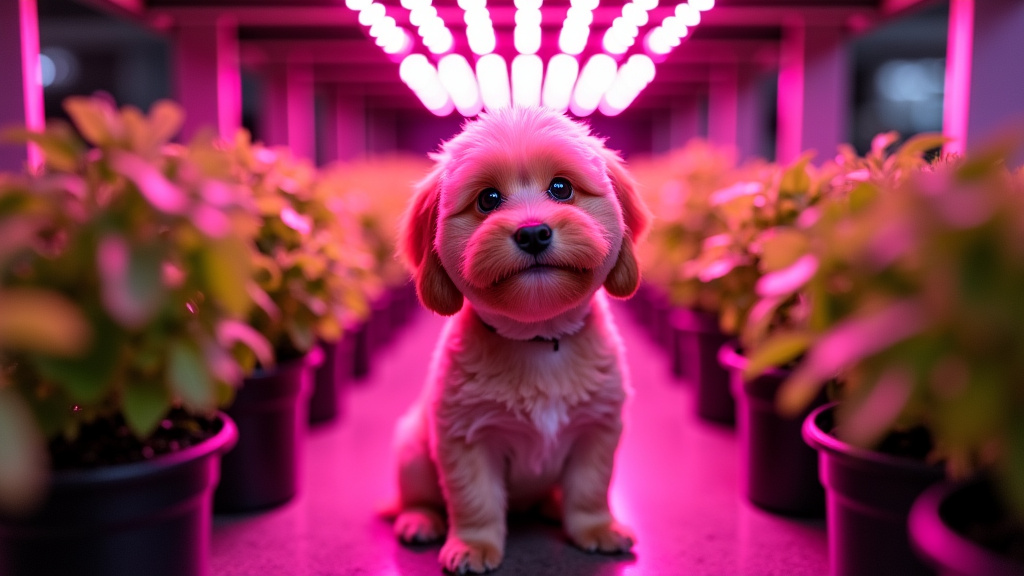
Specific Considerations for Different Pets
Your pet’s species and habits matter. What’s safe for a lazy cat might not be for an energetic puppy or an inquisitive bird.
Dogs and Cats
These pets are most at risk from heat and chewing hazards. Keep lights elevated and cords secured. If your dog is prone to jumping, ensure your setup is very high or enclosed. For cats, they love to climb and perch, so ensure shelves are stable and lights aren’t within easy reach.
Birds
Birds are particularly sensitive and curious. They can fly into things and peck at materials. Ensure grow lights are well out of flight paths. Avoid any materials that could be ingested if pecked. Consider a fully enclosed grow tent for birds.
Small Mammals (Hamsters, Guinea Pigs, Rabbits)
These pets often live in cages. Ensure their cages are nowhere near grow lights. If they have an outdoor run, make sure the grow lights are positioned high above and away from this area. The main risk is accidental exposure if the cage is moved or if lights are in the same room and fall.
When to Choose a Grow Tent
For many pet owners, a grow tent offers the best solution. These are enclosed structures that keep everything contained. Your plants, your lights, and your wiring are all safely inside. This creates a physical barrier between your pets and the equipment.
We found that grow tents are ideal for those with very active or destructive pets. They also help control the environment for your plants. It’s a win-win for plant parents and pet parents alike.
A Quick Safety Checklist for Your Grow Lights
Here’s a simple checklist to ensure your setup is pet-friendly:
- Elevate: Place lights high enough so pets can’t reach them.
- Secure Cords: Use covers or ties to keep wires tidy and out of reach.
- Check Heat: Ensure lights don’t get too hot for accidental contact.
- Barriers: Install cages or guards around hot or fragile bulbs.
- Stable Mounting: Make sure all fixtures and shelves are securely attached.
- Consider a Tent: For ultimate safety, use an enclosed grow tent.
Conclusion
You’ve learned that grow lights can be perfectly safe for your pets with the right precautions. We found that LED lights are your coolest and safest option. Always prioritize placing your lights out of reach and securing any dangling cords. By taking these steps, you create a harmonious home where both your plants and your furry family members can thrive. Now, go ahead and set up your safe and happy growing space!
Frequently Asked Questions
Are grow lights bad for my pet’s eyes?
Most grow lights are designed for plant growth and emit light not typically harmful to pet eyes. We found research suggesting the spectrums are not damaging to mammalian vision. However, it’s still wise to avoid shining any bright light directly into your pet’s eyes for extended periods, just as a general good practice.
What if my pet chews on the grow light cord?
Chewing on cords is a serious hazard that can lead to electrical shock or internal injuries. We strongly advise using cord covers or securing them out of reach with zip ties. If your pet is a known chewer, consider a completely enclosed grow tent system for maximum safety.
Do I need to worry about pets touching hot grow lights?
Yes, this is a primary concern, especially with older HID or halogen lights. These can get very hot and cause painful burns. We recommend using cooler LED lights whenever possible. For hotter lights, always ensure they are placed well out of your pet’s reach or use protective barriers.
Can I use grow lights in the same room as my bird?
Birds are particularly sensitive and curious, so extra caution is needed. Ensure grow lights are well out of their flight path and not accessible for pecking. For maximum safety with birds, we found that a fully enclosed grow tent is the best solution to prevent any accidental contact.
Is it safe to have grow lights near my small mammal’s cage?
It’s best to keep grow lights well away from small mammal cages. Ensure cages are not placed underneath or too close to any lighting. We found that accidental exposure is the main risk if cages are moved or if lights are in the same room and could fall.
