
Can You Use Grow Lights for Aquarium Plants?
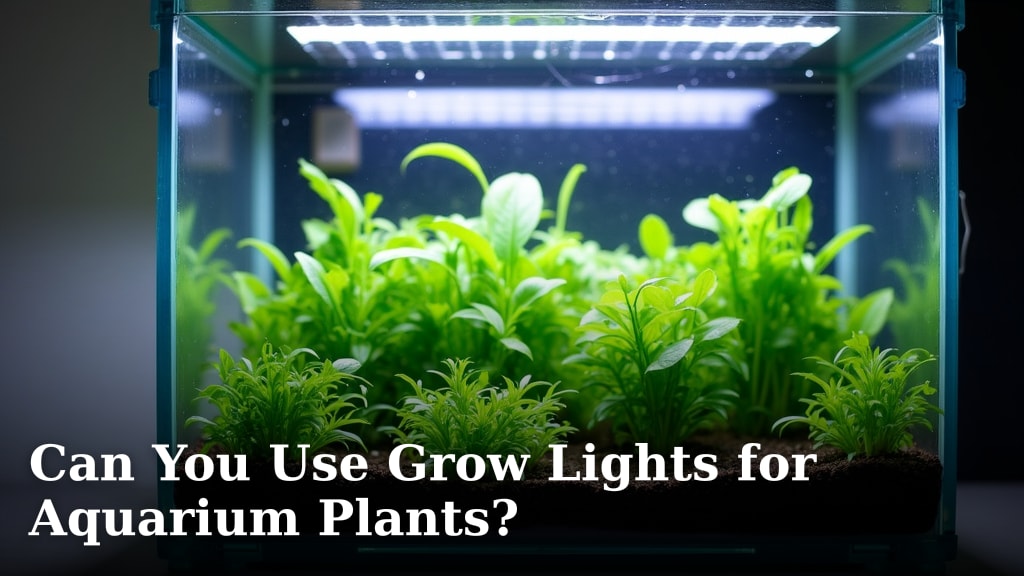
Yes, you can absolutely use grow lights for aquarium plants, and often, it’s a fantastic way to help them thrive! Many standard household or shop lights can be adapted, but using lights specifically designed for plant growth is usually the most effective method for lush, vibrant aquatic flora. We found that the right light makes a world of difference in plant health and appearance.
Thinking about supplementing your aquarium’s natural light or switching entirely? You’re on the right track to a more beautiful tank. The type of grow light and its intensity are key factors. Many plant keepers are turning to LEDs because they offer great control over the light spectrum and are energy-efficient, which is a win-win for your wallet and your plants.
- Grow lights can work for aquarium plants.
- Specific plant grow lights offer the best results.
- LEDs are a popular, efficient choice for aquariums.
- Light spectrum and intensity are important considerations.
Below, we’ll break down how to choose and use grow lights for your aquarium plants to ensure they get the perfect amount of light for healthy growth. Let’s get your underwater garden flourishing!
Lighting Your Aquarium Plants: The Grow Light Guide
Yes, using grow lights for your aquarium plants is a smart move. You might be wondering if those lights designed for herbs on your windowsill could work underwater. The answer is often yes, but with some important considerations. We’ve found that the right light source can transform a struggling aquarium into a vibrant underwater garden.
Think of it like sunlight for your houseplants. Plants need specific wavelengths and amounts of light to photosynthesize, which is their way of eating. In an aquarium, natural light can be inconsistent and often insufficient. This is where grow lights step in. They provide the controlled environment your aquatic plants need to thrive.
Understanding Aquarium Lighting Needs
Aquatic plants, just like their terrestrial cousins, need light for photosynthesis. This process converts light energy into chemical energy, fueling growth. Different plants have different light requirements. Some, like Java Fern or Anubias, are low-light plants. Others, such as carpeting plants or red stem plants, are high-light plants and need much more intense illumination.
The Spectrum of Light Your Plants Crave
Light isn’t just about brightness; it’s also about color, or spectrum. Plants primarily use the red and blue ends of the light spectrum for photosynthesis. Red light encourages flowering and fruiting, while blue light promotes leafy growth. A full-spectrum light provides a balance of these colors, mimicking natural sunlight. Many aquarium-specific grow lights are designed to offer this optimal spectrum. We’ve found that a good balance ensures all plant types in your tank can benefit.
You might see terms like “Kelvin” (K) and “PAR” (Photosynthetically Active Radiation) when researching lights. Kelvin measures the color temperature of the light. For planted aquariums, a range of 6500K to 10,000K is often recommended for a good balance of growth-promoting light. PAR, on the other hand, measures the amount of light available for photosynthesis. Higher PAR values mean more light energy for your plants. This is especially important for high-light plants.
Intensity Matters: How Much Light is Enough?
The intensity of light is just as critical as its spectrum. Too little light, and your plants will become leggy, pale, and may even melt away. Too much light, especially if not balanced with CO2 and nutrients, can lead to unsightly algae blooms. Finding the sweet spot is key to a healthy, balanced aquarium ecosystem. Many experts suggest starting with moderate intensity and adjusting based on plant response and algae growth.
Consider the depth of your aquarium, too. Light intensity decreases as it travels through water. A deep tank will require a more powerful light than a shallow one to achieve the same intensity at the substrate level. We’ve found that a light that seems bright at the surface might be quite dim at the bottom, starving plants that live there.
Types of Grow Lights You Can Use
When you think of grow lights, you might picture those intense purple lights. While those are effective, there are other options that blend better into a home environment. The most common types you’ll encounter for aquariums are LEDs, fluorescents, and occasionally metal halides.
LEDs: The Modern Aquarist’s Choice
Light Emitting Diodes (LEDs) have become incredibly popular for planted aquariums, and for good reason. They are highly energy-efficient, meaning they use less electricity than older lighting technologies. This can lead to significant savings on your energy bills. LEDs also produce very little heat, which helps maintain a stable water temperature in your tank. This is a big plus, as fluctuating temperatures can stress your fish and plants.
Another major advantage of LEDs is their controllability. Many LED aquarium lights allow you to adjust the color spectrum and intensity. Some even offer programmable sunrise and sunset features, mimicking natural light cycles. This level of control is fantastic for fine-tuning your lighting to meet the specific needs of your plants. We found that programmable timers are a huge convenience, taking the guesswork out of daily lighting schedules.
Full Spectrum LEDs
Most modern aquarium LED lights are designed to be full-spectrum. This means they emit a range of wavelengths that plants can use for photosynthesis. You’ll often find LEDs with a mix of white, red, and blue diodes to create a balanced light output. This is generally the best option for a mixed planted tank.
Adjustable LEDs
For those who want ultimate control, adjustable LEDs are the way to go. These lights allow you to dial in the exact spectrum and intensity. Some even offer color customization, letting you create unique lighting effects. While these can be more expensive upfront, the ability to perfectly match your lighting to your plants’ needs can be a worthwhile investment for serious aquascapers.
Fluorescent Lights: The Tried and True Option
Fluorescent lights, particularly T5 High Output (T5 HO) fixtures, have been a staple in the planted aquarium hobby for years. They provide good light intensity and a decent spectrum, especially when you choose bulbs specifically designed for plant growth. They are generally less expensive than LEDs initially.
However, fluorescent bulbs have a shorter lifespan than LEDs. They also tend to lose their intensity over time, meaning you’ll need to replace them every 6-12 months to maintain optimal light levels for your plants. While efficient, they don’t offer the same level of control or energy savings as modern LEDs. We found that keeping track of replacement schedules for fluorescent bulbs is essential for consistent plant health.
Can Household or Shop Lights Be Used?
This is where things get a bit tricky, but often possible with adaptation. A standard household LED bulb or a shop fluorescent fixture might seem like an easy solution. The main challenge is that most household lights aren’t designed with plant growth in mind. They often lack the necessary red and blue wavelengths, or they emit too much green and yellow light, which plants don’t use as effectively. Also, the intensity might be too low for most planted tanks.
If you are considering using a household light, look for “full-spectrum” or “daylight” bulbs. You’ll likely need multiple bulbs to achieve adequate intensity for most aquarium plants. You’ll also need to find a way to safely mount them over your aquarium, ensuring they are water-resistant. Many hobbyists modify existing fixtures or build custom setups for this. We’ve seen successful low-tech tanks using adapted desk lamps with plant-specific bulbs, but it requires careful research and a bit of DIY spirit.
Choosing the Right Grow Light for Your Aquarium
Selecting the perfect grow light involves considering several factors. Your budget, the types of plants you want to grow, and the size and depth of your aquarium all play a role. It’s easy to get overwhelmed by all the options, but focusing on a few key areas will help you make a sound decision.
Matching Light to Plant Needs
As we discussed, different plants have different light requirements. Low-light plants like Anubias, Java Fern, and most mosses can do well with moderate light intensity and a less demanding spectrum. High-light plants, such as carpeting plants (like Dwarf Baby Tears) or stem plants with red coloration, will demand much more intense light and a carefully balanced spectrum, often coupled with CO2 injection and good nutrient dosing.
If you’re a beginner, it’s wise to start with easy-to-care-for, low-to-medium light plants. This gives you a buffer as you learn about lighting, fertilization, and CO2. Trying to grow demanding high-light plants without the proper setup can lead to frustration. Many successful planted aquariums start with a moderate LED light that can grow a wide variety of plants.
Considering Your Aquarium’s Size and Depth
The dimensions of your tank are critical. A long, narrow tank might need a light that spans the entire length. A deep tank requires a light with strong penetration power. A common guideline is to measure the distance from your light fixture to the substrate. Longer distances require more powerful lights. We found that lights with adjustable mounting arms offer great flexibility for different tank depths and rim styles.
| Plant Light Needs | PAR at Substrate (approx.) | Light Type Examples |
|---|---|---|
| Low Light | 10-30 µmol/m²/s | Standard hood lights, T5/T8 fluorescents (not HO), basic LED bars |
| Medium Light | 30-50 µmol/m²/s | T5 HO fluorescents, moderate-output LEDs |
| High Light | 50+ µmol/m²/s | High-output LEDs, Metal Halides (less common now) |
Note: PAR values can vary significantly based on the specific fixture, distance, and reflectors used. This table provides a general idea.
Budget and Energy Efficiency
Grow lights can range from very affordable to quite expensive. Simple fluorescent fixtures or basic LED bars can be budget-friendly. High-end, full-featured LED systems can cost several hundred dollars. When budgeting, remember to factor in the long-term cost of electricity. More energy-efficient lights, like LEDs, will save you money over time.
We’ve seen many aquarists start with a moderately priced LED fixture and be very happy with the results. It’s often a good balance between cost and performance. Don’t feel pressured to buy the most expensive light. Focus on getting a light that meets your plants’ needs and fits your tank, and you’ll be off to a great start.
Setting Up Your Grow Light Correctly
Once you’ve chosen your light, setting it up properly is crucial for success. This involves positioning, duration, and acclimatizing your plants. Think of it as giving your plants the perfect introduction to their new sun.
Placement and Positioning
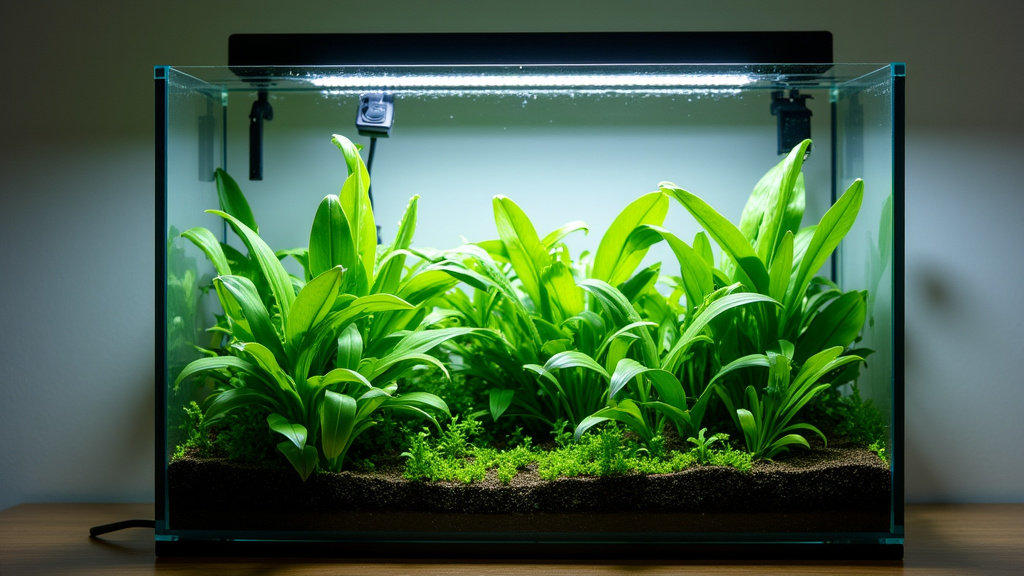
Ensure your light fixture is securely mounted above your aquarium. For most LED and fluorescent fixtures, the ideal height is typically 6-12 inches above the water’s surface. This distance provides good light penetration without being too intense or causing excessive heat. If your light has adjustable arms or legs, use them to position the light directly over your tank, covering the entire planted area. For optimal results, consider that the ideal height is typically 6-12 inches above the water’s surface for aquarium plants.
Avoid placing the light too close, as this can scorch plants and concentrate heat. Too far, and you lose intensity. If you’re using a clip-on style light for a smaller tank, ensure it’s stable. Water-resistant designs are always a bonus. We found that mounting lights on adjustable stands gives you the freedom to move them easily for maintenance or trimming.
The Importance of a Timer
Using an automatic timer is highly recommended. It ensures your light stays on for a consistent duration each day. Most planted aquariums thrive with 6 to 10 hours of light per day. Beginners should start on the lower end, around 6-8 hours, and gradually increase if needed. Consistency is more important than the exact number of hours.
A timer prevents you from forgetting to turn the lights on or off, which can disrupt your plants’ natural cycles. It also helps prevent algae by avoiding prolonged periods of intense light. We found that a simple, inexpensive outlet timer is a game-changer for maintaining a healthy planted tank. It takes the daily decision-making out of the equation.
Acclimating Your Plants and Tank
If you’re installing a new, significantly brighter light, or introducing new plants, it’s important to acclimate them. Suddenly blasting your plants with high-intensity light can shock them, causing leaf burn or melting. Start with a shorter photoperiod (light duration) and gradually increase it over a week or two. If your new light is much brighter than your old one, consider reducing the duration by a couple of hours initially.
Similarly, if you’ve had a dimly lit tank and are upgrading to a strong grow light, your existing plants will need time to adjust. Watch them closely for any signs of stress. Many experts suggest this gradual adjustment period to minimize shock and promote healthy adaptation. It’s like easing into a new exercise routine – you wouldn’t go from zero to a marathon overnight!
Quick Checklist for Your Grow Light Setup
- Choose the right light type (LEDs are often best).
- Consider your plants’ needs (low, medium, or high light).
- Match light intensity to tank depth.
- Invest in an automatic timer for consistency.
- Position the light correctly above the tank.
- Acclimate plants to new or stronger lighting.
Conclusion
You’ve learned that using grow lights for your aquarium plants is not only possible but often beneficial. We’ve seen how LEDs offer fantastic control and efficiency. Remember to match your light’s spectrum and intensity to your plants’ specific needs. Getting the placement and duration right with a timer is key for a thriving planted tank. Your next step? Choose a light that fits your tank and plant goals, and watch your underwater garden flourish!
Frequently Asked Questions
How do I know if my aquarium plants are getting enough light?
You can tell by observing your plants. If they are growing leggy, pale, or have stunted growth, they likely need more light. Conversely, excessive algae growth can sometimes indicate too much light or an imbalance with nutrients and CO2. We recommend starting conservatively and adjusting based on your plants’ response.
Can I use a regular household LED bulb as a grow light?
While you can try, regular household LEDs often lack the specific wavelengths (red and blue) that plants need for photosynthesis. They may also not provide enough intensity. If you do use one, look for “full-spectrum” or “daylight” bulbs and be prepared to use multiple bulbs to achieve adequate brightness. We found that specialized aquarium grow lights offer much better results.
What’s the difference between Kelvin and PAR for aquarium lights?
Kelvin (K) measures the color temperature of the light, like warm yellow or cool blue. For planted aquariums, a range of 6500K to 10,000K is generally recommended. PAR (Photosynthetically Active Radiation) measures the actual amount of light energy available for plants to use for growth. Higher PAR is needed for more demanding plants. We found both are important to consider.
How long should I run my aquarium grow lights each day?
Most planted aquariums do well with 6 to 10 hours of light per day. It’s best to start with a shorter photoperiod, around 6-8 hours, especially when introducing a new light or new plants. Consistency is more important than the exact number of hours, so using an automatic timer is highly recommended to maintain a regular schedule.
Will brighter grow lights cause more algae in my aquarium?
Brighter lights can contribute to algae growth if not properly managed. However, algae is usually caused by an imbalance in the aquarium ecosystem. Providing the correct light intensity and spectrum, along with adequate CO2 and nutrients for your plants, will help them outcompete algae for resources. We suggest monitoring your tank closely after making lighting changes.
