What Is the Best Grow Light for Succulents?
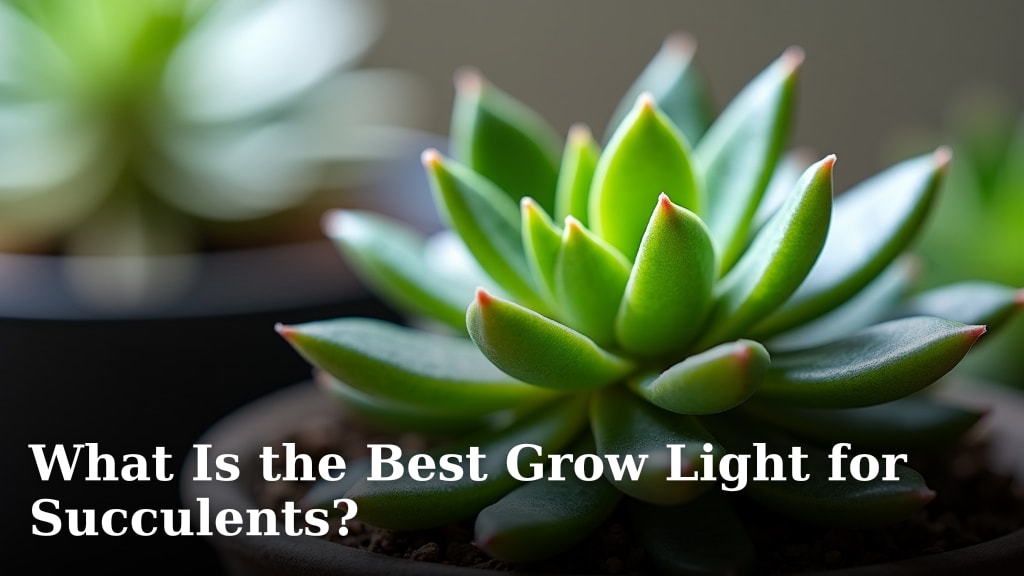
For most succulents, the best grow light is a full-spectrum LED light. These lights mimic natural sunlight, giving your succulents all the wavelengths they need to thrive. Look for lights with a color temperature between 4000K and 6500K for optimal growth.
You want to provide your succulents with enough light to keep them happy, especially indoors where natural light might be scarce. A good grow light prevents stretching (etiolation) and helps your plants maintain their beautiful, compact form. It’s all about finding the right balance of light intensity and duration for your specific plants.
- Full-spectrum LED lights are ideal.
- Aim for 4000K to 6500K color temperature.
- Light intensity and duration matter.
- Prevents stretching and maintains plant shape.
Ready to give your succulents the light they deserve? Let’s dive into exactly what makes a grow light perfect for your prickly pals.
Choosing the Right Grow Light for Your Succulents
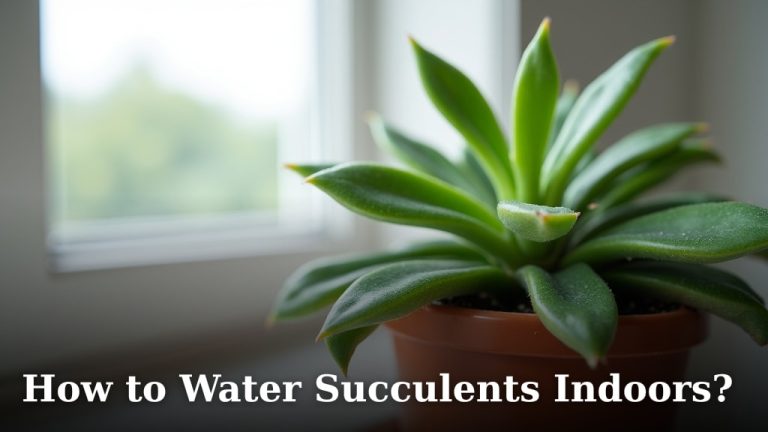
You’re looking for the best way to keep your succulents happy and healthy indoors. The right grow light is key. It provides the essential light your plants need to flourish, preventing them from stretching and losing their vibrant colors.
We found that full-spectrum LED lights are generally the top choice for most succulent owners. They offer a balanced light profile, similar to natural sunlight, which is perfect for photosynthesis.
Understanding Light Spectrum and Wavelengths
Just like us, plants need different “colors” of light. This is called the light spectrum. Natural sunlight contains all these colors. A good grow light tries to replicate this.
The different colors, or wavelengths, of light play specific roles. Red light helps with flowering and fruiting. Blue light promotes leafy growth. Succulents need a good mix of both.
Full-spectrum lights provide light across the entire visible spectrum. This means your succulents get everything they need for balanced growth and strong development. Think of it as a complete meal for your plant.
LEDs: The Smart Choice for Succulents
When it comes to grow lights, you have a few options. But for succulents, LEDs truly stand out. They offer many benefits that other light types can’t match.
- Energy efficiency: LEDs use much less electricity. This saves you money on your power bill.
- Long lifespan: These lights last a very long time. You won’t be replacing them often.
- Low heat output: LEDs don’t get very hot. This reduces the risk of burning your plants.
- Customizable spectrum: Many LED grow lights offer adjustable light colors. This lets you fine-tune the light for your specific succulents.
- Compact size: LEDs are small and can fit into various spaces.
Other options like fluorescent or HID lights exist. However, we found that LEDs offer the best balance of cost, performance, and plant health for most home growers.
Why Not Fluorescent Lights?
Fluorescent lights, like T5s or T8s, were once popular. They are relatively inexpensive. However, they are not as efficient as LEDs. They also have a shorter lifespan. Many fluorescent tubes get warm, which can be an issue for some plants. They often don’t provide the same quality of full-spectrum light.
Why Not HID Lights?
High-Intensity Discharge (HID) lights are very powerful. They are often used in large-scale commercial growing. These include Metal Halide (MH) and High-Pressure Sodium (HPS) lights. While powerful, they generate a lot of heat. They also use a lot of electricity. For a typical home succulent collection, HIDs are usually overkill and too expensive to run.
Key Factors When Choosing Your Grow Light
Beyond being full-spectrum LEDs, there are other important features to consider. These will ensure you pick the absolute best light for your leafy friends.
Color Temperature (Kelvin)
Color temperature is measured in Kelvin (K). It describes how “warm” or “cool” a light appears. For succulents, you want a cooler light temperature. This mimics the bright conditions they love in nature.
Look for lights in the 4000K to 6500K range. This range provides a good balance of blue light. Blue light is important for compact growth and preventing stretching. Lower K values (around 2700K-3000K) are warmer, like an incandescent bulb, and are generally better for flowering plants.
Think of it this way: a bright, sunny day is high Kelvin. A sunset is low Kelvin. Succulents love sunny days!
Light Intensity (PPFD/PAR)
Light intensity is crucial. Too little light, and your succulents will stretch. Too much light, and they can get sunburned. This is often measured in Photosynthetic Photon Flux Density (PPFD) or Photosynthetically Active Radiation (PAR).
You don’t need to be an expert in these terms. Just know that succulents need bright, but not scorching, light. Many experts suggest a PPFD value between 100-300 µmol/m²/s for most succulents (Cornell University Extension).
The wattage of the light can give you a rough idea of its intensity. For a small shelf of succulents, a 20-40 watt LED grow light might be enough. For a larger collection, you may need a more powerful fixture.
Distance from Plants
The distance between your light and your succulents greatly impacts intensity. Closer means more intense light. Further away means less intense. This is where observation comes in handy. If your plants are stretching, move the light closer. If they show signs of sunburn (white or brown spots), move the light further away.
Most small LED grow lights for succulents work best when positioned 6 to 12 inches above your plants. Always check the manufacturer’s recommendations. Every light is a little different.
Light Duration (Photoperiod)
How long should the lights be on? This is called the photoperiod. Succulents are desert plants. They are used to long hours of bright sunlight.
We found that most succulents thrive with 12 to 16 hours of light per day. After this, they need a period of darkness. This dark period is just as important as the light period. It allows the plants to rest and carry out other metabolic processes.
A simple timer can be your best friend here. Set it and forget it! This ensures consistent light exposure for your plants.
Types of Grow Light Fixtures for Succulents
Grow lights come in various shapes and sizes. The best type for you depends on your setup and how many succulents you have.
| Fixture Type | Description | Pros | Cons |
|---|---|---|---|
| Bar Lights | Long, thin strips of LEDs. Often linkable. | Even light distribution, good for shelves, easy to mount. | May need multiple for wider areas. |
| Panel Lights | Flat, square or rectangular panels with many LEDs. | Covers a larger area, often very powerful. | Can be bulkier, sometimes more expensive. |
| Bulb Lights | Standard E26/E27 screw-in bulbs. Fit into regular lamps. | Very flexible, easy to use with existing fixtures. | Limited coverage, intensity might be lower. |
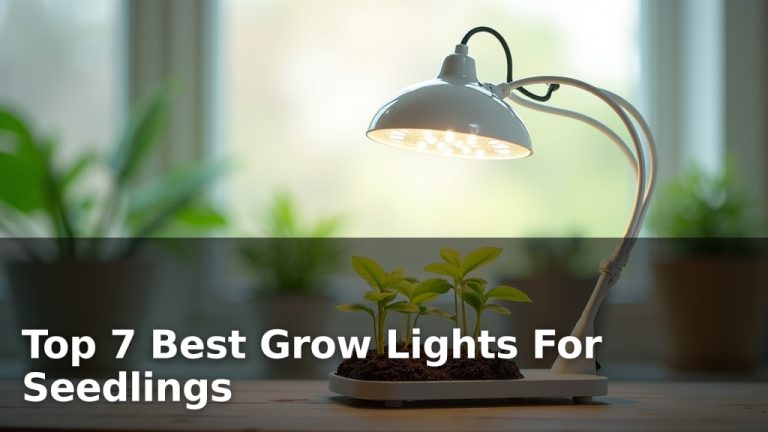
| Gooseneck Lights | Bulbs on flexible arms with a clip or base. | Adjustable direction, good for small setups or single plants. | Less power, covers a small area. |
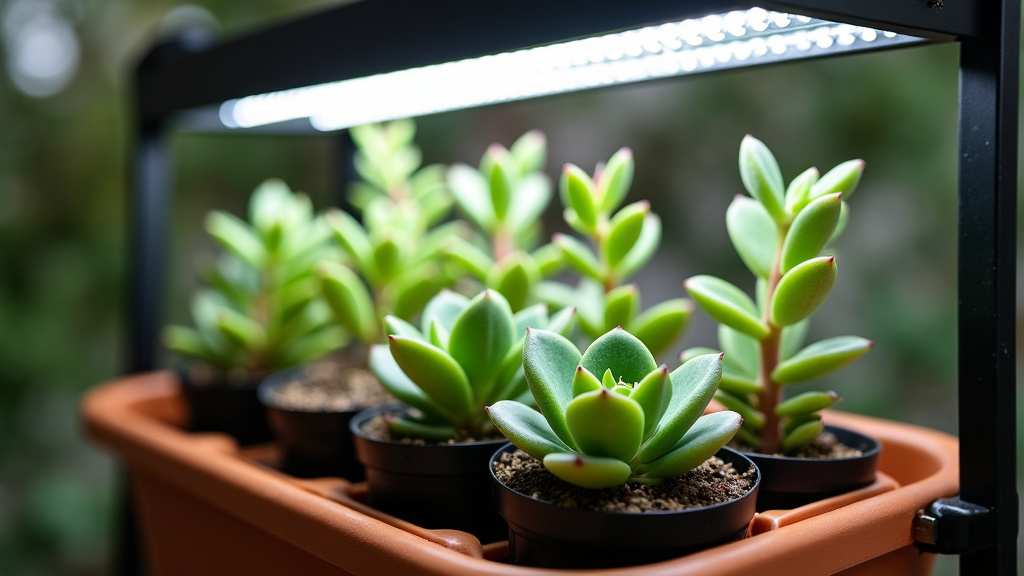
For a small collection on a shelf, bar lights or gooseneck lights are often ideal. If you have a larger display, a panel light might be more efficient. Consider your space and how many plants you need to illuminate.
Signs Your Succulent Needs More Light
Your succulents will tell you if they’re not getting enough light. Pay attention to these common warning signs. Catching them early can save your plant.
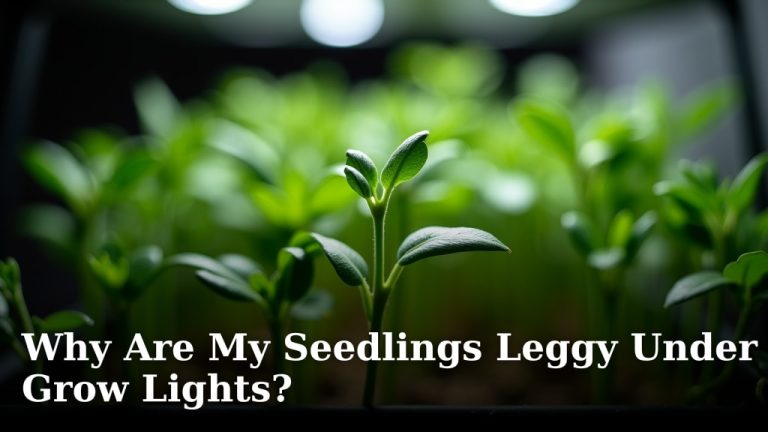
- Stretching (etiolation): This is the most common sign. Your plant will grow tall and leggy. The leaves will be spaced far apart on the stem. This means it’s reaching for light.
- Fading colors: Many succulents get their vibrant colors (reds, purples, oranges) from ample sunlight. If they start looking dull or uniformly green, they need more light.
- Downward-pointing leaves: Leaves that point down instead of up or outward can indicate a lack of light.
- Weak, soft growth: New growth might be thin and weak, not firm and plump.
- Lack of growth: If your plant isn’t growing at all, even during its active season, light might be the issue.
If you see these signs, it’s time to adjust your grow light setup. Move the light closer or increase the duration. Or consider upgrading to a more powerful light.
Grow Light Checklist for Succulent Success
Ready to make your grow light purchase? Use this quick checklist to help you choose the best option for your succulents.
- Is it full-spectrum? Look for descriptions like “full-spectrum” or “sunlight-mimicking.”
- What is the color temperature? Aim for 4000K to 6500K.
- What is the wattage/intensity? Match it to your plant’s needs and collection size.
- Is it LED? For efficiency and longevity, LEDs are best.
- Does it fit your space? Consider the fixture type and mounting options.
- Does it come with a timer? Or can you easily add one?
By keeping these points in mind, you’ll be well on your way to providing your succulents with the perfect lighting environment.
Conclusion
Choosing the best grow light for your succulents doesn’t have to be complicated. By focusing on full-spectrum LED lights with a color temperature between 4000K and 6500K, you’re setting your plants up for success. Remember to balance light intensity and duration, usually 12-16 hours a day, and adjust the distance based on how your plants respond. Observing your succulents for signs of stretching or sunburn is key to finding their perfect lighting sweet spot.
With the right grow light, you can easily replicate their natural environment indoors. Give your succulents the light they crave, and watch them thrive with vibrant colors and compact growth!
Frequently Asked Questions
Can any LED light work as a grow light for succulents?
Not all LED lights are suitable. While any LED provides light, regular household LEDs typically don’t offer the full spectrum or intensity succulents need for healthy growth. Look for LEDs specifically marketed as “grow lights” and check their spectrum and Kelvin rating.
How do I know if my succulents are getting too much light from a grow light?
Signs of too much light include sunburn, which appears as white, yellow, or brown scorched spots on leaves. Your succulents might also look bleached or overly stressed, sometimes turning unusual, dull colors. If you see these signs, move the light further away or reduce the daily duration.
Do grow lights help succulents flower?
Yes, a proper grow light can certainly encourage succulents to flower. Flowers require ample light energy. By providing consistent, high-quality full-spectrum light, you give your succulents the energy they need to produce blooms when they are mature and in season.
Is it okay to leave a grow light on 24 hours a day for succulents?
No, it’s not recommended to leave grow lights on 24/7. Succulents need a period of darkness, typically 8-12 hours, to perform essential metabolic processes like respiration. Consistent darkness is just as important as consistent light for their overall health.
Can I use a regular desk lamp with an LED bulb as a succulent grow light?
While you can use a desk lamp, the LED bulb inside needs to be a full-spectrum grow light bulb, not a standard reading light. Regular LED bulbs lack the specific wavelengths and intensity plants need to photosynthesize effectively. A dedicated grow light bulb in a desk lamp might work for a single small succulent.